
How Long Does an Oil Change Take?
An oil change itself takes about 15 to 30 minutes of hands-on work. At a drive-through quick-lube shop, you are often back on the road in 15 to 45 minutes. At a dealership or general repair shop, plan on 45 minutes to 90 minutes or more, because your car waits in line and often gets a multi-point inspection. Doing it yourself usually takes 30 to 60 minutes once you have the tools, and longer the first time.
How Long an Oil Change Takes by Where You Go
| Where | Typical time | Why |
|---|---|---|
| Drive-through quick-lube | 15–45 minutes | Stay in the car; built for speed; wait depends on the line |
| Independent repair shop | 30–60 minutes | Usually appointment-based; may combine with other checks |
| Dealership service department | 45–90+ minutes | Multi-point inspections, recalls and busy schedules |
| Big-box auto center | 45–120 minutes | Long queues at busy times |
| Mobile oil change | 30–45 minutes on site | Comes to your home or office |
| Do it yourself | 30–60 minutes | Includes lifting the car, draining and refilling |
What Happens During an Oil Change
- Check-in: the shop confirms your oil type, capacity and any extra services.
- Lift and drain: the car is raised, the drain plug is removed and old oil drains out, which usually takes 5 to 10 minutes.
- Replace the filter: the old filter comes off and a new one goes on.
- Reinstall the plug: with a new washer, tightened to the correct torque.
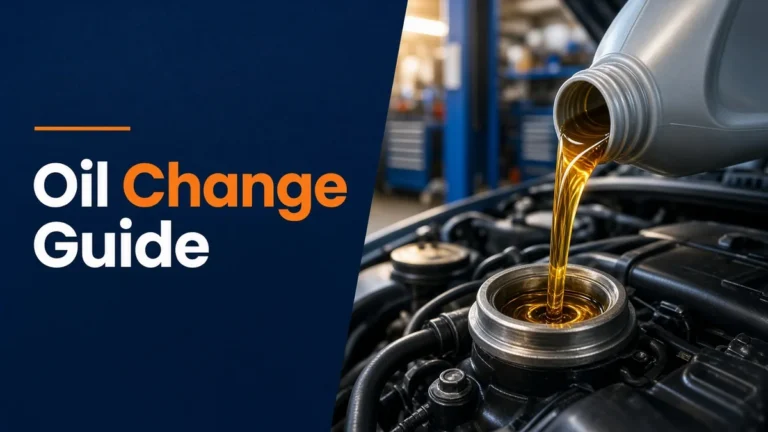
- Refill: fresh oil goes in through the filler cap.
- Check for leaks and level: the engine runs briefly, then the dipstick is checked.
- Reset the reminder: the oil-life monitor is reset and a sticker or digital reminder is updated.
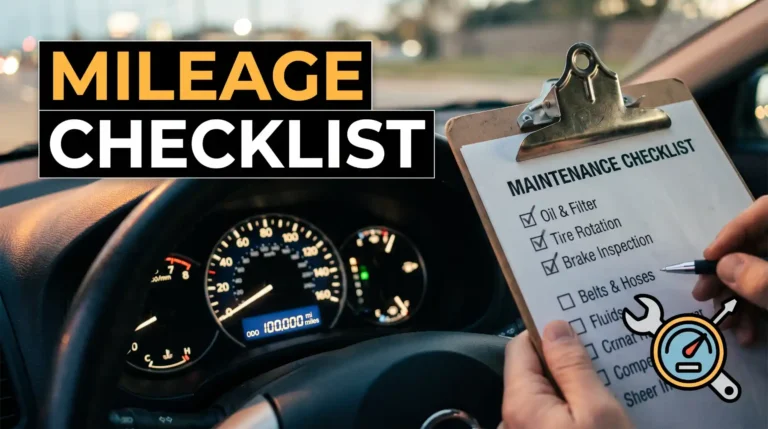
Many shops also top off fluids and check tire pressure in the same visit. Our car maintenance schedule by mileage shows what else is typically due around the same time as an oil change.
How Much Time to Add for Other Services
Oil changes are often combined with other work. Typical extra time on top of a basic oil change at a shop:
| Added Service | Typical Extra Time |
|---|---|
| Tire rotation | About 15–30 minutes |
| Tire rotation and balance | About 30–60 minutes |
| Engine or cabin air filter | About 5–15 minutes |
| Wiper blades | About 5 minutes |
| Multi-point inspection | About 10–20 minutes |
| State inspection | About 20–60 minutes |
| Brake inspection | About 15–30 minutes |
| Recall or software update at a dealer | 30 minutes to several hours |
Waiting time is separate from labor time. On busy Saturdays or at dealerships without an express lane, the total visit can stretch to two hours or more.
What Can Make an Oil Change Take Longer
- The line: Saturdays, lunchtimes and after-work hours are busiest.
- Extra services: tire rotation, air filter or cabin filter replacement, or a multi-point inspection.
- Vehicle design: undertrays, skid plates or hard-to-reach filters add time.
- Large engines: trucks with 7 or more quarts take longer to drain and fill.
- Parts availability: an unusual filter may need to be fetched from a supplier.
- Problems found: a stripped drain plug or leaking gasket can turn a quick visit into a repair.
Why Dealerships Sometimes Take Longer
- Scheduling: oil changes share bays and technicians with major repairs.
- Multi-point inspections: dealers often inspect brakes, tires, fluids and belts and prepare a report.
- Recall checks: the service advisor may check your VIN for open recalls or software updates and perform them during the visit.
- Car wash: some dealers wash the car after service, which adds time.
- Paperwork and parts: factory-specific filters or oil may need to be pulled from the parts department.
Many dealers now have express service lanes that can do an oil change in 30 to 60 minutes without an appointment. Ask when you book.
How to Make Your Oil Change Faster
- Book an appointment at a dealer or independent shop
- Go early on a weekday morning, when lines are shortest
- Know your oil type and viscosity from the owner’s manual so there is no guesswork
- Decline extra services you do not need that day
- Bring coupons or maintenance-plan details to speed up checkout
How Long a DIY Oil Change Takes
For a first-timer, set aside an hour or more. With experience and the right tools, most people finish in 30 to 45 minutes. A typical timeline:
| Step | Time |
|---|---|
| Gather tools and park on level ground | 5 minutes |
| Raise the car safely on ramps or jack stands | 5–10 minutes |
| Drain the old oil | 5–10 minutes |
| Replace the filter | 5 minutes |
| Reinstall the drain plug and lower the car | 5 minutes |
| Refill with new oil and check the level | 5–10 minutes |
| Clean up and pour old oil into containers | 5–10 minutes |
Afterward, recheck the level on the dipstick and look for drips over the next day. Our guide to checking your car’s oil shows the right way to read it, and our guide to car oil leaks helps if you spot spots on the driveway.
Safety first: never get under a car held up only by a jack. Use ramps or jack stands on firm, level ground, chock the wheels and let a hot engine cool before draining, since hot oil can cause burns.
Can You Wait While Your Oil Is Changed?
Yes. At quick-lube shops you often stay in the car, and dealers and repair shops usually have waiting areas. If the shop quotes more than an hour, ask whether you can drop the car off and come back.
How Often Will You Need to Make the Trip?
Most modern cars need an oil change every 5,000 to 10,000 miles or every 6 to 12 months, so a typical driver visits a shop one to three times a year. The exact interval is in your owner’s manual or on your oil-life monitor. Electric cars skip the trip entirely: as our guide explains, electric cars do not need oil changes.
Related guides: how to change a car air filter, how to check car fluids and dashboard symbols and meanings.
Oil Change Time FAQ
The work takes about 15 minutes, and most visits take 15 to 45 minutes including the wait.
Usually about 30 to 60 minutes at most shops, since the tire rotation adds 15 to 30 minutes.
Yes. Check that there are no warning lights and no leaks, and look at the dipstick later to confirm the level.
Busy times, extra services, hard-to-reach filters, large engines or a problem found during the service can all add time.
Not at most quick-lube shops. Dealers and many repair shops prefer appointments, which usually shortens the wait.
Busy shops, dealer inspections, recall work, extra services and waiting for a bay can all stretch the visit. Booking an early appointment or using an express lane usually helps.