Do Electric Cars Need Oil Changes? EV Maintenance Explained
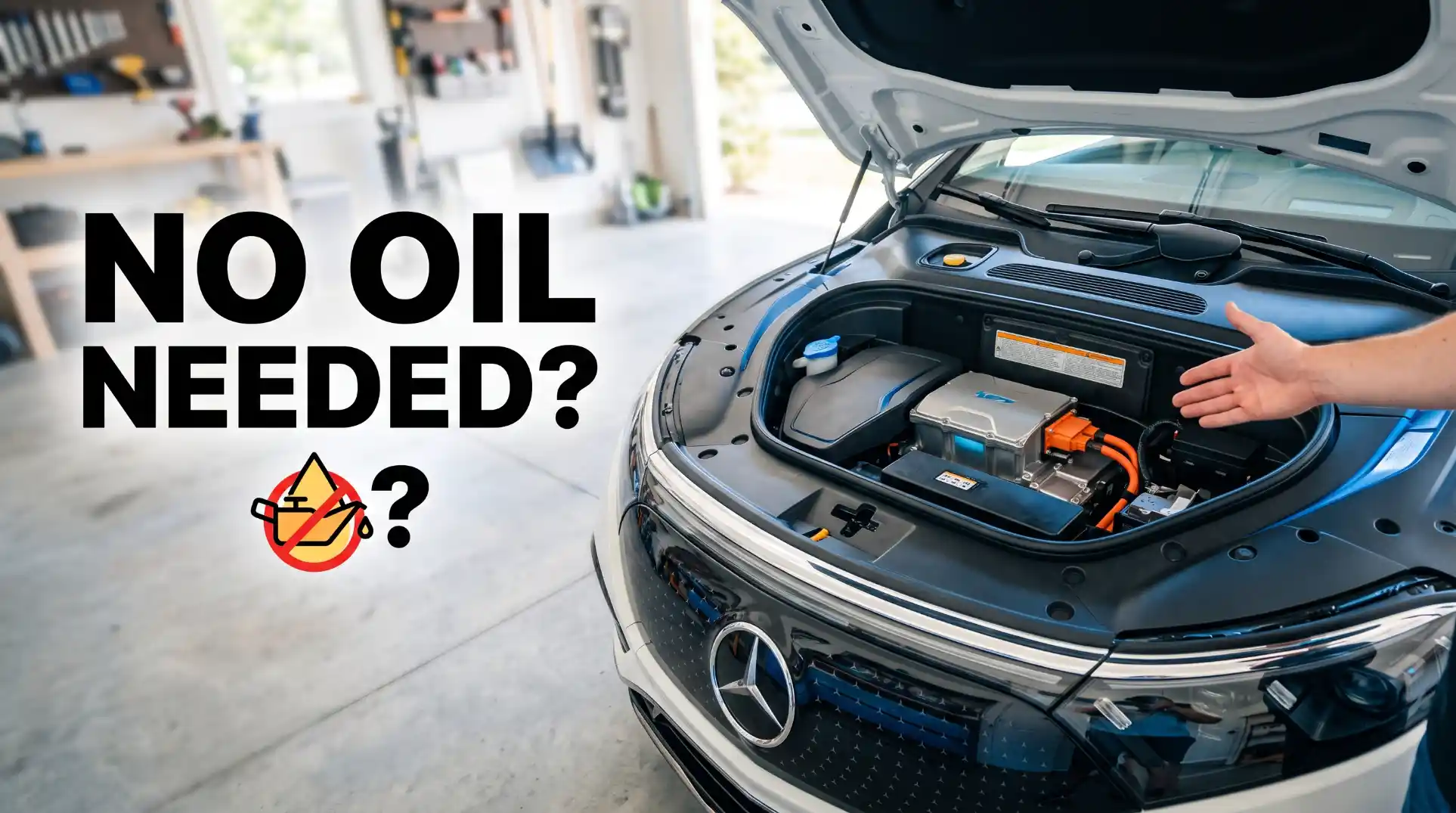
Do electric cars need oil changes? Here is the direct answer. No, fully electric cars do not need oil changes. They have no internal combustion engine, so there are no pistons, valves or crankshaft to lubricate with motor oil. EVs still need maintenance, though: tire rotations, brake fluid, battery coolant, cabin air filters, wiper blades and washer fluid, and some models specify a check or change of the reduction gear (transmission) fluid. Hybrids and plug-in hybrids do need oil changes, because they have a gas engine.
Key Takeaways
- Battery-electric (BEV): no engine oil or oil changes.
- Hybrids and plug-in hybrids: still need regular oil changes for the gas engine.
- EV maintenance: tires, brake fluid, coolant, cabin filter, wipers, 12-volt battery, suspension checks.
- Gear reducer fluid: some EVs specify it; many are “lifetime” fluids. Follow your manual.
- Generally cheaper to maintain than a gas car because there are fewer moving parts and fluids.
Why EVs Do Not Need Oil Changes
Gas engines rely on motor oil to lubricate hundreds of fast-moving metal parts, carry away heat and trap combustion byproducts, which is why oil breaks down and must be replaced. An electric motor has far fewer moving parts, no combustion, and no exhaust contamination. The small amount of lubricant in an EV’s gearbox (reduction gear) is sealed and is changed rarely, if ever, depending on the manufacturer.
EV vs Hybrid vs Gas Car: Oil and Fluids
| Gas car | Hybrid / plug-in hybrid | Electric car (BEV) | |
|---|---|---|---|
| Engine oil changes | Yes | Yes | No |
| Transmission or gearbox fluid | Yes (varies) | Yes (varies) | Some models; long intervals or lifetime |
| Engine coolant | Yes | Yes | Battery and electronics coolant instead |
| Brake fluid | Yes | Yes | Yes |
| Spark plugs, timing belt, exhaust | Yes | Yes | No |
| Brake pad wear | Normal | Lower (regenerative braking) | Lower (regenerative braking) |
EV Maintenance Checklist
| Item | What to do | Typical timing |
|---|---|---|
| Tires | Rotate, check pressure and tread; EVs can wear tires faster | Per your owner’s manual |
| Brake fluid | Test and replace; it absorbs moisture over time | Often every 2 years or per manual |
| Brakes | Inspect pads, rotors and calipers; regen means pads last longer, but calipers can seize from low use | At each service |
| Battery coolant | Check level; replace per manufacturer schedule | Long intervals; varies widely |
| Cabin air filter | Replace to keep HVAC airflow clean | About every 1–2 years |
| 12-volt battery | Test and replace when weak; it powers the car’s electronics | Every few years |
| Wiper blades and washer fluid | Replace blades, top up fluid | As needed |
| Suspension and steering | Inspect; EV weight can wear bushings and links | At each service |
| Software updates | Install over-the-air or dealer updates | As released |
Intervals vary a lot by manufacturer. Your owner’s manual or the car’s app lists the exact schedule.
Do EVs Really Cost Less to Maintain?
Generally yes. With no oil changes, spark plugs, timing belts, exhaust systems or multi-speed transmissions to service, routine maintenance is simpler. Regenerative braking also reduces brake pad wear. Offsetting costs can include faster tire wear because of the extra weight and instant torque, and repairs to specialized EV components if something fails outside warranty.
What About the High-Voltage Battery?
The main traction battery does not need routine servicing beyond keeping its cooling system in good condition and following charging habits recommended by the manufacturer. Most EV makers cover the high-voltage battery with a long warranty, commonly around 8 years or 100,000 miles; check your specific coverage and what capacity loss it covers.
Safety note: Never open or work on orange high-voltage cables, the traction battery or power electronics. These carry dangerous voltages and should only be serviced by trained technicians.
Tips to Keep Your EV in Top Shape
- Check tire pressure monthly; EVs are sensitive to underinflation for range and wear.
- Use the brakes firmly now and then so pads and rotors stay clean, especially if you rely on regen.
- Keep the charge between about 20% and 80% for daily use unless your manual says otherwise.
- Precondition in winter while plugged in.
- Keep up with recalls and software updates.
Try the calculator: use our EV charging cost calculator to estimate your charging costs, or our total cost of ownership calculator to compare what cars really cost to own.
EV Maintenance FAQ
No. Fully electric cars have no engine oil, so they never need oil changes. Hybrids and plug-in hybrids still do.
Most EVs have a small amount of sealed lubricant in the gearbox or reduction gear, and some manufacturers specify checking or changing it at long intervals.
Tire rotations, brake fluid, brake inspections, battery coolant checks, cabin air filter replacement, 12-volt battery checks, wipers and washer fluid.
Yes. Hybrids and plug-in hybrids have gas engines that need regular oil changes, although the engine may run less often.
Generally yes, because they have fewer moving parts and no oil changes, spark plugs or exhaust system. Tires may wear faster.
Follow your owner’s manual. Because EVs are heavy and deliver instant torque, regular rotation and pressure checks matter even more.
No. Tesla vehicles are fully electric and do not use engine oil.