Signs Your Transmission Is Going Out
The most common signs that a transmission is going out are slipping (the engine revs rise but the car does not accelerate), delayed engagement when you shift into Drive or Reverse, harsh or erratic shifts, whining, clunking or grinding noises, shuddering, a burning smell, red fluid leaks and a check engine or transmission warning light. Some of these point to fixable problems such as low fluid or a faulty solenoid, so get a proper diagnosis early; waiting usually turns a repair into a rebuild.
12 Signs Your Transmission Is Going Out
1. Slipping
The engine revs climb, but the car does not speed up to match, or it seems to drop out of gear briefly. Slipping usually means worn clutches, low fluid or pressure problems.
2. Delayed Engagement
You shift into Drive or Reverse and wait a second or more before the car engages, often with a clunk. Low fluid, worn seals or a failing valve body are common causes.
3. Harsh, Jerky or Late Shifts
Shifts that bang into gear, or happen at much higher RPM than normal, can come from low fluid, a faulty solenoid, a sensor problem or software.
4. Not Going Into Gear
The car will not move in Drive or Reverse, or refuses a particular gear. This can be anything from very low fluid to a failed internal part.
5. Whining, Humming or Buzzing
A whine that rises with engine speed can point to a failing pump, low fluid or a torque converter problem. Our guide to car noises explained helps separate transmission noises from wheel bearings and other sounds.
6. Clunking or Grinding
Clunks when shifting or grinding in gear, especially in manual transmissions, can signal worn gears, synchronizers or mounts.
7. Shuddering or Vibration
A shudder at steady speeds around 30 to 50 mph often comes from the torque converter clutch. Our guide to why your car is shaking covers other causes of vibration.
8. Burning Smell
Overheated transmission fluid smells acrid and burnt. It can mean low fluid, heavy towing or internal slipping generating heat.
9. Red or Brown Fluid Leaks
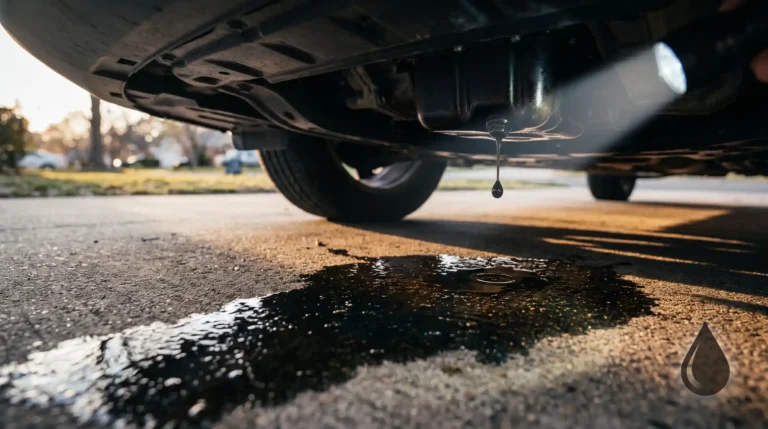
Transmission fluid is red when new and darkens with age. Spots under the middle or front of the car point to a pan gasket, cooler line or seal leak; our guide to car fluid leaks helps identify them.
10. Warning Lights
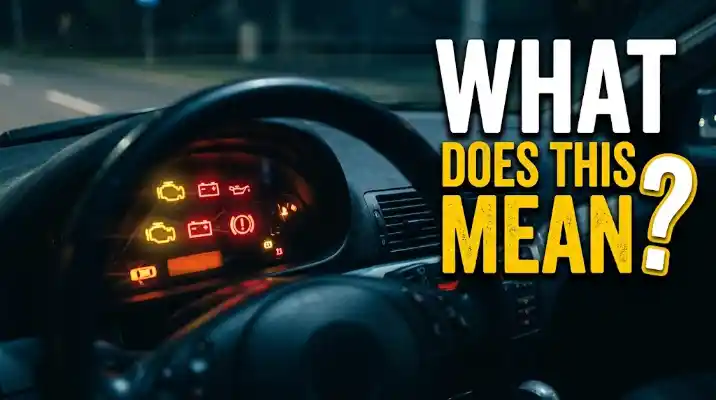
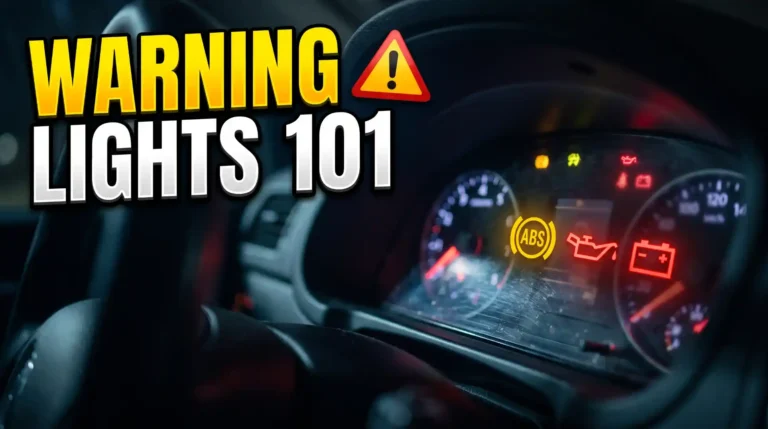
Many cars have a transmission temperature or fault light, and the check engine light often comes on with transmission codes. Our check engine light guide explains how codes are read.
11. Limp Mode
The car stays in one gear, often second or third, and will not upshift. This is a protective mode the computer uses when it detects a serious fault.
12. Dark or Burnt Fluid
If your transmission has a dipstick, fluid that is dark brown or black, smells burnt or has metal particles in it is a strong sign of internal wear.
When to stop driving: if the car will not engage, slips badly at speed, goes into limp mode on the highway, or smells strongly of burning fluid, pull over safely. Continuing to drive can destroy the transmission and leave you stranded in traffic.
Quick Symptom Checker
| What You Notice | Possible Causes | How Urgent |
|---|---|---|
| Engine revs but car barely speeds up | Slipping clutches, low fluid, worn bands | High: get it checked now |
| Long pause before Drive or Reverse engages | Low fluid, worn seals, valve body or solenoid issue | Medium to high |
| Harsh or banging shifts | Old fluid, solenoid, software, mounts | Medium |
| Whine that rises with speed | Low fluid, pump or bearing wear, torque converter | Medium to high |
| Shudder at 30–50 mph under light throttle | Torque converter clutch, old fluid | Medium |
| Red or brown puddle | Pan gasket, cooler line, axle seal leak | Medium; high if the level is low |
| Burning smell | Overheated fluid, fluid leaking onto exhaust | High |
| Stuck in one gear, warning light on | Limp mode from a detected fault | High: drive gently to a shop or tow |
Automatic vs Manual vs CVT Symptoms
| Transmission type | Typical warning signs |
|---|---|
| Conventional automatic | Slipping, delayed engagement, harsh shifts, shudder, limp mode |
| Manual | Grinding when shifting, popping out of gear, clutch slipping, hard-to-select gears |
| CVT | Whining or droning, shuddering, surging or hesitation, sudden loss of power |
In a manual, a slipping or high-engaging clutch is often the problem rather than the gearbox itself, and a clutch replacement costs much less than a transmission. If you drive a stick, our guide to driving a manual car covers clutch habits that make it last.
What Causes Transmission Problems?
- Low or old fluid, often from leaks or skipped services
- Overheating from towing, heavy loads or stop-and-go driving
- Worn clutch packs and bands from age and mileage
- Failed solenoids, sensors or the transmission control module
- Torque converter problems
- Software faults that a dealer update can sometimes fix
What to Do If You Notice These Signs
- Check the fluid: if your car has a dipstick, check the level and color with the engine warm, following the manual.
- Look for leaks: park over clean cardboard overnight.
- Scan for codes: an auto parts store or shop can read stored trouble codes.
- Note when it happens: cold or hot, which gear, what speed; this helps diagnosis.
- See a transmission specialist: ask for a written diagnosis before agreeing to a rebuild or replacement.
Can a Failing Transmission Be Fixed?
Often, if caught early. Low fluid from a leak, a bad solenoid, a sensor or a software issue can be fixed for a few hundred dollars. Worn internal parts usually mean a rebuild or replacement, which can cost several thousand. Getting a diagnosis early gives you the most options.
What Transmission Problems Typically Cost
| Repair | Typical Cost (US) |
|---|---|
| Fluid top-off and leak fix (pan gasket, line) | About $100–$500 |
| Transmission fluid service | About $100–$400 |
| Shift solenoid or solenoid pack | About $150–$800 |
| Software update or relearn | About $100–$250 |
| Torque converter replacement | About $600–$2,000+ |
| Valve body repair or replacement | About $500–$1,500 |
| Transmission rebuild | About $2,000–$4,500+ |
| Remanufactured replacement | About $3,000–$8,000+ |
Prices vary by vehicle and region. Early diagnosis matters: many of the cheaper repairs on this list only stay cheap if the problem is caught before internal damage spreads.
How to Help Your Transmission Last Longer
- Follow the fluid service interval in your manual
- Use only the fluid type your transmission requires
- Fix leaks promptly
- Come to a full stop before shifting between Drive and Reverse
- Avoid towing beyond your vehicle’s rating
- Let the car warm up briefly in very cold weather before driving hard
Related guides: do automatic cars have a clutch, car maintenance schedule by mileage and car trade-in value.
Transmission Warning Signs FAQ
Early signs include delayed engagement, harsher or later shifts, a new whine or hum, and a slight slip when accelerating.
Yes. Low fluid can cause slipping, delayed engagement, harsh shifts and overheating. Check the level and look for leaks.
It is not recommended to keep driving. Some cars limp along for weeks; others fail suddenly. Continued driving usually increases repair costs.
Often yes. Many transmission faults set trouble codes that trigger the check engine light or a dedicated transmission warning light.
Many problems, such as leaks, solenoids, sensors and software, can be fixed without replacing the transmission if diagnosed early.
Failing CVTs often whine or drone, especially under acceleration, and may shudder, hesitate or surge.