Car Maintenance Schedule by Mileage (30k, 60k, 90k)
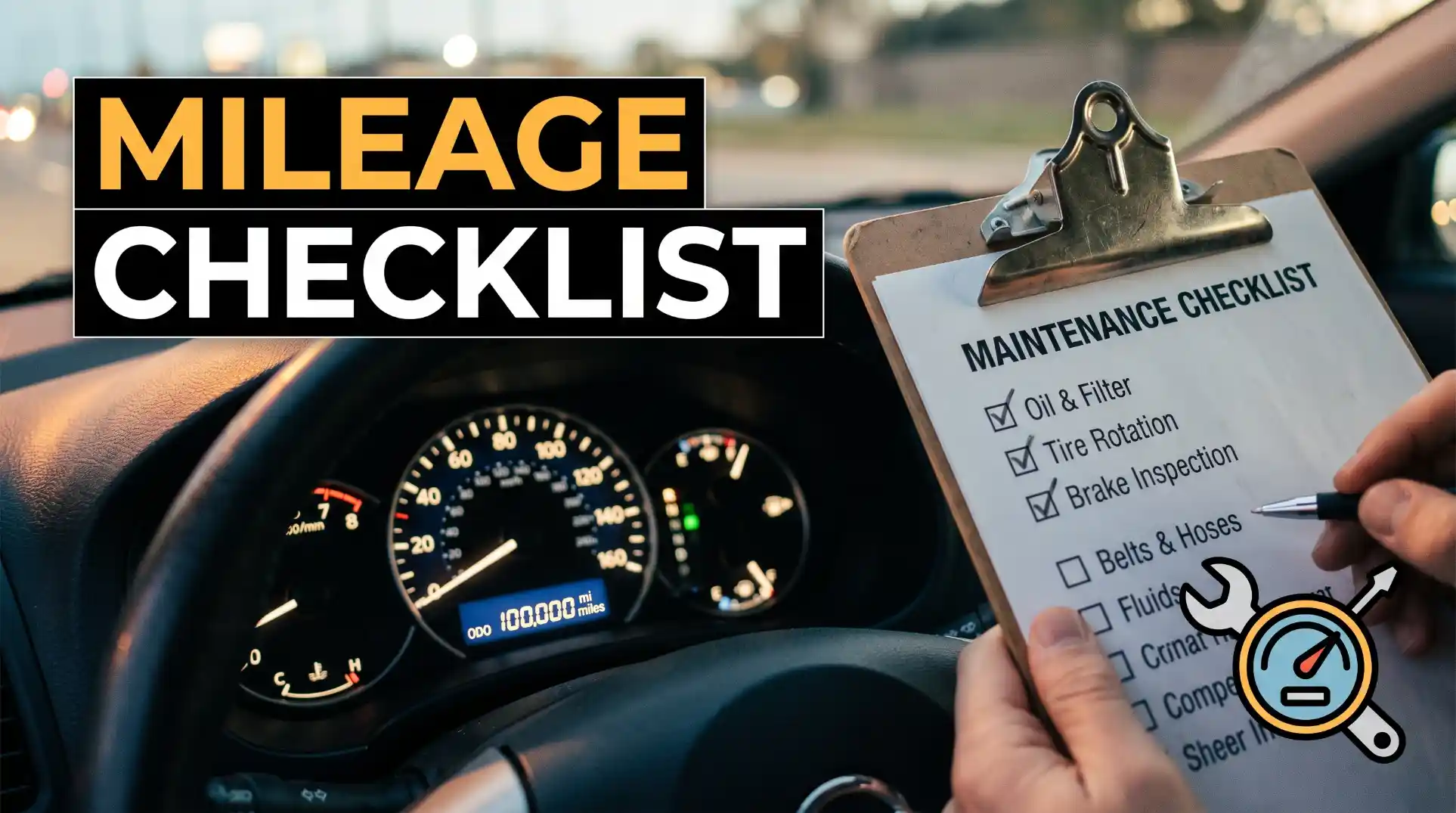
A car maintenance schedule by mileage keeps you ahead of expensive repairs. A typical car maintenance schedule is built around oil changes every 5,000–10,000 miles (or as your oil-life monitor says), tire rotations every 5,000–7,500 miles, filter changes around 15,000–30,000 miles, and bigger services at 30,000, 60,000 and 90,000–100,000 miles that can include brake fluid, coolant, transmission fluid, spark plugs and, on some engines, the timing belt. A modern “tune-up” mostly means replacing spark plugs and filters and inspecting the engine, not the adjustments older cars needed. Your owner’s manual schedule always comes first.
Key Takeaways
- Every oil change: check fluids, tires, lights, wipers and belts.
- Around 30,000 miles: engine and cabin air filters, inspect brakes, battery and hoses.
- Around 60,000 miles: often brake fluid, coolant or transmission fluid depending on the car; timing belt on some engines.
- Around 90,000–100,000 miles: spark plugs on many engines; timing belt if not done; major inspection.
- Severe driving (short trips, towing, dust, extreme heat or cold) may call for shorter intervals.
Car Maintenance Schedule by Mileage (Typical)
| Mileage | Typical services | Notes |
|---|---|---|
| Every 5,000–10,000 miles | Oil and filter change; tire rotation; check fluids, tire pressure, lights and wipers | Use your oil-life monitor or manual interval |
| 15,000–30,000 miles | Engine air filter; cabin air filter; inspect brakes, suspension, exhaust, battery | Dusty areas may need filters sooner |
| 30,000 miles | All of the above plus a more thorough inspection; brake fluid on some models | A common “major service” point |
| 45,000 miles | Repeat 15,000-mile items; inspect belts and hoses | Check tire tread depth |
| 60,000 miles | Brake fluid, coolant or transmission fluid on many cars; timing belt on some engines; battery check | Belts and hoses age with time as well as miles |
| 75,000 miles | Repeat routine items; inspect suspension, steering and CV boots | Consider shocks/struts if worn |
| 90,000–100,000 miles | Spark plugs on many engines; timing belt if due; coolant; transmission service; full inspection | A big-ticket milestone |
| 120,000+ miles | Second round of long-interval items; water pump if not done with the timing belt | Keep records for resale value |
These are common ranges, not rules. Intervals vary a lot by manufacturer and engine, and many newer cars go longer between services.
What Is a Tune-Up on a Modern Car?
On older cars, a tune-up meant replacing spark plugs, ignition points, the distributor cap and rotor, and adjusting timing and the carburetor. Modern cars have electronic ignition and fuel injection, so there is little to adjust. Today, a “tune-up” usually means:
- Replacing spark plugs (and sometimes ignition coils or plug wires)
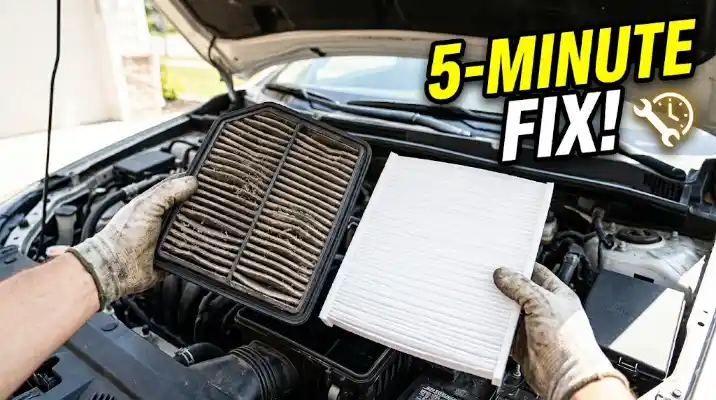
- Replacing the engine air filter and cabin air filter
- Inspecting belts, hoses, and fluids
- Scanning for trouble codes
- Cleaning the throttle body or fuel system if needed
Because “tune-up” means different things at different shops, ask for an itemized quote.
Signs Your Car Needs Service Now
- Check engine light or other warning lights
- Rough idle, misfires or hesitation
- Drop in fuel economy
- Squealing belts or brakes
- Hard starting
- Fluid leaks under the car
- Vibration, pulling to one side or uneven tire wear
Normal vs Severe Maintenance Schedules
Most owner’s manuals list two schedules. The severe schedule applies more often than drivers think:
- Mostly short trips under about 5–10 miles
- Stop-and-go city traffic
- Towing a trailer or carrying heavy loads
- Dusty, sandy or salty roads
- Extremely hot or cold climates
- Rideshare, delivery or long idling
Time-Based Maintenance
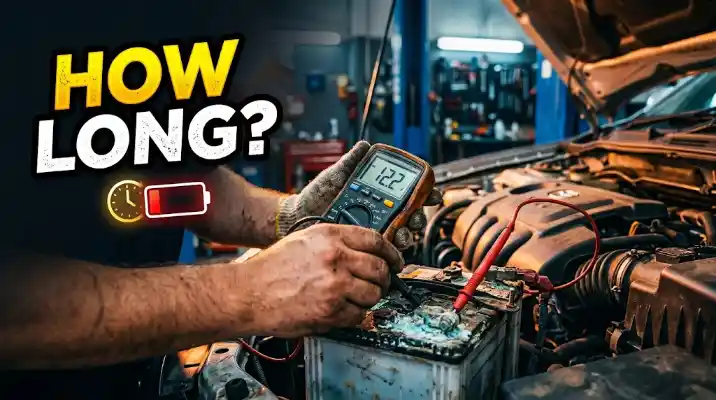
Some items age by time, not just miles. Brake fluid absorbs moisture, coolant additives break down, rubber belts and hoses harden, and batteries typically last about three to five years. If you drive little, follow the time intervals in your manual, such as “every 2 years or 30,000 miles, whichever comes first.”
Tips to Save on Maintenance
- Follow the manual, not upsell lists; some “recommended” services are not required.
- Do easy jobs yourself: air filters, cabin filters, wiper blades.
- Keep receipts; they help with warranty claims and resale value.
- Compare dealer and independent shop quotes for major services.
- Do not skip oil changes or timing belt replacement; failures cost far more.
Safety note: Brakes, tires, steering and suspension are safety items. If you notice a soft brake pedal, grinding, pulling, or a tire bulge, get the car inspected before driving further.
Try the calculator: use our total cost of ownership calculator to compare what cars really cost to own.
Car Maintenance Schedule FAQ
On modern cars, a tune-up usually means replacing spark plugs and filters and inspecting the engine and its systems. Older cars also needed adjustments to ignition timing and carburetors.
Most cars need an oil change and basic inspection every 5,000 to 10,000 miles, with larger services around 30,000, 60,000 and 90,000 to 100,000 miles. Follow your owner’s manual.
It often includes oil and filter, tire rotation, inspection, and on many cars brake fluid, coolant or transmission fluid service, plus a timing belt on some engines.
Many modern spark plugs last around 60,000 to 100,000 miles or more. Check your owner’s manual for your engine.
Timing belt intervals commonly fall between about 60,000 and 120,000 miles. Many engines use a timing chain instead, which usually does not have a set replacement interval.
Short trips, stop-and-go traffic, towing, dusty roads, extreme temperatures, and rideshare or delivery use often count as severe service.
In the US, you can usually have maintenance done by any qualified shop or yourself without voiding the warranty, as long as you follow the schedule and keep records.