No Down Payment Car Insurance: What It Really Means
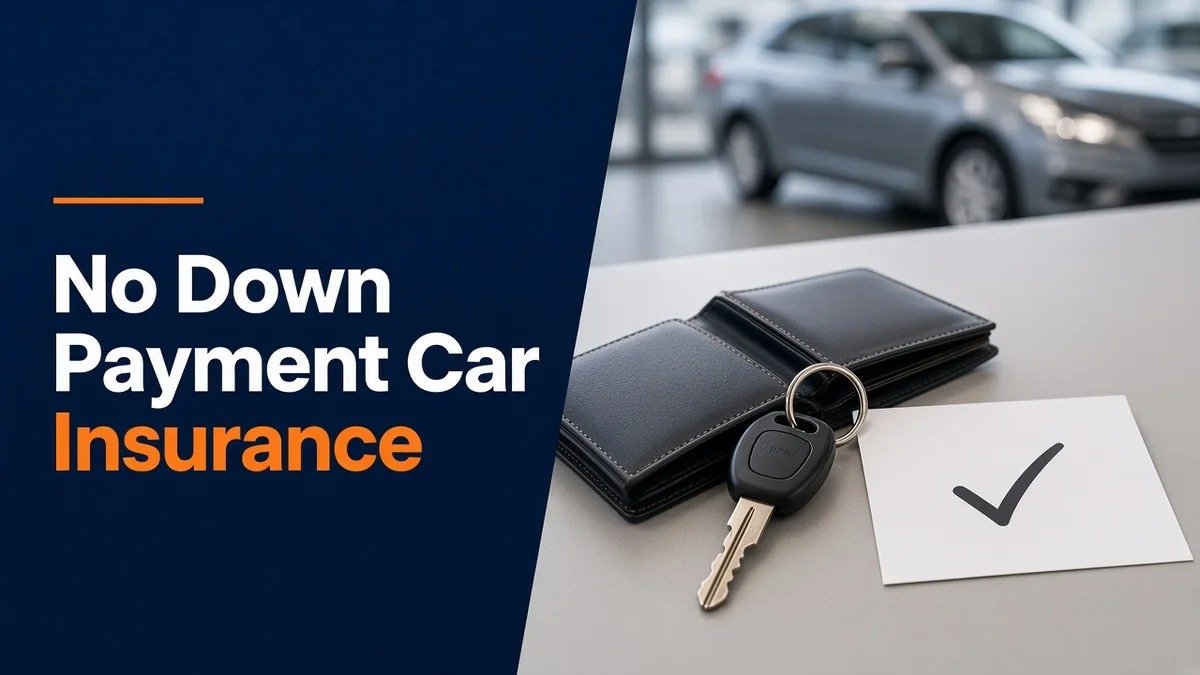
“No down payment” car insurance does not mean free coverage or paying nothing to start. Insurance companies require payment before a policy takes effect, so you will always pay something upfront. What “no down payment” or “$0 down” usually means is that your first payment is simply your first monthly premium, with no extra deposit on top. That makes it easier to get covered quickly if you are short on cash, but the monthly price is the same or higher than a policy you pay in full.
What Does “No Down Payment Car Insurance” Really Mean?
With traditional billing, some insurers asked new customers to pay a deposit, sometimes 15% to 25% of the six-month premium, before the policy started, followed by smaller monthly payments. Today, many insurers let you start a policy by paying only the first month’s premium. Advertisers call that “no down payment” or “low down payment” insurance. You are still paying upfront; there is just no extra lump sum.
| Payment Plan | What You Pay to Start | Total Cost |
|---|---|---|
| Paid in full (6 or 12 months) | Entire premium | Usually lowest (paid-in-full discount) |
| Monthly, “$0 down” | First month’s premium | Often slightly higher due to installment fees |
| Monthly with a deposit | Deposit plus first month, or a larger first payment | Similar to monthly, but more upfront |
| Pay-per-mile | A base rate plus per-mile charges | Can be lower for low-mileage drivers |
Can You Get Car Insurance With No Money Down?
No. You cannot get a legitimate car insurance policy without making a payment. State laws and insurer rules require premium payment for coverage to be in force. If a company says it will start your policy today and bill you later with nothing paid, verify the offer carefully and confirm the insurer is licensed in your state.
Who Qualifies for the Lowest First Payment?
Insurers decide how much to collect upfront based on risk. You are more likely to be offered a first payment equal to just one month if you have:
- Continuous prior insurance with no recent lapse
- A clean driving record
- Good credit (in states where insurers may use credit-based insurance scores)
- Automatic payments set up from a bank account or card
- A history with the insurer or bundled policies
Drivers with a lapse in coverage, a DUI, an SR-22 requirement, multiple claims or poor credit may be asked to pay more upfront, or may need a non-standard insurer.
How to Get Car Insurance With the Lowest Upfront Cost
- Compare several quotes: first-payment requirements vary by company, so ask each insurer exactly how much is due today.
- Choose monthly billing with autopay: many insurers reduce or waive the initial deposit and installment fees with automatic payments.
- Pick a start date that matches your payday so the first payment fits your budget.
- Adjust coverage wisely: raising your collision and comprehensive deductibles lowers the premium. Keep liability limits adequate.
- Ask about discounts: safe driver, good student, multi-car, bundling, paperless, telematics and defensive driving courses.
- Consider pay-per-mile insurance if you drive very little.
- Avoid a lapse: keeping continuous coverage helps you qualify for better payment terms next time.
If you are changing companies, time the new policy to start the day the old one ends. Our guide on how to switch car insurance explains how to avoid a gap.
Pros and Cons of Low Down Payment Insurance
| Pros | Cons |
|---|---|
| Lower upfront cost to get legally insured | Monthly plans may add installment fees |
| Easier to budget month to month | Total annual cost is often higher than paying in full |
| Get coverage quickly, such as when buying a car | Missed payments can cause cancellation and a coverage lapse |
| Available from most major insurers | Higher-risk drivers may still face larger first payments |
Warning Signs of Insurance Scams
- Promises of “free” insurance or no payment at all
- Pressure to pay by gift card, wire transfer, cryptocurrency or a payment app to an individual
- Prices that are dramatically lower than every other quote
- No written policy documents or declarations page
- An insurer you cannot find on your state insurance department’s license lookup
- Fake ID cards emailed without a policy number you can verify
Always confirm that an insurer or agent is licensed through your state’s department of insurance website before paying.
Buying a Car and Need Insurance Today?
Dealers generally require proof of insurance before you drive a financed car off the lot. You can often buy a policy online or by phone in minutes and pay the first month to get an ID card instantly. If the car will be titled to someone else, see whether you can insure a car not in your name. To make sure insurance fits your overall budget, try our car affordability calculator.
What If You Do Not Have a License or Car Yet?
Some drivers need insurance for other reasons, such as meeting a court requirement or keeping continuous coverage. Our guide on getting car insurance without a license explains the options, including non-owner policies.
Not insurance advice: Payment options, fees and eligibility vary by insurer and state. Read the billing terms and cancellation rules before you buy, and confirm the insurer is licensed in your state. Driving without insurance can lead to fines, license suspension and personal liability for damages.
Related guides: How to switch car insurance · Insure a car not in your name · Car affordability calculator
No Down Payment Insurance FAQs
Not in the sense of paying nothing. All policies require a payment before coverage starts. “No down payment” usually means your first payment is only one month’s premium, without an extra deposit.
For many drivers, it equals one month’s premium. Higher-risk drivers or those with a coverage lapse may pay more upfront, such as two months or a percentage of the policy term.
Generally no. Coverage typically starts only after the first payment is made. Some insurers let you choose a future start date and pay then.
Paying in full is usually cheaper. Many insurers offer a paid-in-full discount and charge installment fees on monthly plans.
Insurers usually send a cancellation notice with a short grace period. If you do not pay, the policy is canceled, which can lead to a coverage lapse and higher rates later.
Most major insurers let you start a policy by paying the first month. The exact amount depends on your state, driving record, credit and payment method, so compare quotes.