Why Is My Car Shaking? Causes When Driving, Braking and Idling
Why is my car shaking? The timing of the shake is the biggest clue. A car usually shakes because of a problem with the tires and wheels, brakes, engine, axles or suspension. The quickest way to narrow it down is to notice when it shakes: at highway speed it is most often an unbalanced or damaged tire, when braking it is usually the rotors, at idle it points to a misfire or worn engine mounts, and when accelerating it often means a CV axle or engine mount.
Use this guide to match your symptom to the likely cause, see what the fix typically costs, and know when a vibration means you should stop driving.
Key Takeaways
- Shakes at 50–70 mph: most likely tire balance or a damaged tire. A balance costs about $15–$25 per wheel.
- Shakes when braking: usually uneven brake rotors; pads and rotors typically cost $250–$600 per axle.
- Shakes at idle: often worn spark plugs, a bad ignition coil, a vacuum leak or a broken engine mount.
- Shakes when accelerating: commonly a worn CV axle, engine mount or driveshaft.
- Stop driving if the shaking is violent, the check engine light is flashing or a wheel feels loose.
Car Shaking Diagnosis: Match Your Symptom
| When it shakes | Where you feel it | Most likely causes | Typical repair cost |
|---|---|---|---|
| Only at 45–70 mph, smooths out above | Steering wheel or seat | Unbalanced tire, lost wheel weight | $15–$25 per wheel |
| Gets worse the faster you go | Steering wheel, floor | Damaged or out-of-round tire, bent wheel, worn wheel bearing | $100–$600 |
| When braking | Brake pedal and steering wheel | Uneven or “warped” rotors, sticking caliper | $250–$800 per axle |
| At idle or stopped in gear | Whole car, seat | Engine misfire, vacuum leak, worn engine mounts | $100–$600 |
| When accelerating, fades when cruising | Floor, seat | CV axle, engine or transmission mount, driveshaft or U-joint | $250–$1,000 |
| When turning | Steering wheel, often with clicking | Worn CV joint, wheel bearing, steering parts | $200–$800 |
| All the time, getting worse fast | Whole car | Tire tread separation, loose lug nuts, broken suspension part | Stop and inspect now |
Costs are typical US independent-shop prices for parts and labor and vary by vehicle and region.
How to Describe the Vibration (It Speeds Up the Diagnosis)
Mechanics diagnose shaking faster when you can answer four questions:
- When does it happen? At idle, only at a certain speed, when braking, when accelerating, when turning, or all the time?
- Where do you feel it? A shaking steering wheel usually points to the front wheels, tires or brakes. A vibration in the seat or floor points more to the rear wheels, driveshaft or engine and transmission mounts. A pulsing pedal points to the brakes.
- Does it change with speed or engine RPM? If it changes with road speed in any gear, suspect wheels, tires, axles or brakes. If it changes with engine speed, even when parked, suspect the engine.
- Did anything happen first? Hitting a pothole, new tires, a recent brake job or a rough road can all point straight to the cause.
Car Shaking at High Speeds
A shimmy that appears somewhere between about 45 and 70 mph is the most common complaint, and the cause is usually a tire or wheel.
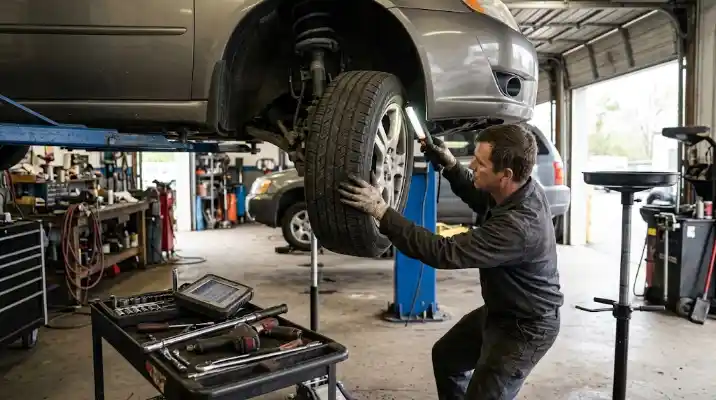
- Unbalanced tires: tires and wheels are balanced with small weights. If one falls off, or the tire wears unevenly, the wheel wobbles at speed. Rebalancing is quick and cheap.
- Damaged tires: a bulge in the sidewall, a flat spot, uneven wear or internal belt separation all cause vibration. A tire with a bulge is dangerous and should be replaced right away.
- Bent wheel: hitting a pothole or curb can bend a rim. A shop can spot it on the balancing machine.
- Worn suspension or steering parts: loose tie rod ends, ball joints or control arm bushings let the wheel move and can make a vibration worse.
- Wheel bearings: a failing bearing often adds a humming or growling noise that changes when you turn.
Wheel alignment on its own usually makes a car pull to one side or wear tires unevenly rather than shake. Misalignment can still cause the uneven wear that leads to vibration, so shops often check both.
Why Does My Steering Wheel Shake?
A steering wheel that shakes at speed almost always points to the front axle: a front tire out of balance or damaged, a bent front wheel or worn front steering parts. If it only shakes when you brake, look at the front brake rotors.
Car Shaking When Braking
If the steering wheel shakes or the brake pedal pulses as you slow down, especially from highway speed, the front brake rotors are the usual suspect. Rotors are often described as “warped,” but the more common cause is uneven thickness or uneven pad material deposited on the rotor surface after hard braking or heat. As the rotor spins, the pads grip unevenly and you feel it.
- Uneven rotors: the rotors are resurfaced, if thick enough, or replaced, usually along with new pads.
- Sticking caliper: a caliper that does not release keeps rubbing, overheating the rotor. You may notice a burning smell or the car pulling to one side.
- Worn pads: pads worn down to metal cause grinding and damage rotors quickly.
- Loose wheel or suspension parts: can make braking shudder worse.
Safety note: if the car pulls hard to one side when braking, the pedal feels soft or sinks, or you hear metal grinding, have the brakes inspected before driving further. Brakes are not a repair to put off.
Car Shaking at Idle
If the car shakes while stopped at a light but smooths out when moving, the engine is running unevenly or its mounts are no longer absorbing normal vibration.
- Engine misfire: worn spark plugs, a failing ignition coil, a clogged fuel injector or low compression make one cylinder skip. The check engine light often comes on, and it flashes when the misfire is severe.
- Vacuum leak: a cracked hose lets extra air in, causing a rough, sometimes high idle.
- Dirty throttle body or idle air control: carbon buildup can cause a rough or hunting idle.
- Worn engine mounts: rubber mounts crack and collapse with age. The shaking is usually worst in Drive or Reverse while stopped, and you may hear a clunk when shifting.
- Dirty air filter or fuel filter: can make idle rougher on some engines.
Car Shaking When Accelerating
A vibration that appears or gets worse when you press the accelerator, then eases when you cruise, points to parts that carry engine power to the wheels.
- Inner CV joint or CV axle: on front-wheel-drive cars, a worn inner joint causes shaking under acceleration. A torn CV boot is an early warning.
- Engine or transmission mounts: under load the engine twists, and worn mounts let that movement shake the car.
- Driveshaft or U-joints: on rear-wheel-drive and all-wheel-drive vehicles, a worn U-joint or unbalanced driveshaft vibrates under load.
- Misfire under load: weak coils or plugs may only misfire when the engine works hard, such as merging or climbing.
- Transmission problems: shuddering during shifts or at certain speeds can come from low or old fluid or a torque converter problem.
Car Shaking When Turning
Vibration or clicking when you turn usually comes from a worn outer CV joint on front-wheel-drive cars, a failing wheel bearing or worn steering components. A clicking noise during tight, slow turns, such as in a parking lot, is the classic sign of a worn outer CV joint.
What Does It Cost to Fix a Shaking Car?
| Repair | Typical cost |
|---|---|
| Tire balance | $15–$25 per wheel ($60–$100 for four) |
| Wheel alignment | $100–$200 |
| New tire | $100–$300+ each |
| Brake pads and rotors | $250–$600 per axle |
| Brake caliper | $300–$800 per side |
| Spark plugs | $100–$350 |
| Ignition coil | $150–$400 each |
| Engine or transmission mount | $200–$600 each |
| CV axle | $250–$800 |
| Wheel bearing | $200–$600 per wheel |
| Tie rod end | $150–$400 |
| Driveshaft or U-joint | $200–$1,000+ |
Is It Safe to Drive a Car That Is Shaking?
A mild vibration at one speed range, such as an unbalanced tire, is usually safe to drive on carefully until you can get it checked in the next few days. Some shaking is a warning to stop now:
- Violent or sudden shaking, especially if it keeps getting worse.
- A flashing check engine light, which signals a severe misfire that can overheat and damage the catalytic converter.
- A wheel that feels loose or a clunking from one corner, which could mean loose lug nuts or a failing bearing.
- A visible tire bulge or the steering suddenly pulling hard.
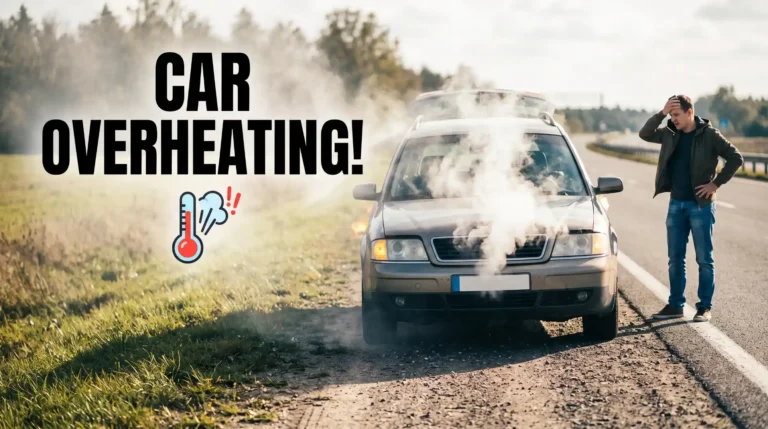
- Shaking with a burning smell, smoke or grinding brakes.
In any of these cases, pull over safely, turn on your hazard lights and have the car inspected or towed.
Simple Checks You Can Do Yourself
- Check the tire pressure on all four tires with a gauge and set them to the pressure on the driver’s door-jamb sticker.
- Look at each tire for bulges, cuts, flat spots or uneven wear, and feel the tread for cupping.
- Check that the lug nuts are tight, especially after recent tire work.
- Look for snow, ice or mud packed inside the wheels in winter, which can throw the balance off.
- Note whether the check engine light is on. An inexpensive OBD-II scanner can read misfire codes such as P0300 to P0308.
- With the car parked and the parking brake on, have someone watch the engine while you shift between Drive and Reverse. Big engine movement suggests a worn mount.
How to Prevent Shaking and Vibration
- Rotate your tires every 5,000–7,500 miles and balance them when you notice a vibration.
- Keep tires at the recommended pressure and replace them before the tread is worn out.
- Get an alignment after hitting a big pothole or curb, or when you buy new tires.
- Follow your service schedule for spark plugs and filters.
- Avoid riding the brakes on long downhill stretches to keep rotors from overheating.
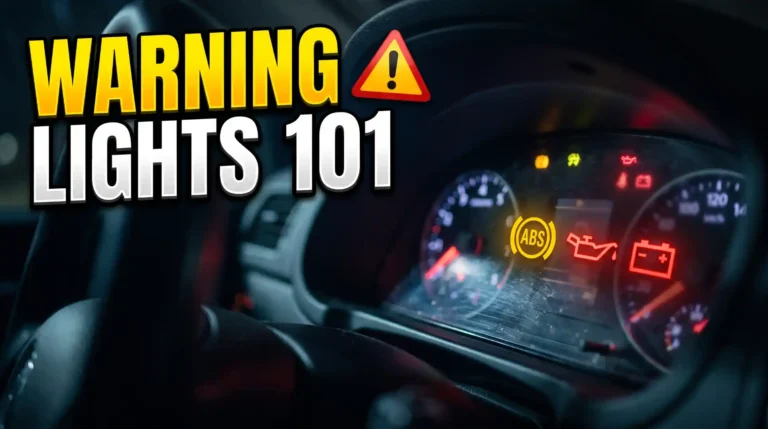
For other symptoms, see our warning lights and car problems guides, and check typical prices in our repair cost guides.
Car Shaking FAQ
The most common cause is an unbalanced or damaged tire, especially if the shaking appears between about 45 and 70 mph. Other causes include bent wheels, worn suspension parts, wheel bearings, CV axles and uneven brake rotors.
Shaking or a pulsing pedal when braking usually means the brake rotors have uneven thickness or pad deposits, often called warped rotors. A sticking caliper or worn pads can also cause it.
Shaking at idle is usually caused by an engine misfire from worn spark plugs or a bad ignition coil, a vacuum leak, a dirty throttle body or worn engine mounts.
Shaking under acceleration often comes from a worn inner CV joint or axle, worn engine or transmission mounts, a driveshaft or U-joint problem, or a misfire that only happens under load.
Misalignment usually makes a car pull to one side and wears tires unevenly rather than causing shaking directly. The uneven tire wear it causes can lead to vibration, so alignment and balance are often checked together.
A mild shake at one speed is usually safe for a short time, but get it checked soon. Stop driving if the shaking is violent, getting worse, or comes with a flashing check engine light, a loose-feeling wheel or grinding brakes.
It depends on the cause. A tire balance costs about $15 to $25 per wheel, pads and rotors about $250 to $600 per axle, an engine mount $200 to $600, and a CV axle about $250 to $800.
Yes. Under- or over-inflated tires can cause vibration and uneven handling. Check all tires with a gauge and set them to the pressure listed on the driver door-jamb sticker.