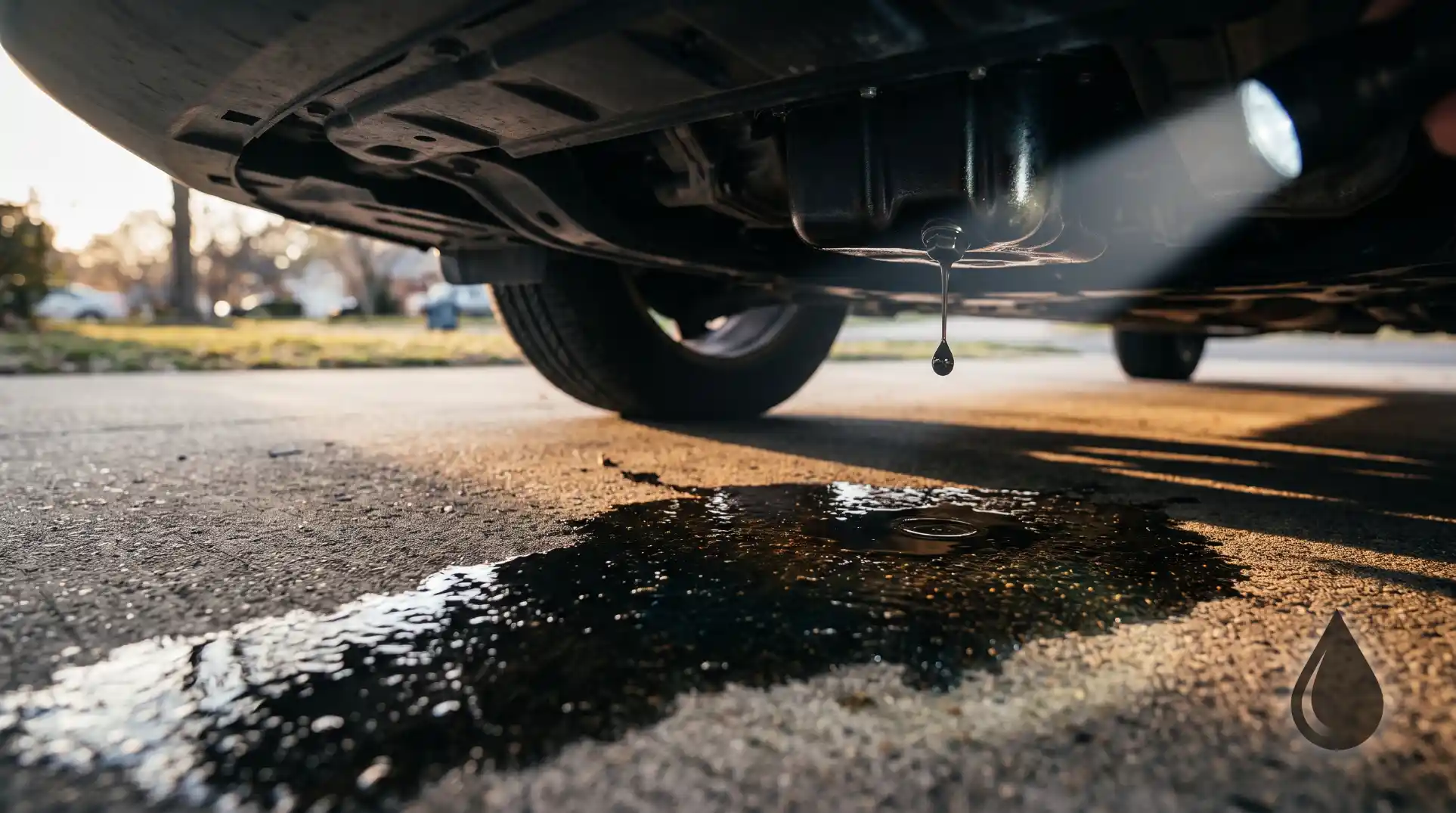
Car Leaking Oil: Causes, Fixes and Costs
A car leaking oil usually has a worn gasket or seal: the most common culprits are the valve cover gasket, the oil pan gasket or drain plug, the oil filter, and on higher-mileage engines the front or rear main seal. Engine oil drips are brown to black, slippery, and smell like petroleum. Repairs range from a few dollars for a loose drain plug or filter to about $200–$500 for a valve cover gasket, $400–$1,200 for an oil pan gasket, and $1,000–$2,000+ for a rear main seal.
Key Takeaways
- Check the oil level first: keep it topped up while you arrange a repair.
- Engine oil: amber when new, brown to black when used, slick and oily.
- Cheapest fixes: tighten or replace the drain plug washer or oil filter.
- Common repair costs: valve cover gasket $200–$500; oil pan gasket $400–$1,200; rear main seal often $1,000–$2,000+.
- Burning smell or smoke: oil dripping on hot exhaust parts can be a fire risk; get it checked soon.
Is It Oil? Identify the Leak by Color
| Fluid | Color | Feel and smell | Where it drips |
|---|---|---|---|
| Engine oil | Amber (new) to brown or black | Slick, smells like petroleum | Front or middle, under the engine |
| Transmission fluid | Red or pink (brown when old) | Thin, oily, can smell burnt | Middle of the car |
| Coolant/antifreeze | Green, orange, pink or blue | Thin, sweet smell | Front, near the radiator |
| Brake fluid | Clear to yellowish brown | Slippery, slightly oily | Near wheels or behind the engine |
| Power steering fluid | Red, pink or amber | Thin, oily | Front, near the steering rack |
| Water (AC condensation) | Clear | Like water, no smell | Under the front passenger footwell; normal |
Tip: slide a piece of white cardboard under the engine overnight. The color, size and position of the spots tell your mechanic a lot.
Common Causes of an Oil Leak
| Leak source | Signs | Typical repair cost |
|---|---|---|
| Loose drain plug or worn washer | Drip at the bottom of the oil pan, often after an oil change | $0–$50 |
| Loose or bad oil filter / double gasket | Oil around the filter after a recent oil change | $0–$75 |
| Valve cover gasket | Oil on top and sides of the engine; burning smell on exhaust | $200–$500 |
| Oil pan gasket | Oil along the bottom edge of the pan | $400–$1,200 |
| Oil filter housing or cooler gasket | Oil near the filter area | Varies by engine |
| Front crankshaft (timing cover) seal | Oil behind the drive belt pulley | Often a few hundred dollars or more |
| Rear main seal | Oil where the engine meets the transmission | $1,000–$2,000+ (transmission must come out) |
| Oil pressure sensor or cooler lines | Drip near the sensor or lines | Usually modest |
Costs vary a lot by vehicle and labor rate. Leaks that require removing the transmission, subframe or intake are much more expensive.
Signs Your Car Is Leaking Oil
- Brown or black spots under the car
- Burning oil smell after driving, often from oil on the exhaust
- Blue-gray smoke from under the hood
- Oil level dropping between changes
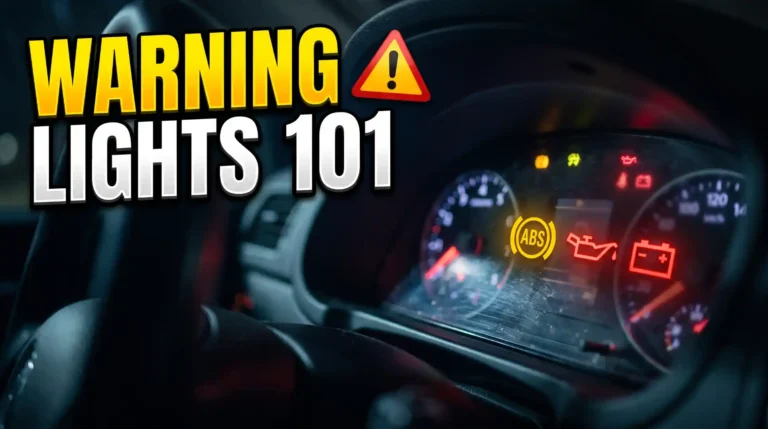
- Oil pressure warning light (low oil)
- Oily residue coating the engine or underside
Is It Safe to Drive With an Oil Leak?
A slow seep that loses a little oil between changes is usually not an emergency, as long as you keep the level topped up and fix it soon. It becomes urgent if:
- The oil pressure warning light comes on
- Oil is pouring or leaving a large puddle
- You smell burning oil or see smoke from under the hood
- Oil is dripping onto the exhaust, belts or brake parts
Safety note: If the oil pressure light comes on while driving, pull over safely and turn off the engine. Running an engine low on oil can destroy it within minutes. Oil dripping onto a hot exhaust manifold can also start a fire. A raw fuel smell is a different problem from burning oil; see why a car smells like gas.
What You Can Do Yourself
- Check the level: park on level ground, wait a few minutes after shutting off, and read the dipstick. Top up with the oil grade in your owner’s manual.
- Check the drain plug and filter: especially if the leak started after an oil change.
- Clean the engine area: degrease and then look for fresh oil after a short drive to find the source.
- Try a stop-leak additive for small seeps: it can soften old seals and slow minor leaks, but it is not a permanent fix and will not stop large leaks.
- Keep records: note how much oil you add and how often.
How to Prevent Oil Leaks
- Change oil on schedule; old, dirty oil wears seals faster.
- Use the correct oil viscosity for your engine.
- Make sure the drain plug gets a new crush washer and correct torque at oil changes.
- Fix small leaks early before they damage other parts.
- Avoid scraping the oil pan on curbs or road debris.
Oil Leak FAQ
Most oil leaks come from worn gaskets and seals, such as the valve cover gasket, oil pan gasket, or main seals, or from a loose drain plug or oil filter.
It can be nearly free for a loose drain plug, about $200 to $500 for a valve cover gasket, $400 to $1,200 for an oil pan gasket, and $1,000 or more for a rear main seal.
A small leak is usually safe short term if you keep the oil topped up. Stop driving if the oil pressure light comes on, oil is pouring out, or you see smoke.
Engine oil is amber when new and brown to black when used. Red fluid is usually transmission or power steering fluid, and green, orange or pink is usually coolant.
They can slow small seeps from hardened seals, but they are not a permanent repair and will not fix large leaks or damaged gaskets.
Oil may be leaking onto hot engine or exhaust parts, often from a valve cover gasket. Have it checked soon.
Yes. Running low on oil increases friction and heat and can cause severe engine damage.