Parking Brake: How It Works and Why It Sticks
The parking brake, also called the emergency brake or e-brake, is a separate brake system that holds the car in place when parked, usually by mechanically applying the rear brakes through a cable or, on newer cars, with small electric motors in the rear calipers. It sticks most often because of corroded or frozen cables, seized caliper mechanisms, or, on electronic systems, a weak battery or a fault in the control module. Most cable repairs cost about $150 to $400, and electronic parking brake motors or calipers about $300 to $800 per side.
How a Parking Brake Works
Cable-Operated Parking Brakes
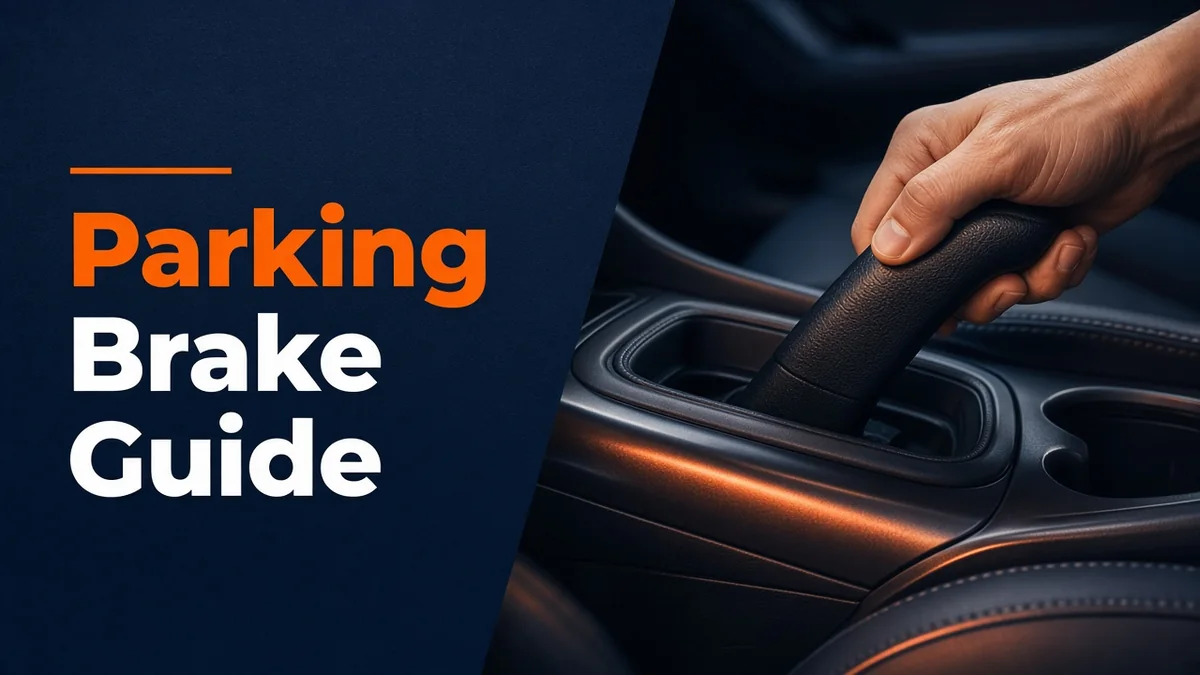
On older and many current vehicles, a hand lever between the seats or a small pedal on the left side of the footwell pulls a steel cable. The cable runs under the car to the rear brakes and forces the brake shoes or pads against the drum or rotor. Cars with rear disc brakes often use either a small drum inside the rotor hub, called a drum-in-hat, or a lever built into the rear caliper.
Electronic Parking Brakes
Many newer cars have a button or switch instead of a lever. Pressing it sends a signal to a control module, which powers small electric motors on the rear calipers to clamp the pads. Electronic parking brakes often release automatically when you drive off with your seatbelt fastened and may include an auto-hold feature that keeps the car stopped at lights.
| Type | How you use it | Common problems |
|---|---|---|
| Hand lever | Pull up to apply; press the button and lower to release | Stretched or seized cables, weak holding |
| Foot pedal | Press to apply; pull a handle or press again to release | Frozen or rusted cables, release mechanism failure |
| Electronic (EPB) | Pull or press a switch | Motor or module faults, weak battery, stuck caliper |
Types of Parking Brake Controls
| Type | Where You Find It | Common In |
|---|---|---|
| Center hand lever | Between the front seats | Many older and some current cars |
| Foot pedal | Far left of the footwell, released with a pedal or a pull handle | Many trucks, SUVs and older sedans |
| Stick or T-handle | Under the dashboard | Older vehicles and some vans |
| Electronic parking brake (EPB) | Button or switch on the center console | Most newer cars and SUVs |
| Auto-hold (with EPB) | Separate button that holds the car at stops | Many newer vehicles |
Electronic parking brakes often engage automatically when you shift into Park or turn off the car, and release when you drive away with your seatbelt fastened.
Why Is My Parking Brake Stuck?
- Rusted or seized cables: moisture and road salt corrode the cable inside its housing.
- Frozen parts: water can freeze in the cable or brake assembly overnight in winter.
- Seized caliper or drum components: the mechanism in the rear brake sticks.
- Weak battery (electronic systems): the motors need strong voltage to release.
- Module or sensor fault: the electronic parking brake refuses to release and shows a warning.
- Brake pads stuck to rotors: after sitting a long time, pads can rust to the rotor surface.
How to Release a Stuck Parking Brake
- Try the normal release several times: apply and release firmly two or three times.
- Rock the car gently: with your foot on the brake, shift between Drive and Reverse (or first and reverse in a manual) to shake the mechanism loose.
- If frozen: let the engine run to warm the car, or park in a warmer place; do not pour boiling water on brake parts.
- For electronic brakes: check the battery and try the release with the engine running and your foot on the brake pedal.
- Look for a manual release: some electronic systems have an emergency release procedure described in the owner’s manual.
- If it still will not release: call for roadside help rather than forcing the car to move.
A weak battery is a common cause of electronic parking brake problems; our guide to telling whether your car battery is dead explains how to check it, and charging a car battery covers how to bring it back up.
Do not drive with the parking brake on: dragging brakes overheat quickly, which can glaze pads, damage rotors and drums, and in extreme cases start a fire. If the parking brake warning light stays on while driving, or you smell burning from the rear, stop and check it.
What Happens If You Drive With the Parking Brake On
- Overheated rear brakes: pads, shoes and rotors can glaze or warp.
- Burning smell and smoke from the rear wheels.
- Worn-out linings: parking brake shoes or pads can wear through quickly.
- Reduced braking: overheated brakes fade and stop less effectively.
- Poor fuel economy and sluggish acceleration.
A short, slow drive with the parking brake partly on usually causes no lasting damage. Miles of driving, especially at speed, may require new pads or shoes and a brake inspection. Most cars chime or show a warning if you drive with the parking brake applied.
Parking Brake Warning Light
A red light showing a circle with an exclamation point or the letter P means the parking brake is applied, or on some cars that the brake fluid is low. If the light stays on after releasing the parking brake, check the brake fluid level and have the brakes inspected. On electronic systems, an amber parking brake symbol usually means a fault. Our guide to dashboard symbols and meanings shows the common variations.
Should You Use the Parking Brake With an Automatic?
Yes. When you park an automatic car in Park without the parking brake, the car’s weight rests on a small metal pin in the transmission called the parking pawl. On a hill, that can make the shifter hard to move out of Park and adds strain over time. The best habit is to stop with the foot brake, apply the parking brake, then shift into Park. Using the parking brake regularly also keeps the cables and mechanism from seizing.
Using the Parking Brake in Winter
In freezing weather with slush or wet roads, cable parking brakes can freeze on overnight. Some drivers of manual cars leave the car in gear on flat ground instead, and automatic drivers can rely on Park on level ground, but on hills the parking brake should still be used. Our winter car prep guide covers other cold-weather habits.
How a Cable Parking Brake Is Adjusted
Cable parking brakes stretch and self-adjusters can stick, so the lever may pull up too far before holding. A shop typically adjusts it at the cable equalizer under the car or at an adjuster near the lever, and on rear drum brakes, adjusts the shoes first. A properly adjusted hand lever usually holds after a few clicks. Electronic parking brakes do not need routine adjustment, but they require a scan tool or service mode for rear brake work.
Parking Brake Repair Costs
| Repair | Typical cost |
|---|---|
| Parking brake adjustment | $50–$150 |
| Parking brake cable replacement | $150–$400 |
| Drum-in-hat shoes (rear) | $150–$350 |
| Electronic parking brake motor or actuator (per side) | $300–$800 |
| Rear caliper with integrated EPB (per side) | $300–$800 |
| EPB control module | $400–$1,200 |
After rear brake work on electronic systems, the calipers must be retracted and recalibrated with a scan tool, which some shops charge for separately. Brakes, including the parking brake, are checked in many state safety inspections.
Using the Parking Brake in an Emergency
If your main brakes fail, apply the parking brake gradually rather than yanking it, while downshifting to use engine braking. On electronic systems, holding the parking brake switch while moving usually triggers controlled emergency braking. Hard application of a cable brake at speed can lock the rear wheels and cause a skid.
Related guides: how to drive a manual car, car noises explained and car maintenance schedule by mileage.
Parking Brake FAQ
They are the same system. It holds the car when parked and can act as a backup if the main brakes fail.
Common causes are rusted or frozen cables, seized rear brake parts, and on electronic systems, a weak battery or a control module fault.
Often a weak battery or a system fault. Try releasing it with the engine running and your foot on the brake; if it still fails, check the manual or call for help.
Yes. Water in the cable or brake assembly can freeze in cold weather, especially after driving through slush.
Many hand levers are designed to hold firmly within about 3 to 8 clicks. If the lever pulls up much farther or the car rolls, the cable or rear brakes may need adjustment. Check your service manual.
In an emergency, many cars let you pull and hold the electronic parking brake switch to slow the car in a controlled way, often using the main brakes. Check your owner’s manual for how your vehicle behaves.