How to Drive a Manual Car: A Step-by-Step Beginner Guide
Learning how to drive a manual car takes a few hours of practice, not weeks. To drive a manual car, press the clutch all the way down, shift into first gear, then slowly lift the clutch until you feel it start to grab (the friction point) while gently pressing the gas. As the car moves, keep easing the clutch up fully. To change gears, lift off the gas, press the clutch, move to the next gear, and smoothly release the clutch while adding gas. Most beginners get comfortable after a few hours of practice in an empty parking lot.
This beginner guide explains the pedals and gear pattern, then walks through starting, moving off, shifting, stopping, reversing and hill starts, plus the mistakes that cause stalling and clutch wear.
Key Takeaways
- Three pedals: clutch (left foot), brake and gas (right foot).
- Find the friction point: where the clutch starts to grab and engine speed drops slightly.
- Shift up around 2,000–3,000 rpm in normal driving.
- Stopping: press the clutch before the car slows too much, or it will stall.
- Practice first in an empty, flat parking lot.
Know the Controls
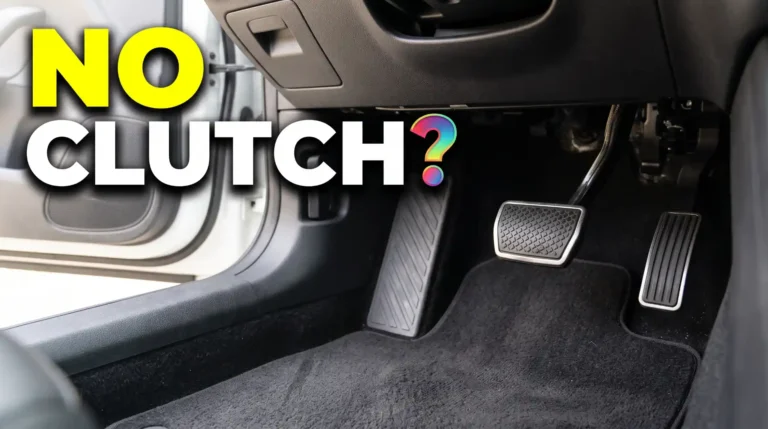
- Clutch pedal (far left): disconnects the engine from the transmission so you can change gears or stop without stalling. Use your left foot only.
- Brake (middle) and gas (right): both operated with your right foot, as in an automatic.
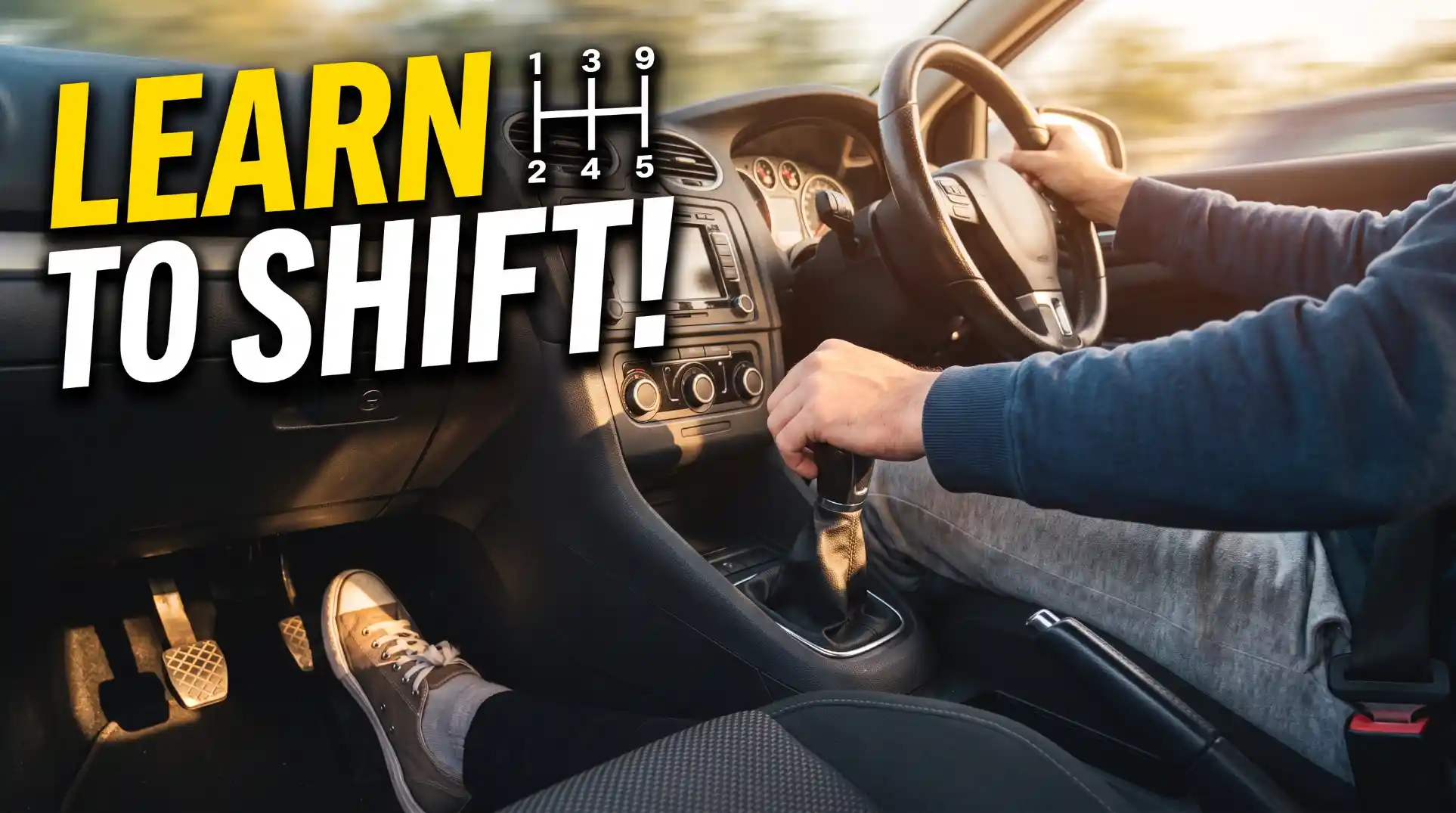
- Gear shifter: the pattern is printed on the knob, usually five or six forward gears in an H pattern, with reverse at one end. Many cars require you to push down or lift a collar to select reverse.
- Tachometer: shows engine speed (rpm) and helps you know when to shift.
- Parking brake: essential for hill starts and parking.
How to Start a Manual Car
- Adjust the seat so you can press the clutch fully to the floor with your knee slightly bent.
- Make sure the parking brake is on.
- Press the clutch pedal all the way down and hold it.
- Move the shifter to neutral: it should wiggle freely side to side.
- Start the engine. Most modern manual cars will not start unless the clutch is pressed.
How to Move Off in First Gear
- With the engine running, press the clutch fully and shift into first gear.
- Release the parking brake while holding the brake pedal if you are on any slope.
- Move your right foot to the gas.
- Slowly lift the clutch until you feel the friction point: the engine note drops slightly and the car wants to creep.
- Hold the clutch there briefly and gently press the gas to about 1,500 rpm.
- Keep lifting the clutch slowly while adding a little gas, then take your foot off the clutch completely once the car is moving smoothly.
If the car jerks and stalls, you released the clutch too quickly or gave too little gas. If the engine revs loudly while the car barely moves, you are giving too much gas or holding the clutch too long.
How to Shift Up
- Accelerate in first gear until the engine is around 2,000–3,000 rpm, or until it sounds busy.
- Lift your foot off the gas and press the clutch fully at the same time.
- Move the shifter smoothly to the next gear. Do not force it; guide it through the pattern.
- Release the clutch smoothly, a little faster than when starting off, while gently pressing the gas.
- Repeat for each higher gear.
Around town you will usually be in second or third; on the highway, the highest gears. Your car’s gear shift indicator, if it has one, suggests efficient shift points.
How to Slow Down and Downshift
- To slow gradually, lift off the gas and brake as needed; the car slows in gear.
- When your speed drops too low for your current gear and the engine starts to lug or shake, press the clutch, shift down one gear and release the clutch smoothly.
- For a smooth downshift, give a light blip of the gas while the clutch is pressed so the engine speed better matches the lower gear.
- You do not have to go through every gear when slowing; shifting from fifth to third, for example, is fine.
How to Stop
- Brake to slow down.
- Before the engine drops to idle speed, usually around 10 mph in higher gears, press the clutch fully so the car does not stall.
- Come to a stop holding the clutch and brake.
- Shift to neutral if you will wait more than a few seconds, and release the clutch to rest your leg while keeping your foot on the brake.
How to Reverse
Come to a complete stop first. Press the clutch, select reverse (using the collar or push-down if your car has one), and move off the same way as in first gear, using very little gas and slow clutch control. Reverse gear is low, so the car moves slowly.
How to Do a Hill Start
- Hold the car with the parking brake and press the clutch.
- Select first gear.
- Give a little more gas than on flat ground, about 1,500–2,000 rpm.
- Lift the clutch to the friction point until you feel the car pull against the brake and the rear of the car dip slightly.
- Release the parking brake while slowly lifting the clutch and adding gas.
Many newer manual cars have hill-start assist, which holds the brakes for a second or two after you release the brake pedal, giving you time to move your foot to the gas.
Common Beginner Mistakes
- Riding the clutch: resting your foot on the clutch pedal wears it out. Keep your left foot on the dead pedal or floor when not shifting.
- Holding the car on a hill with the clutch: use the brake or parking brake instead.
- Resting your hand on the shifter can wear internal parts.
- Coasting in neutral reduces control and engine braking; stay in gear.
- Lugging the engine: driving too slowly in a high gear makes the car shudder; downshift.
- Over-revving: shifting down too far at high speed can damage the engine. Shift one gear at a time until you are confident.
What to Do If You Stall
Stalling happens to everyone while learning. Stay calm: turn on your hazard lights if you are in traffic, press the clutch, shift to neutral, restart the engine and try again with a slower clutch release and a bit more gas. Stalling occasionally will not damage the car.
Parking a Manual Car
Stop, set the parking brake firmly and turn off the engine. Leave the car in first gear, or in reverse if facing downhill, as an extra safeguard against rolling. On steep hills, also turn your wheels toward the curb when facing downhill and away from it when facing uphill. Driving an automatic instead? Here is how an automatic transmission works without a clutch pedal. Smooth, gentle shifting also saves fuel, as fueleconomy.gov’s driving and maintenance tips explain.
A Simple Practice Plan
- In an empty lot, practice finding the friction point and creeping forward without gas.
- Practice starting off smoothly and stopping without stalling, over and over.
- Shift from first to second and back.
- Practice reversing into a space.
- Try gentle slopes, then quiet streets, then busier roads as you gain confidence.
Manual Driving FAQ
Press the clutch, shift into first, slowly lift the clutch to the friction point while gently adding gas, then release the clutch fully as the car moves. To shift, lift off the gas, press the clutch, change gear and release smoothly.
It is the point where the clutch begins to engage and the car starts to move. You feel the engine speed drop slightly and the car begin to creep.
In normal driving, usually around 2,000 to 3,000 rpm, or when the engine starts to sound busy. Downshift if the engine starts to lug or shake.
Usually because the clutch is released too quickly, not enough gas is given, or the clutch is not pressed when coming to a stop.
Hold the car with the parking brake, select first, raise the revs slightly, bring the clutch to the friction point, then release the parking brake while lifting the clutch and adding gas.
Occasional stalling while learning does not harm the car. Just press the clutch, shift to neutral and restart.
Brake normally at higher speeds, then press the clutch before the engine drops to idle speed so the car does not stall as you stop.
Many people learn the basics in a few hours of practice and feel comfortable in traffic after a week or two of regular driving.