Ceramic vs Semi-Metallic Brake Pads: Which Should You Buy?
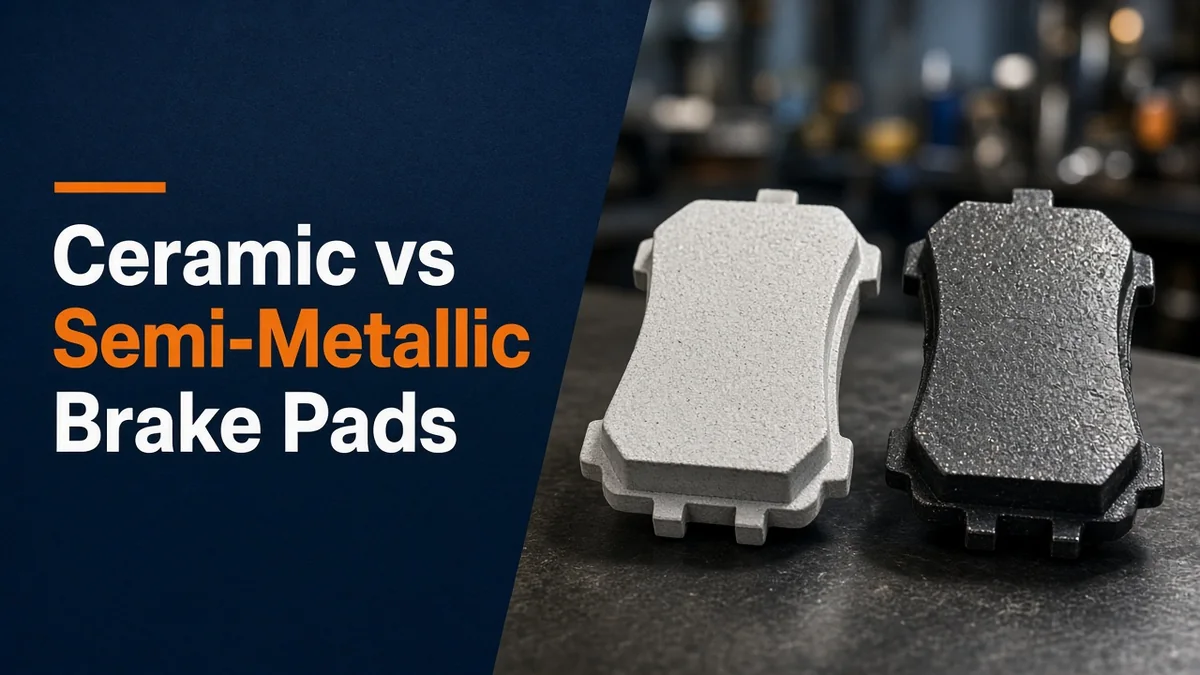
Ceramic brake pads are quieter, create less visible dust, are gentler on rotors and usually last longer, which makes them the best choice for most daily-driven cars and SUVs. Semi-metallic brake pads grip harder when hot, handle heat better and cost less, so they suit trucks, towing, heavy loads, mountain driving and performance use. The best option is usually the pad type your vehicle came with from the factory, unless your driving has changed.
Ceramic Vs. Semi-Metallic Brake Pads: Comparison Table
| Feature | Ceramic | Semi-Metallic | Organic (NAO) |
|---|---|---|---|
| Material | Ceramic fibers, fillers, small amount of metal fibers | About 30%–70% metal (steel, iron, copper) plus fillers | Fibers, rubber, glass, resins, Kevlar |
| Noise | Quietest | Can be noisy | Quiet |
| Brake dust | Light-colored, low visibility | Heavy, dark dust | Moderate |
| Heat tolerance | Good for normal driving | Best; resists fade under heavy use | Lowest |
| Cold bite | Good | Can be weaker until warm | Good |
| Pad life | Longest | Moderate | Shortest |
| Rotor wear | Gentle | Higher | Gentle |
| Typical price per axle (pads only) | About $40–$120 | About $30–$100 | About $20–$60 |
| Best for | Daily drivers, sedans, SUVs, EVs | Trucks, towing, performance, mountain driving | Light, older, low-speed vehicles |
Prices are typical US retail ranges for aftermarket pads for common vehicles and vary by brand and vehicle. Professional installation usually adds roughly $100 to $200 per axle.
What Are Ceramic Brake Pads?
Ceramic pads use a dense ceramic compound, similar to pottery, bonded with fibers and a small amount of fine metal. They were developed to reduce noise and dust while offering stable braking. Many modern cars, especially Asian and domestic sedans and crossovers, come with ceramic or low-metallic ceramic pads from the factory.
Pros of Ceramic Pads
- Quiet: their vibration frequency is mostly above the range of human hearing.
- Clean wheels: the dust is light-colored and less sticky, so it is less noticeable.
- Long life: often outlast semi-metallic pads under normal use.
- Rotor-friendly: less abrasive, so rotors last longer.
- Consistent feel across normal temperatures and weather.
Cons of Ceramic Pads
- Higher cost than most semi-metallic pads.
- Less heat capacity: under repeated hard braking, towing or long descents they can fade sooner than semi-metallics.
- Transfer more heat into rotors and calipers in some applications rather than absorbing it.
- Not ideal for severe-duty use such as heavy towing or track days.
What Are Semi-Metallic Brake Pads?
Semi-metallic pads contain a large percentage of metal fibers, usually steel, blended with graphite and fillers. The metal conducts heat away from the rotor and gives strong friction. Many trucks, heavy SUVs and performance cars come with semi-metallic pads.
Pros of Semi-Metallic Pads
- Strong braking bite, especially when hot.
- Excellent heat tolerance and fade resistance under heavy loads.
- Lower price for most vehicles.
- Wide temperature range for demanding use.
Cons of Semi-Metallic Pads
- Noisier: squeal and grinding sounds are more common.
- More brake dust: dark and harder to clean off wheels.
- Harder on rotors: more abrasive, so rotors wear faster.
- Weaker cold bite in some formulations until the pads warm up.
What About Organic Brake Pads?
Organic, or non-asbestos organic (NAO), pads use softer materials such as fibers, rubber and resins. They are quiet and inexpensive, but wear quickly, create moderate dust and fade under heat. They are best for lighter vehicles driven gently. Most modern vehicles use ceramic or semi-metallic pads instead.
Which Brake Pads Are Best for Your Driving?
| Driving Type | Best Pad Choice |
|---|---|
| Daily commuting, city and highway | Ceramic |
| Family SUV or minivan, normal loads | Ceramic |
| Electric vehicles and hybrids | Ceramic or low-dust pads designed for EVs (regenerative braking means pads are used less) |
| Towing trailers or hauling heavy loads | Semi-metallic |
| Mountain or steep-grade driving | Semi-metallic |
| Pickup trucks and heavy-duty vehicles | Semi-metallic (or severe-duty ceramic rated for the vehicle) |
| Performance or spirited driving | Performance semi-metallic or performance ceramic |
| Tight budget, light car, gentle driving | Organic or entry-level ceramic |
Can You Switch From Semi-Metallic to Ceramic?
Usually yes, if a ceramic pad is made for your vehicle. Many drivers switch to reduce dust and noise. A few tips:
- Check your owner’s manual and the original equipment pad type first, especially on heavy or performance vehicles.
- Replace or resurface rotors when changing pad compounds, so the new pads bed in on a fresh surface.
- Do not mix pad types on the same axle. Using different types front and rear is sometimes done, but follow the vehicle maker’s guidance.
- Follow the pad maker’s bedding-in procedure to transfer an even layer of pad material to the rotor.
How Long Do Ceramic and Semi-Metallic Pads Last?
Pad life depends far more on driving style, vehicle weight and terrain than on pad type. As a rough guide, many pads last about 30,000 to 70,000 miles. Ceramic pads often sit toward the higher end for normal commuting, while semi-metallic pads may wear faster but protect against fade in severe use. Heavy stop-and-go traffic, towing and aggressive braking shorten any pad’s life.
Have pad thickness checked at every tire rotation. Our car maintenance schedule by mileage shows when brakes should be inspected.
Signs You Need New Brake Pads
- Squealing from the metal wear indicator
- Grinding, which means metal contact and possible rotor damage
- Longer stopping distances or a softer pedal
- Vibration or pulsation when braking
- Brake warning light on cars with electronic pad sensors
- Pad material thinner than about 3 mm (1/8 inch)
Noises are often the first warning. Our guide to common car noises helps you tell a pad squeal from other problems, and why your car is shaking covers vibration when braking.
How to Choose Quality Brake Pads
- Buy pads made specifically for your vehicle’s make, model, year and brake package
- Look for pads that include new hardware (clips and shims) and wear indicators
- Prefer reputable brands and OE-equivalent or better ratings
- Check that pads meet copper-reduction rules (LeadFree / “N” or “LF” markings in the US)
- Consider the warranty, but remember “lifetime” warranties usually cover only the pads, not labor
Brakes are also checked in many state safety inspections. Our car inspection guide explains what is tested.
Safety note: Brake work affects your ability to stop. If you are not experienced, have pads installed by a qualified technician. Always replace pads in pairs on the same axle, torque caliper bolts to specification, pump the pedal before driving, and test the brakes at low speed first.
Related guides: Car maintenance schedule · Car noises explained · Car inspection guide
Brake Pad FAQs
For most daily drivers, yes. Ceramic pads are quieter, cleaner and last longer. Semi-metallic pads are better for towing, heavy loads, mountain driving and performance use because they handle heat better.
Ceramic pads usually last the longest under normal driving conditions, while organic pads wear fastest. Driving habits and vehicle weight matter more than pad type.
Yes, if ceramic pads are made for your truck and suited to how you use it. For heavy towing or hauling, severe-duty semi-metallic pads are often the better choice.
Squeaks can come from missing shims, lack of lubrication on contact points, glazed rotors or skipping the bedding-in process. Have the installation checked if it continues.