Winter Car Prep: Snow Tires, What Makes a Car Good in Snow, and Must-Have Gear
Good winter car prep starts with the tires. The single biggest upgrade for winter driving is a set of four winter tires, even on a front-wheel-drive car. Putting snow tires only on the front makes the rear end more likely to slide when you brake or turn, which is why tire makers and most automakers recommend all four. Beyond tires, get your car ready by testing the battery, checking antifreeze, fitting winter wiper blades and washer fluid, and packing an emergency kit with a scraper, shovel and blankets.
This guide covers winter tires, whether all-wheel drive is really better in snow, what makes a car good in winter, a complete prep checklist and the gear worth keeping in your car.
Key Takeaways
- Fit four winter tires, not two, on any drivetrain.
- Tires beat drivetrain: AWD helps you get moving, but it does not help you stop or turn.
- Check before winter: battery, antifreeze, wipers, washer fluid, lights and tire pressure.
- Tire pressure drops about 1 psi for every 10°F drop in temperature.
- Carry a kit: scraper, shovel, blanket, flashlight, jumper cables or a jump starter, water and snacks.
Snow Tires on a Front-Wheel-Drive Car: Do You Need All Four?
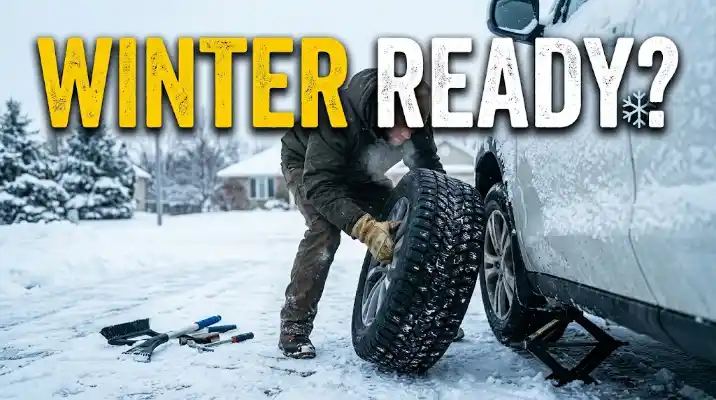
Yes. It is tempting to put winter tires only on the front drive wheels, but it creates a car with much more grip at the front than the back. When you brake or turn on snow or ice, the rear tires can lose traction first and the car can spin. Four matching winter tires keep the car balanced. The same applies to rear-wheel-drive and all-wheel-drive vehicles.
Winter Tires vs All-Season vs All-Weather
| Tire type | How it performs in winter | Best for |
|---|---|---|
| All-season | Adequate in light snow; rubber hardens and grip drops in cold temperatures | Mild winters with occasional light snow |
| All-weather (3-peak mountain snowflake symbol) | Much better snow traction than all-season; can stay on all year | Moderate winters where you do not want to swap tires |
| Dedicated winter (snow) tires | Softest rubber, deep tread and many biting edges; best on snow, slush and ice | Regular snow, ice or temperatures below about 45°F |
| Studded winter tires | Extra grip on ice | Icy regions; legal only in some states and seasons |
Look for the three-peak mountain snowflake symbol on the sidewall, which means the tire meets a standard snow traction test. Many drivers keep winter tires on a second set of wheels so swapping is quick and cheaper each season.
Is All-Wheel Drive Better in Snow?
All-wheel drive and four-wheel drive help you accelerate and climb hills in snow because power goes to all four wheels. They do not help you stop or steer, which depend almost entirely on tire grip. A front-wheel-drive car on four winter tires often stops and turns better in snow than an all-wheel-drive SUV on all-season tires. The best combination is AWD plus winter tires, but tires come first.
| Drivetrain | Snow traits |
|---|---|
| Front-wheel drive | Good in snow for most drivers; engine weight over the drive wheels helps traction |
| All-wheel drive | Best for getting moving and climbing; no advantage when braking |
| Four-wheel drive (trucks and SUVs) | Great in deep snow when engaged; high ground clearance helps |
| Rear-wheel drive | Hardest in snow without winter tires; much improved with them |
What Makes a Car Good in Snow?
- Winter tires matter most.
- All-wheel or four-wheel drive for getting started on slippery hills.
- Ground clearance so the car does not plow or get stuck in deeper snow.
- Stability and traction control, standard on modern cars, to limit wheel spin and skids.
- Good headlights and heated features such as heated mirrors, seats, wiper areas and a remote start.
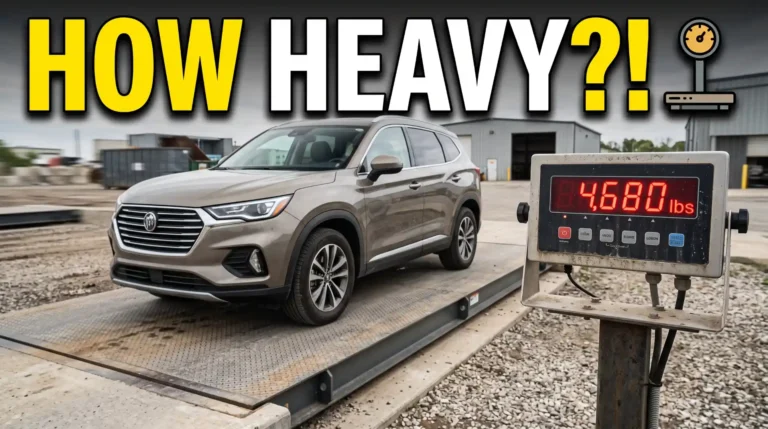
- Predictable handling and a reasonable weight; heavy vehicles take longer to stop.
Winter Car Prep Checklist
- Test the battery: cold weather exposes weak batteries. Most auto parts stores test for free.
- Check antifreeze: make sure coolant is at the right level and strength for your coldest temperatures.
- Replace wiper blades and fill up with winter washer fluid rated for freezing temperatures.
- Check tire pressure often; it drops about 1 psi per 10°F. Inflate to the door-jamb pressure when the tires are cold.
- Check tread depth: for winter traction you want well above the legal minimum.
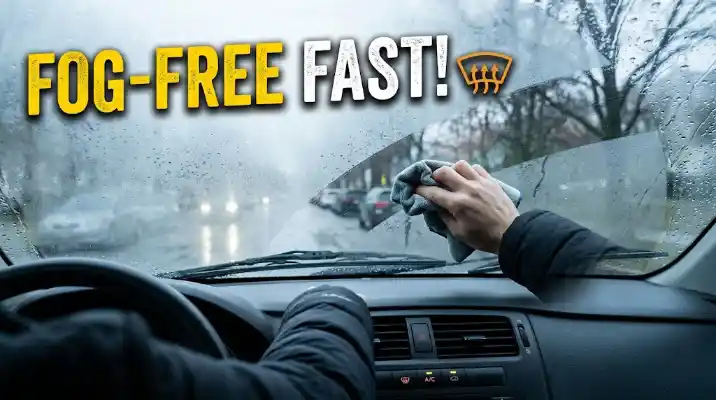
- Test the heater and defroster before you need them.
- Check all lights so others can see you in snow and short days.
- Change the oil to the grade your manual recommends for cold weather if a change is due.
- Inspect belts and hoses for cracks.
- On 4x4s, test that four-wheel drive engages.
Winter Emergency Kit for Your Car
- Ice scraper and snow brush
- Compact snow shovel
- Blanket, gloves, hat and warm clothes
- Flashlight or headlamp with spare batteries
- Jumper cables or a portable jump starter
- Phone charger or power bank
- Water and non-perishable snacks
- First-aid kit
- Traction aid such as sand, kitty litter or traction mats
- Reflective triangles or flares
- Tire chains or cables if you drive in mountains where they may be required
Car Covers and Snow Gear
A fitted outdoor car cover or windshield snow cover saves scraping time, but covers can freeze to the car in wet snow and ice. A windshield cover is a simpler, cheaper option for many drivers. If you park outside in very cold climates, an engine block heater makes cold starts easier. Always clear snow from the roof, hood and lights before driving; loose snow blowing off can blind other drivers, and some states require you to remove it.
Safe Winter Driving Tips
- Slow down and accelerate and brake gently.
- Leave much more following distance, roughly 8–10 seconds on snow or ice.
- Do not use cruise control on slippery roads.
- With anti-lock brakes, press firmly and steadily; the pedal may pulse, which is normal.
- If you skid, look and steer where you want to go.
- Watch for black ice on bridges, overpasses and shaded spots.
- Keep your fuel tank at least half full in winter.
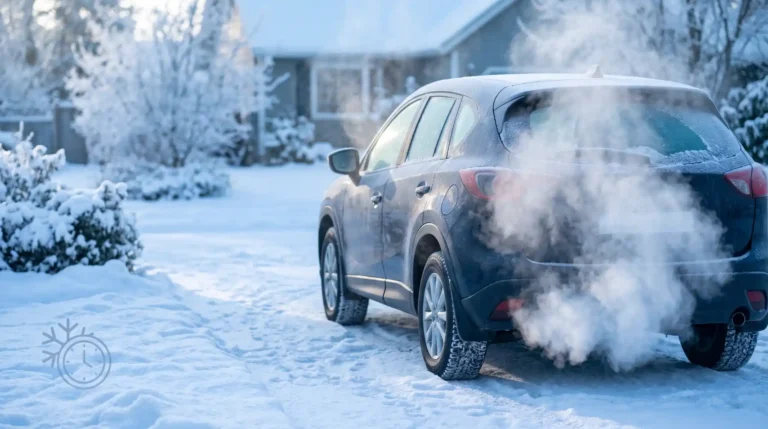
- If you get stuck in a storm, stay with the car, run the engine only briefly for heat, keep the exhaust pipe clear of snow to avoid carbon monoxide, and make yourself visible.
Try the calculator: use our tire size calculator to compare tire sizes. Wondering how long to idle before driving off on cold mornings? See whether you should warm up your car in winter.
Winter Driving FAQ
Yes. Tire makers and most automakers recommend four winter tires. Putting them only on the front can make the rear slide when braking or turning.
Yes, especially with winter tires. The engine weight over the front drive wheels helps traction, and a FWD car on winter tires often outperforms an AWD vehicle on all-season tires.
No. AWD helps you accelerate and climb hills, but it does not help you stop or turn. Winter tires make a bigger difference for most drivers.
When temperatures regularly drop below about 45°F, since all-season rubber loses grip in the cold, and before the first snow.
An ice scraper, snow shovel, blanket and warm clothes, flashlight, jumper cables or jump starter, phone charger, water, snacks, first-aid kit and a traction aid such as sand or kitty litter.
Air contracts in the cold. Tire pressure drops about 1 psi for every 10 degree Fahrenheit drop, so check and refill tires often in winter.
All-weather tires carry the three-peak mountain snowflake symbol and grip much better in snow than all-season tires, while still being usable all year.
A cover or windshield cover saves scraping, but full covers can freeze to the car in wet snow. A windshield cover is often the easier option.