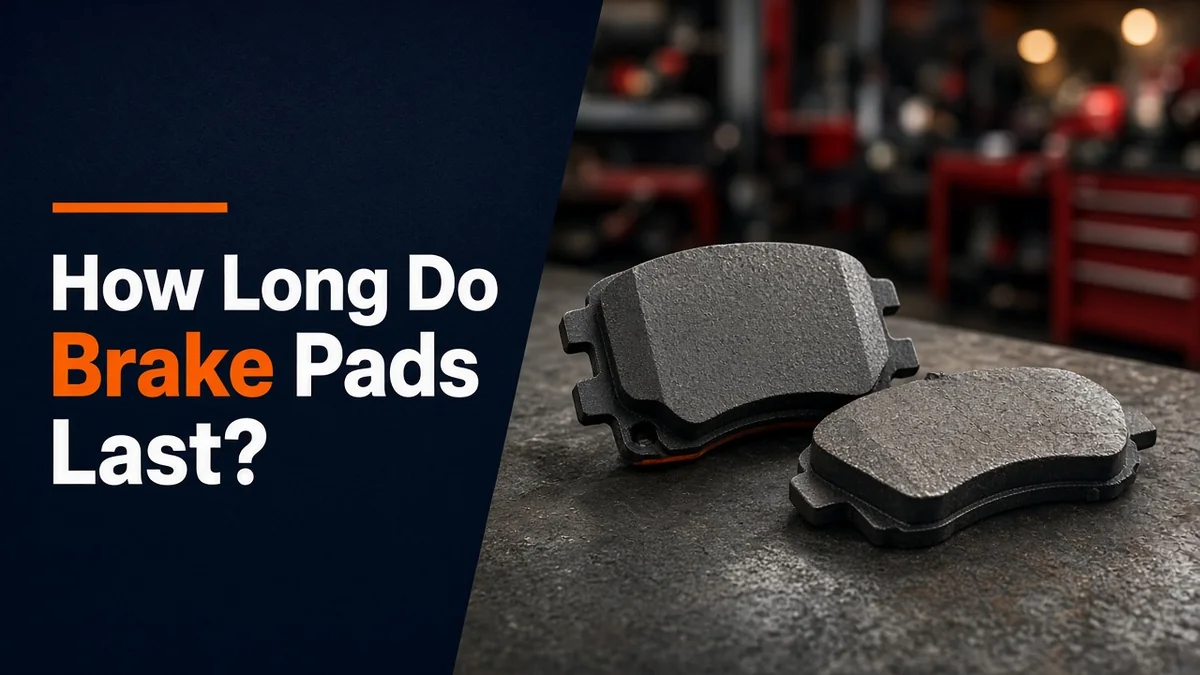
How Long Do Brake Pads Last? (Signs You Need New Pads)
Brake pads typically last 30,000 to 70,000 miles, and many drivers replace them somewhere around 40,000 to 50,000 miles. The real number depends mostly on how and where you drive: pads on a car used for highway commuting can last well past 70,000 miles, while pads on a heavy SUV in stop-and-go city traffic may need replacing after 25,000. Replace them when the friction material wears down to about 3 to 4 millimeters (roughly 1/8 inch), or sooner if you hear squealing or grinding.
Brake Pad Lifespan at a Glance
| Driving and vehicle | Typical pad life |
|---|---|
| Mostly highway, light car | 50,000–70,000+ miles |
| Mixed city and highway | 35,000–50,000 miles |
| Heavy city traffic | 25,000–40,000 miles |
| Heavy SUV, truck or frequent towing | 25,000–40,000 miles |
| Hilly or mountain driving | Often at the low end of these ranges |
| Hybrids and EVs with regenerative braking | Often much longer, sometimes 100,000+ miles |
These are typical ranges, not guarantees. Two identical cars can wear pads at very different rates depending on who drives them.
Why Brake Pads Wear Out
Every time you press the brake pedal, hydraulic pressure pushes the caliper pistons and clamps the pads against the spinning rotors. Friction turns the car’s motion into heat, and a tiny layer of pad material wears away with each stop. That is by design: pads are the sacrificial part of the system, meant to wear so the more expensive rotors and calipers do not.
How quickly they wear depends on how much energy they have to absorb. Heavier vehicles, higher speeds, frequent stops and steep descents all mean more heat and faster wear.
Why Front Brake Pads Wear Faster
When you brake, the car’s weight shifts forward, so the front brakes do most of the work, often around 60 to 70 percent of it. That is why front pads usually need replacing before rear pads, sometimes twice as often. Some modern cars use the rear brakes more for stability control, so rear pads can occasionally wear faster, which is one more reason to have all four checked.
What Affects How Long Brake Pads Last
- Driving environment: city driving with frequent stops wears pads far faster than steady highway miles.
- Braking habits: late, hard braking generates more heat and wear than coasting and braking early.
- Vehicle weight and load: heavier vehicles, passengers, cargo and towing all increase wear.
- Terrain: long downhill stretches keep the brakes working hard.
- Pad material: ceramic pads usually last longest; organic pads wear fastest; semi-metallic pads sit in between.
- Rotor condition: grooved or uneven rotors can speed up pad wear.
- Stuck calipers or slide pins: can make one pad wear much faster than the others.
Brake Pad Materials and Lifespan
| Pad type | Typical life | Characteristics |
|---|---|---|
| Ceramic | Longest | Quiet, low dust, stable; higher price |
| Semi-metallic | Medium | Strong bite and heat tolerance; more dust and noise; wears rotors faster |
| Organic (NAO) | Shortest | Soft and quiet; cheapest; more dust |
Signs You Need New Brake Pads
- High-pitched squealing: many pads have a small metal wear indicator that squeals against the rotor when the pad is thin. Our guide to car noises explained helps you tell brake noises from other sounds.
- Grinding or growling: usually means the pad material is gone and metal is contacting the rotor.
- Brake pad warning light: some cars have electronic wear sensors that trigger a dashboard light; see our guide to dashboard symbols and meanings.
- Vibration or pulsing: often uneven rotors, which commonly show up alongside worn pads.
- Longer stopping distances or a lower pedal: the car takes more effort to stop.
- Pulling to one side: can mean uneven pad wear or a sticking caliper.
- Thin pads you can see: less than about 1/4 inch of material visible through the wheel spokes is time to plan a replacement.
Grinding means stop soon: metal-on-metal grinding damages rotors quickly and reduces braking power. Limit driving, avoid highways and have the brakes inspected as soon as possible.
How to Check Your Brake Pads
- Park on level ground and let the brakes cool.
- Look through the spokes of each front wheel at the caliper, the clamp that sits over the rotor.
- Find the outer pad pressed against the rotor and judge the thickness of the friction material, not the metal backing plate.
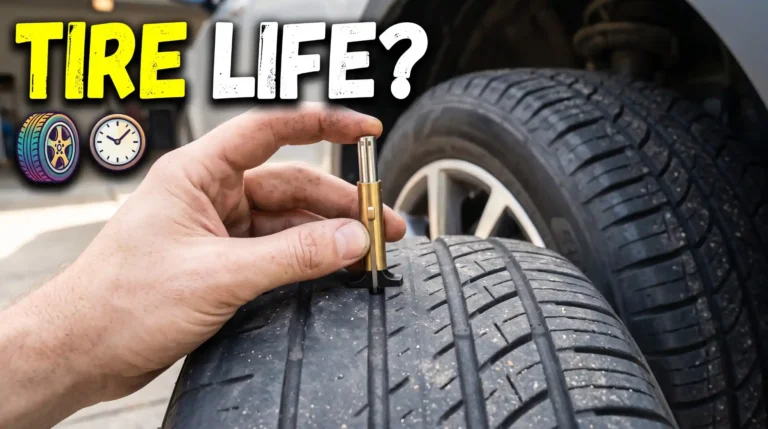
- If it looks thinner than about 1/4 inch (roughly 6 mm), plan a replacement; below about 3–4 mm, replace it soon.
- If you cannot see clearly, have them measured at your next tire rotation or oil change, when the wheels are already off.
The inner pad often wears faster than the outer one and is harder to see, so a professional inspection with the wheels off gives the most accurate picture. Brake checks fit naturally into the routine in our car maintenance schedule by mileage.
Brake Pad Thickness Chart
| Pad thickness | Condition | What to do |
|---|---|---|
| 10–12 mm | New | Nothing |
| 6–9 mm | Good | Check at the next service |
| 4–5 mm | Wearing | Plan replacement |
| 3 mm or less | Worn | Replace soon |
| Under 2 mm or metal showing | Dangerous | Replace immediately |
How to Make Brake Pads Last Longer
- Look further ahead and coast to slow down before braking
- Brake smoothly and gradually instead of late and hard
- Use a lower gear on long descents to let the engine help slow the car
- Remove unnecessary weight from the trunk and cargo area
- Have calipers and slide pins serviced so pads wear evenly
- Replace pads before they reach metal to protect the rotors
What Happens If You Wait Too Long to Replace Brake Pads
| Stage | What You Notice | What It Costs to Fix |
|---|---|---|
| Pads getting thin (about 3–4 mm) | Squeal from the wear indicator, or a pad warning light | Pads only, about $150–$300 per axle |
| Pads worn to the backing plate | Harsh grinding, longer stopping distance | Pads and rotors, about $300–$800 per axle |
| Metal-on-metal for weeks | Deep rotor grooves, vibration, overheating | Pads, rotors and possibly calipers, often $600–$1,200+ per axle |
| Caliper piston overextends | Fluid leak, soft pedal, pulling | Caliper replacement plus brake bleed |
Costs are typical US shop ranges and vary by vehicle. Replacing pads at the first squeal is almost always the cheapest option.
Pad Wear Sensors and Warning Lights
Many cars, especially European models and newer luxury vehicles, have electronic pad wear sensors. When the pad wears down to the sensor, a dashboard warning appears. The sensor is usually a one-time part and should be replaced along with the pads, which adds about $20 to $80 in parts.
Should You Replace Rotors at the Same Time?
Not always. Rotors can often be reused if they are above their minimum thickness, smooth and free of cracks or vibration. But worn pads that were driven down to metal usually damage the rotors, and many shops replace or resurface rotors with every pad job for the best braking feel. Ask the shop to measure the rotors and show you the result before agreeing to new ones. Brake fluid also ages over time; our guide to checking car fluids shows how to check the brake fluid reservoir.
Do Hybrids and Electric Cars Need Brake Pads Less Often?
Usually yes. Hybrids and EVs use regenerative braking, where the electric motor slows the car and recovers energy, so the friction brakes are used less. Pads can last far longer, but rotors and calipers can rust or stick from lack of use, especially in wet or salty climates. They still need regular inspection, as our guide to EV maintenance explains.
Related guides: why your car is shaking, car inspection and suspension repair cost.
Brake Pad Lifespan FAQ
Typically 30,000 to 70,000 miles. Highway drivers often get more; city drivers, heavy vehicles and frequent towing usually get less.
Many drivers replace pads every two to five years, but mileage and driving style matter more than age. Have them checked at least once a year.
Replace pads at about 3 to 4 millimeters of friction material. New pads usually have about 10 to 12 millimeters.
Yes. Pads are replaced by axle, so you can replace only the front or only the rear, but always both sides of the same axle together.
A high-pitched squeal from the wear indicator is the early warning. Grinding or growling usually means the pads are worn to metal.
The pads wear down to the metal backing plate, which grinds into the rotors, reduces braking power and can damage calipers. A simple pad replacement can turn into a much more expensive pad, rotor and caliper job.