Gap Insurance on a Used Car: Is It Worth It?
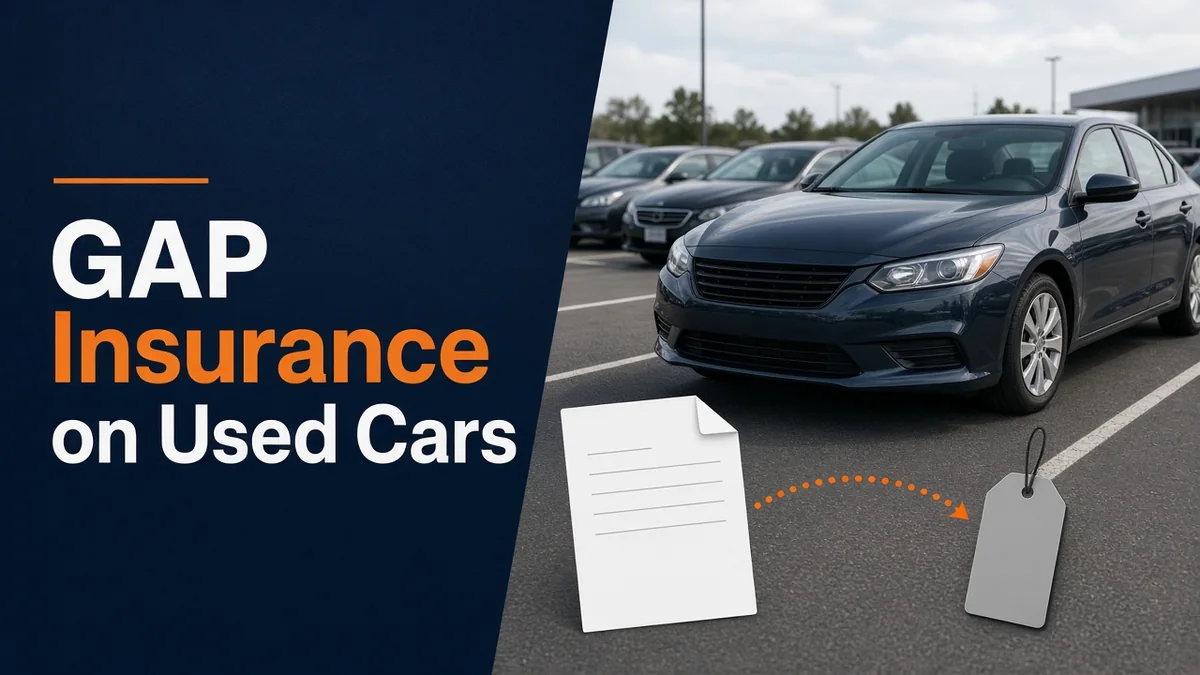
Gap insurance on a used car can be worth it if you owe more on the loan than the car is worth, which is common when you make a small down payment, take a loan longer than 60 months, roll negative equity from a trade-in into the new loan, or buy a car that depreciates quickly. Gap coverage pays the difference between your car’s actual cash value and your remaining loan or lease balance if the car is totaled or stolen. It is usually not needed if you put 20% or more down, have a short loan, or the car is worth more than you owe.
How Gap Insurance Works: Example
| Item | Amount |
|---|---|
| Loan balance when the car is totaled | $18,000 |
| Car’s actual cash value (ACV) | $14,000 |
| Collision deductible | $500 |
| Insurance payout (ACV minus deductible) | $13,500 |
| Remaining amount you owe without gap | $4,500 |
| Gap insurance pays | $4,000 (the difference between ACV and loan balance; some gap policies also cover the deductible) |
This example is illustrative. Gap policies differ in whether they cover your deductible, overdue payments, extended warranties or other add-ons rolled into the loan.
When Gap Insurance on a Used Car Makes Sense
- Small or no down payment: less than about 20% down.
- Long loan term: 60 months or more, where payments build equity slowly.
- Negative equity rolled in: you still owed money on a trade-in and added it to the new loan.
- High interest rate: more of each payment goes to interest early on.
- Fast-depreciating model: some luxury cars and EVs lose value quickly.
- Add-ons financed: extended warranties, service contracts or fees added to the loan.
- Leased used car: many leases require or include gap coverage.
When You Probably Do Not Need It
- You put 20% or more down
- Your loan term is short (36 to 48 months)
- The car is worth more than you owe
- You paid cash or can easily cover any shortfall
- The car is older and depreciating slowly
To check whether you are “upside down,” compare your loan payoff amount with the car’s value. Our car depreciation calculator and car loan calculator can help you estimate both over time.
Where to Buy Gap Insurance for a Used Car
| Source | Typical Cost | Notes |
|---|---|---|
| Your auto insurer | Roughly $150–$450 over three years, NerdWallet estimates | Usually the cheapest; requires collision and comprehensive; vehicle age limits often apply |
| Dealer or finance office | Often $500–$700 or more for three years, and more if it is financed with interest | Convenient but frequently marked up; interest may apply if financed |
| Bank or credit union | Often lower than dealer pricing | Ask when you apply for the loan |
| Standalone gap providers | Varies | Compare terms carefully |
Prices vary by state, provider and vehicle. Always ask for the price in writing and compare before signing at the dealership. You are not required to buy gap coverage from the dealer.
Gap Insurance vs Loan/Lease Payoff Coverage
Some auto insurers sell “loan/lease payoff” coverage instead of true gap insurance. It works the same way, paying toward what you still owe after a total loss, but it is usually capped at a percentage of the car’s actual cash value, often 25%. On a used car with a large negative-equity balance rolled in, that cap may not cover the whole shortfall, so compare the limit with how far underwater you are before relying on it.
Eligibility Limits for Used Cars
- Many auto insurers only offer gap coverage on vehicles that are a few model years old or newer
- Some require you to be the original owner or original loan holder
- Some cap coverage at a percentage of the car’s value (for example, 125%)
- Dealer and lender gap products may have broader eligibility for used cars
How to Cancel Gap Insurance
Gap coverage is only useful while you owe more than the car is worth. Once your loan balance drops below the car’s value:
- Check your loan payoff amount and your car’s current value.
- If you have positive equity, remove gap coverage from your auto policy, or cancel a dealer gap contract in writing.
- If you paid upfront, request a prorated refund. If gap was rolled into your loan, the refund is often applied to the loan balance.
- Also cancel gap coverage when you pay off, sell or trade in the car.
Reduce the Need for Gap Insurance
- Make a larger down payment, ideally 20% if you can
- Choose a shorter loan term
- Avoid rolling negative equity into a new loan
- Buy a used car with a strong reliability and resale history
- Avoid financing add-ons you do not need
Our guide on how much to put down on a car explains how a larger down payment protects you. When shopping, see how to buy a used car for tips on choosing a vehicle that holds its value.
Not insurance or financial advice: Gap coverage terms, eligibility and prices vary by insurer, lender, dealer and state. Read the contract carefully, including what is excluded and how refunds work.
Related guides: Car depreciation calculator · How much to put down on a car · How to buy a used car
Used Car Gap Insurance FAQs
It can be if you owe more than the car is worth, such as with a small down payment, a long loan or negative equity rolled in. It is usually not needed with 20% down or a short loan.
Yes. Many insurers, lenders, credit unions and dealers offer gap coverage on used cars, though insurers often limit it to newer model years.
Some gap policies cover the deductible and some do not. Read your policy terms.
It is not required by law, but some lenders and most leases require it. You can usually choose where to buy it.
Added to your auto policy, it often costs about $150 to $450 over three years, while dealer gap products commonly run $500 to $700 or more, plus interest if financed, according to NerdWallet estimates. Get a written quote before signing.