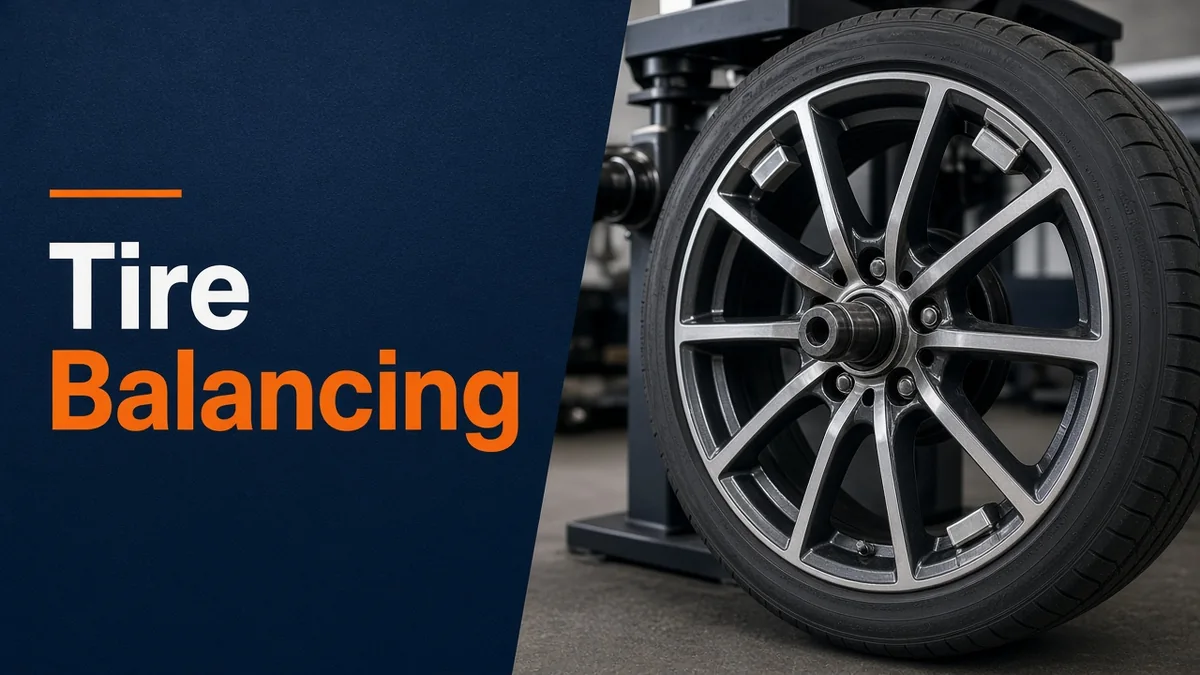
Tire Balancing: Signs You Need It, Cost and How Often
Tire balancing is a service that evens out the weight around a tire and wheel so it spins smoothly. A technician mounts each wheel on a balancing machine, finds the heavy spots, and attaches small weights to the rim to cancel them out. Most drivers need it every 5,000 to 7,500 miles (often with each tire rotation), whenever new tires are mounted, or as soon as a vibration shows up at highway speed. It usually costs $15 to $50 per tire, or roughly $60 to $200 for all four.
What Is Tire Balancing?
No tire and wheel is perfectly uniform. The rubber can be slightly thicker in one area, the valve stem adds weight on one side, and the wheel itself may have tiny variations from manufacturing. At 60 mph a tire spins about 800 to 900 times a minute, so even a quarter-ounce heavy spot creates a repeating force that you feel as a vibration.
Balancing measures that uneven weight and offsets it with counterweights, so the assembly rotates evenly around its axle. The goal is a smooth ride, even tread wear and less strain on the suspension.
Signs Your Tires Need Balancing
- Vibration at highway speed: typically starts between about 45 and 70 mph and may ease off above or below that range.
- Shaking steering wheel: usually points to an imbalance in a front tire.
- Vibration in the seat or floorboard: usually points to a rear tire.
- Uneven or scalloped tread wear: patchy, cupped spots around the tire.
- A lost wheel weight: a clean rectangle on the rim where a stick-on weight used to be, or a missing clip-on weight.
- Recent tire work: a new tire, a patched flat or a tire remounted on the wheel.
- Worse fuel economy or extra road noise: less common, but can accompany uneven wear.
Vibration can come from other causes too, such as bent wheels, worn suspension parts, warped brake rotors or loose lug nuts. Our guide on why your car is shaking walks through how to tell them apart by speed and when the shake happens.
How Much Does Tire Balancing Cost?
| Service | Typical Cost (US) |
|---|---|
| Standard spin balance, per tire | $15–$50 |
| Standard spin balance, all four tires | $60–$200 |
| Road force balance, per tire | $25–$50 |
| Road force balance, all four tires | $100–$200 |
| Balance included with new tire installation | Often included, or $10–$25 per tire |
| Balance and rotation package | About $40–$100 |
| Lifetime balancing (bought with tires) | Often $10–$20 per tire once, then free |
Prices vary by region, shop type and wheel size. Dealerships and shops handling large or low-profile wheels tend to charge more. Many tire retailers include free rebalancing for the life of the tires if you bought them there, so check your receipt before paying again.
How Often Should Tires Be Balanced?
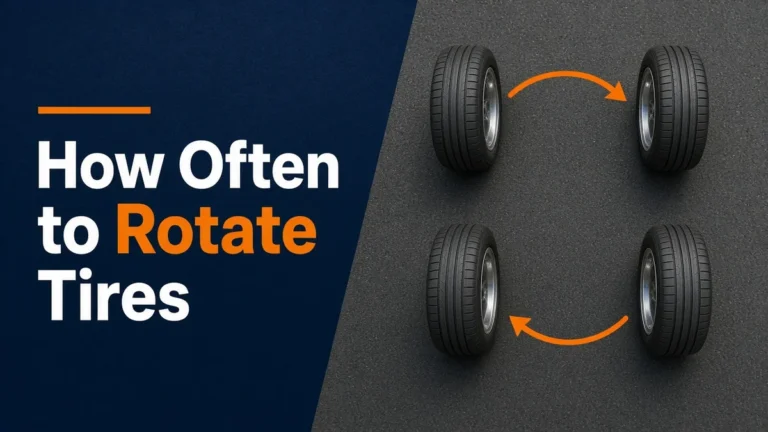
- Every 5,000 to 7,500 miles, commonly paired with a tire rotation
- When new tires are installed (always)
- After any tire repair or when a tire is removed from the wheel
- After hitting a big pothole or curb if you notice a new vibration
- When a wheel weight falls off
- At least once a year if you drive very little
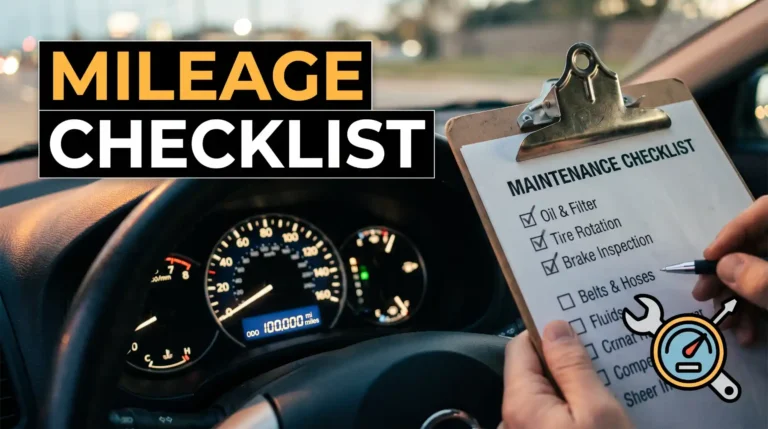
Pairing balance checks with rotations and your other routine services is the easiest way to stay on top of it. See our car maintenance schedule by mileage for how it fits with oil changes and inspections.
How Tire Balancing Is Done
- The car is lifted and the wheels are removed.
- Old wheel weights are removed and the rim is cleaned.
- Each wheel is mounted on a computerized balancer and spun.
- The machine shows where the heavy spots are and how much weight to add, and where.
- The technician attaches clip-on weights to the rim edge or stick-on adhesive weights inside the wheel.
- The wheel is spun again to confirm it reads zero or within tolerance.
- Wheels are reinstalled and lug nuts are torqued to specification.
A full four-wheel balance usually takes 30 to 60 minutes.
Types of Tire Balancing
Static Balancing
Static balancing corrects imbalance in one plane, the up-and-down “hop.” It is simple and was common for older, narrow tires. Today it is mostly used for motorcycles and some trailer tires.
Dynamic (Spin) Balancing
Dynamic balancing corrects imbalance in two planes, both up-and-down and side-to-side “wobble.” This is the standard method at nearly every tire shop for passenger cars.
Road Force Balancing
A road force balancer presses a roller against the spinning tire to simulate the weight of the car on the road. It detects stiff spots in the tire and runout in the wheel that a regular balancer cannot see. The technician can then rotate the tire on the rim to “match mount” the high and low spots. It costs more, but it is the best fix when a vibration remains after a normal balance, and it is recommended for low-profile and performance tires.
Balancing Beads and Internal Compounds
Some truck and commercial tires use loose beads or powder inside the tire that distribute themselves as the wheel spins. They are uncommon on passenger cars and are not a substitute for fixing a damaged wheel or tire.
Tire Balancing Vs. Wheel Alignment Vs. Rotation
| Service | What It Fixes | Typical Symptom | Typical Cost |
|---|---|---|---|
| Balancing | Uneven weight around the tire and wheel | Vibration at certain speeds | $15–$50 per tire |
| Alignment | Angles of the wheels (camber, caster, toe) | Car pulls to one side, crooked steering wheel, edge wear | About $80–$200 |
| Rotation | Uneven wear between positions | Front tires wear faster than rear, or vice versa | About $20–$50, often free |
A car can need one without the others. If your car pulls to one side but does not vibrate, you likely need an alignment, not a balance. If it vibrates but tracks straight, balancing is the first thing to check.
What Happens If You Do Not Balance Your Tires?
- Faster, uneven tire wear: cupping and flat spots can shorten tire life by thousands of miles.
- Extra suspension and steering wear: constant vibration stresses wheel bearings, shocks, struts and tie rods.
- Reduced comfort and control: vibration makes long drives tiring and can reduce grip on rough roads.
- Lower fuel economy: uneven contact adds rolling resistance.
Tires are expensive, and balancing is one of the cheapest ways to protect them. Our guide on how long tires last covers other habits that extend tread life, and if the vibration is already damaging parts, our suspension repair cost guide shows what those repairs run.
Can You Balance Tires Yourself?
It is possible with a bubble balancer (a static balancer) and a set of weights, but it only corrects static imbalance and needs the wheels off the car. For modern cars at highway speeds, a shop dynamic balance is far more accurate and costs little. DIY is mainly realistic for trailers, lawn equipment or occasional track use with the right tools.
Do New Tires Need to Be Balanced?
Yes. Every new tire should be balanced when it is mounted on the wheel, because the tire and wheel combination is new. Most shops include it in the installation price, but confirm it is on the quote. If you are also changing tire size, check the fit first with our tire size calculator.
Safety note: A vibration that appears suddenly, grows quickly, or comes with a thumping sound or pulling can mean a damaged tire, a separating tread or loose lug nuts, not just imbalance. Slow down, pull over safely and inspect the tires. If you see a bulge or the wheel feels loose, do not keep driving on it.
Related guides: Why is my car shaking? · How long do tires last? · Tire size calculator
Tire Balancing FAQs
The most common sign is a vibration that begins between about 45 and 70 mph. You feel front tire imbalance in the steering wheel and rear tire imbalance in the seat or floor. Uneven, cupped tread wear is another sign.
Most drivers should balance tires every 5,000 to 7,500 miles or with each rotation, and always when new tires are installed or a tire is repaired.
No. Balancing evens out the weight around the tire and wheel to stop vibration. Alignment adjusts the angles of the wheels so the car tracks straight and tires wear evenly.
Yes. Over time they cause uneven tire wear and add stress to wheel bearings, shocks, struts and steering components.
Not always, but many shops check or rebalance during rotation because moving a tire to a new position can reveal a small imbalance.