How to Sell a Car Privately (Paperwork and Safety)
Here is how to sell a car privately without getting scammed or stuck with paperwork problems. To sell a car privately, price it using market guides and local listings, clean it and gather service records, list it with good photos, meet buyers safely, and get paid in full with verified funds before signing over the title. The key paperwork is the signed title, a bill of sale (required or recommended in most states), an odometer disclosure, and your state’s notice of transfer or release of liability, which protects you from tickets or accidents after the sale. Selling privately usually gets you more money than trading in, at the cost of more time and effort.
Key Takeaways
- Price right: compare pricing guides with local listings for similar cars.
- Paperwork: title, bill of sale, odometer disclosure, release of liability; some states need notarization.
- Get paid first: cash counted at a bank, or a cashier’s check verified directly with the issuing bank.
- File the release of liability promptly after the sale.
- Plates and insurance: in many states the seller keeps the plates; cancel insurance only after the transfer.
Step-by-Step: How to Sell a Car Privately
- Find the title: if you have a loan, contact the lender for the payoff amount and how the title is released.
- Research the price: check pricing guides and similar local listings; price slightly above your minimum to leave room to negotiate.
- Prepare the car: wash, clean the interior, fix small issues, and gather maintenance records.
- Get a vehicle history report: sharing one builds buyer trust.
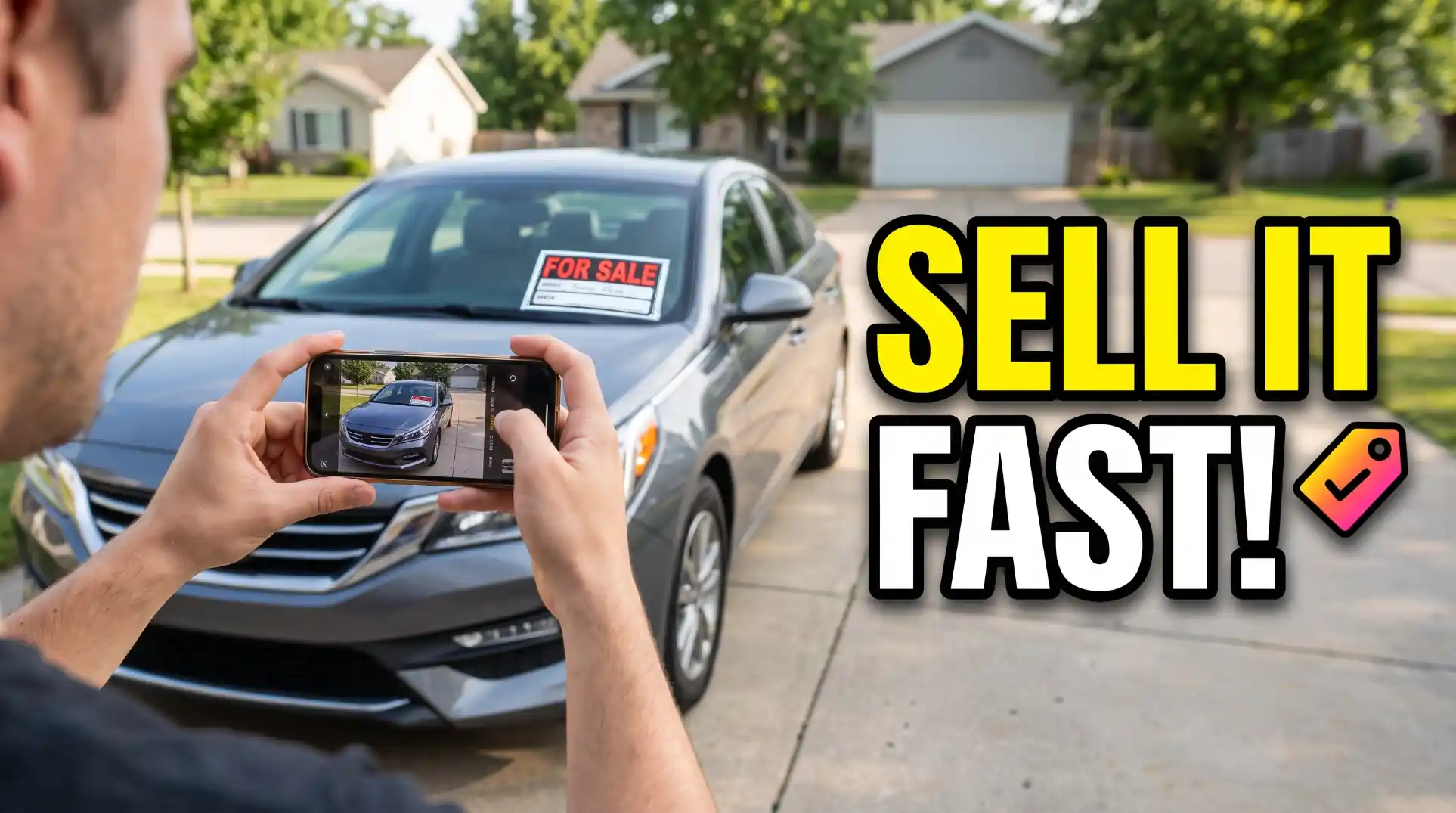
- Take good photos: daylight shots of all sides, interior, dashboard with mileage, tires and any flaws.
- Write an honest listing: year, make, model, trim, mileage, condition, recent repairs, title status and price.
- Screen buyers: talk by phone first; be wary of anyone who will not meet in person.
- Meet safely: in daylight at a public place; many police stations offer safe exchange zones.
- Allow a test drive carefully: check the buyer’s license, ride along, and bring a friend.
- Allow an inspection: a serious buyer may want a mechanic to check the car.
- Negotiate and agree on terms, including that the car is sold as-is if applicable.
- Get paid and complete the paperwork (below), then hand over keys.
- After the sale: remove plates if your state requires, file the release of liability, and cancel insurance and registration as appropriate.
Paperwork You Need to Sell a Car
| Document | Purpose | Notes |
|---|---|---|
| Certificate of title | Transfers ownership | Sign in the seller section exactly as your name appears; some states require notarization |
| Bill of sale | Records price, date, VIN, buyer and seller | Include “sold as-is” if applicable; both parties sign and keep copies |
| Odometer disclosure | Federal requirement to record mileage | Often part of the title; some states use a separate form |
| Release of liability / notice of transfer | Tells the DMV you no longer own the car | Time-sensitive; file online or by mail per your state |
| Lien release | Proves the loan is paid off | Needed if there was a lender |
| Maintenance records and history report | Builds trust | Not legally required |
Requirements vary by state. Check your state DMV website for its exact forms, notary rules and deadlines.
How to Get Paid Safely
| Payment method | Safety | Tips |
|---|---|---|
| Cash | Good | Count and check bills at the buyer’s bank or deposit them on the spot |
| Cashier’s check | Good if verified | Call the issuing bank using a number you look up yourself; better yet, go to the bank with the buyer |
| Bank transfer at the buyer’s bank | Very good | Complete the sale at the bank when funds are confirmed |
| Payment apps | Mixed | Many apps have limits and chargeback or scam risks for large sales |
| Personal check | Poor | Can bounce after you hand over the car |
| Escrow service | Varies | Use only a well-known service you find yourself, never a link a buyer sends |
Safety note: Common scams include fake cashier’s checks, overpayment requests asking you to wire back the difference, and “escrow” or shipping services suggested by a buyer who cannot meet in person. Do not sign the title or hand over keys until payment is fully confirmed, and never share vehicle documents or personal details before meeting.
Selling a Car That Still Has a Loan
- Get the exact payoff amount from your lender.
- If the buyer is paying more than the payoff, complete the sale at your lender’s branch if possible so the loan is paid and the title released.
- If you owe more than the sale price, you must pay the difference to clear the lien.
- Some lenders mail the title to you after payoff; plan for that delay.
Private Sale vs Trade-In vs Instant Offer
| Private sale | Dealer trade-in | Instant online offer | |
|---|---|---|---|
| Price | Usually highest | Usually lowest | Often in between |
| Effort | Most work | Least work | Low |
| Speed | Days to weeks | Same day | A few days |
| Tax benefit | No | Trade-in can reduce sales tax in many states | No |
Try the calculator: use our car depreciation calculator to estimate your car’s future value.
Selling Your Car FAQ
Usually the signed title, a bill of sale, an odometer disclosure and your state’s release of liability or notice of transfer. Some states also require notarization.
Take cash counted at a bank, or a cashier’s check you verify directly with the issuing bank. Complete the deal at the buyer’s bank if possible.
In many states, yes, the seller keeps the plates, but rules vary. Check your state DMV.
A form you file with your state DMV to show you sold the car, protecting you from tickets, tolls or accidents after the sale.
Yes. Pay off the loan with the sale proceeds, often by completing the sale at your lender, so the lien is released and the title can transfer.
Yes, but check their driver’s license, ride along, and meet in a safe public place.
Selling privately usually brings more money, while trading in is faster and may reduce sales tax on your next car in many states.