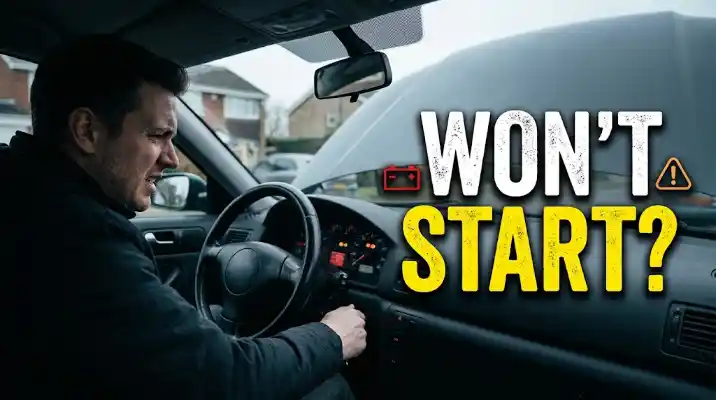
Car Won’t Start? A Step-by-Step Diagnosis by Sound and Symptom
When a car won’t start, the sound it makes is your best clue. Rapid clicking with dim lights almost always means a weak or dead battery or corroded terminals. A single click or no sound with bright lights points to the starter, a relay or the shifter not being fully in Park. If the engine cranks normally but will not fire, the battery is fine and the problem is fuel, spark, a sensor or the anti-theft system.
Work through the checks below from quickest to most involved. Many no-start problems can be fixed or narrowed down in a few minutes without tools.
Key Takeaways
- Clicking and dim lights: battery; try a jump start.
- One click, bright lights: starter, starter relay or a Park/Neutral switch issue.
- Cranks but will not start: fuel delivery, spark, a crank sensor or the immobilizer.
- Quick checks first: in Park, foot on the brake, key fob battery, steering lock and fuel level.
- Do not crank for long: 10 seconds at a time, with a short rest, to protect the starter.
Start With These Quick Checks
- Is it in Park (or Neutral)? Shift firmly into Park and try again, or try starting in Neutral. A worn shifter switch can stop the car cranking in Park.
- Foot on the brake (automatics and push-button start), or clutch fully pressed (manuals).
- Steering lock: if the key will not turn, wiggle the steering wheel while turning the key.
- Key fob battery: a “key not detected” message usually means a weak fob battery. Hold the fob against the start button, where there is often a backup reader.
- Fuel: check the gauge; an empty tank or a faulty gauge is more common than you would think.
- Security light: a flashing key or lock symbol can mean the immobilizer does not recognize the key. Try a spare key.
- Battery terminals: look for loose or heavily corroded clamps.
Car Won’t Start: Diagnosis by Symptom
| What happens | Most likely causes | What to try |
|---|---|---|
| Nothing at all: no lights, no sound | Completely dead battery, loose battery cable, main fuse | Check terminals, then jump-start |
| Rapid clicking, dim or flickering dash lights | Weak or dead battery, corroded terminals | Clean terminals, jump-start, test the battery |
| One loud click, bright dash lights, no crank | Starter, starter relay or solenoid, Park/Neutral switch | Try Neutral; tap the starter lightly; have the starter tested |
| Slow, labored cranking | Weak battery, bad cables, very cold engine oil | Jump-start; test battery and charging system |
| Cranks normally but will not start | No fuel, no spark, crank sensor, immobilizer, flooded engine | Listen for the fuel pump; check fuel, fuses and security light |
| Starts, then dies within seconds | Immobilizer or key problem, fuel pump, idle control | Try the spare key; check for security light |
| Won’t start when hot, starts when cooled | Fuel vapor lock, failing crank sensor or fuel pump | Have it diagnosed while the problem is present |
| Won’t start in cold weather | Weak battery, thick oil, fuel line freeze in extreme cold | Jump-start; use a block heater or garage in extreme cold |
If You Hear Clicking: Battery or Connections
Rapid clicking means the starter is trying but not getting enough current. It is usually a discharged or failing battery, or corroded or loose terminals.
- Check that both battery clamps are tight and clean off white or green corrosion.
- Jump-start the car with jumper cables or a portable jump starter, following your owner’s manual.
- If it starts, drive at least 30 minutes or recharge the battery with a charger, then have it tested.
- If it keeps happening, test the battery, the alternator and look for a parasitic drain.
If You Hear One Click or Nothing: Starter Circuit
With a charged battery and bright lights, a single click or silence usually means the starter motor, its solenoid or relay, a blown starter fuse, or the neutral safety switch is not doing its job. Try starting in Neutral, check the starter relay and fuse in the fuse box (the owner’s manual shows which), and have the starter tested. Tapping the starter body lightly with a tool while someone turns the key can sometimes get a worn starter to engage one more time, a sign it needs replacing.
If the Engine Cranks but Will Not Start
An engine needs fuel, spark, air and compression, plus a computer that allows it to run. Check these in order:
- Fuel pump: turn the key to On (not Start) and listen for a two-second hum from the rear of the car. No hum can mean a failed fuel pump, relay or fuse.
- Immobilizer: a flashing security or key light means the car does not recognize the key; try the spare key and replace the fob battery.
- Crankshaft or camshaft position sensor: a failed sensor stops spark and fuel. The tachometer may not move while cranking.
- Ignition: failed coils or very worn spark plugs, or wet ignition parts after heavy rain.
- Flooded engine: after short starts in the cold, excess fuel can prevent starting. Many fuel-injected cars have a “clear flood” mode: hold the accelerator to the floor while cranking. Check your manual.
- Bad fuel: a problem that starts right after refueling can point to water or wrong fuel.
- Timing belt: an unusually fast, even cranking sound can mean a broken timing belt; do not keep cranking, and have it towed.
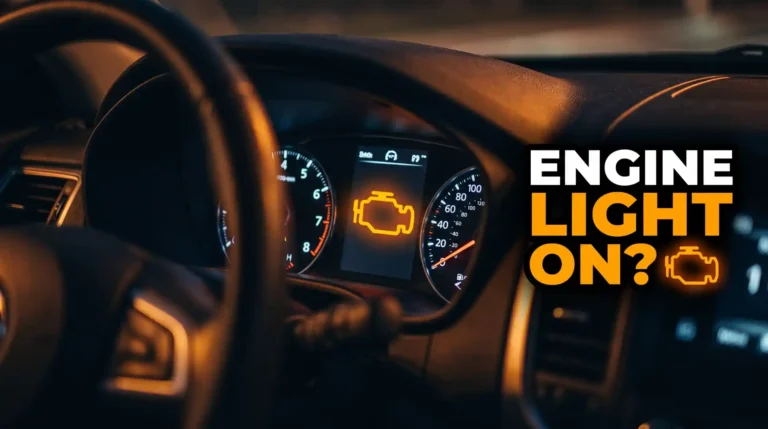
If the check engine light is on, an OBD-II scanner can read stored codes that point straight to the cause.
Safety note: do not spray starting fluid into modern engines unless your service manual allows it, never hold the starter for more than about 10 seconds at a time, and never work near moving belts or the fan with the engine cranking. If you smell fuel strongly, stop trying to start the car and have it towed.
Common No-Start Repair Costs
| Repair | Typical cost |
|---|---|
| Battery replacement | $100–$400 |
| Battery terminal cleaning or cable ends | $20–$150 |
| Starter replacement | $300–$800 |
| Starter relay or fuse | $10–$100 |
| Alternator replacement | $400–$900 |
| Fuel pump replacement | $400–$1,200 |
| Crankshaft position sensor | $150–$400 |
| Ignition coil (each) | $150–$400 |
| Key fob battery | $5–$15 |
| Key reprogramming (immobilizer issue) | $100–$300 |
When to Call for a Tow
- The car still will not start after a jump and basic checks.
- You smell fuel or see a leak.
- You hear grinding, a fast free-spinning crank, or loud mechanical noises.
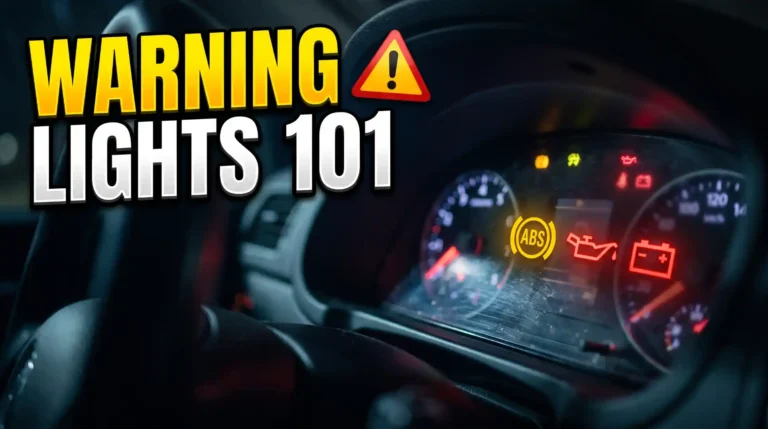
- Warning lights for oil pressure or temperature were on before the car died.
- The car is in an unsafe location.
How to Prevent a No-Start
- Test the battery yearly after year three and before winter.
- Keep terminals clean and tight.
- Replace the key fob battery every few years.
- Keep at least a quarter tank of fuel, especially in winter.
- Follow the maintenance schedule for spark plugs and filters.
- Carry a portable jump starter in the car.
Car Won’t Start FAQ
Bright lights with a single click or no crank often point to the starter, a starter relay or the Park/Neutral switch. Dim lights with rapid clicking usually point to a weak battery.
Rapid clicking usually means a weak or dead battery or corroded terminals. A single loud click with bright lights usually means a starter or relay problem.
The battery is likely fine. Common causes are a fuel pump or relay failure, a crankshaft position sensor, an ignition problem, a flooded engine or the anti-theft system not recognizing the key.
If jump-starting fixes it and lights are dim, it is usually the battery. If lights are bright and you hear one click or nothing, suspect the starter or its relay.
Cold reduces battery power and thickens engine oil, so a weak battery often fails first on cold mornings. Test the battery and use the correct oil grade.
Yes. A weak fob battery or unrecognized key can prevent push-button cars from starting. Hold the fob near the start button or replace its battery.
No more than about 10 seconds at a time, with a short rest between attempts, to avoid overheating the starter.
Often an immobilizer or key recognition problem, a failing fuel pump or an idle control issue. Try the spare key and watch for a security light.