Tire Pressure Light: Solid vs Flashing and How to Reset It
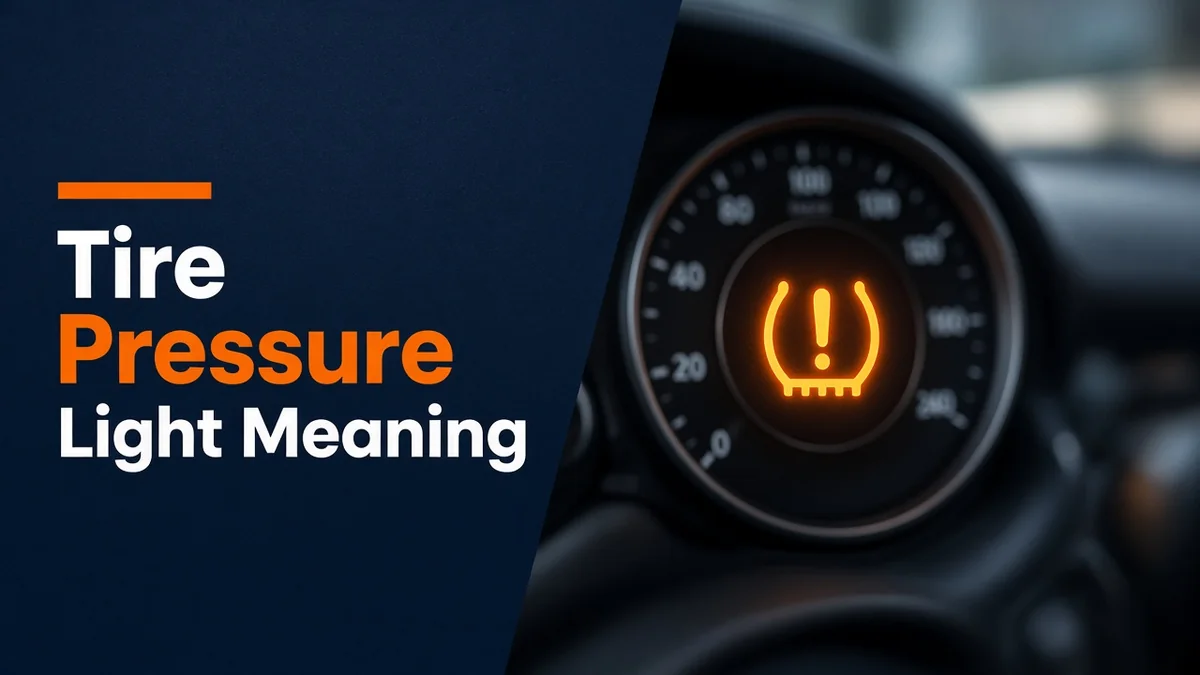
The tire pressure light, a yellow horseshoe-shaped symbol with an exclamation point, is your tire pressure monitoring system (TPMS) warning. If it stays on solid, at least one tire is significantly underinflated, typically 25 percent or more below the recommended pressure. If it flashes for about a minute when you start the car and then stays on, the system itself has a fault, most often a TPMS sensor with a dead battery. Check all four tires with a gauge, inflate them to the pressure on the driver’s door jamb sticker, and the light should go off after a short drive.
What the Tire Pressure Light Means
Since the 2008 model year, all new passenger vehicles sold in the US have been required to have a tire pressure monitoring system. It warns you when a tire is significantly underinflated, which reduces grip, lengthens stopping distances, overheats the tire and can lead to a blowout. The light is a warning to check your tires, not a replacement for regular checks with a gauge; by the time it comes on, the tire may already be well below where it should be.
Solid vs Flashing Tire Pressure Light
| What you see | What it means | What to do |
|---|---|---|
| Light stays on solid | One or more tires are low on air | Check all tires with a gauge and inflate to the placard pressure |
| Light flashes for 60–90 seconds, then stays on | TPMS malfunction: dead sensor battery, damaged or missing sensor, or system error | Inflate tires correctly, then have the TPMS diagnosed |
| Light comes on in the morning, goes off later | Pressure is borderline and rises as tires warm up | Add air when the tires are cold |
| Light on after a tire change or rotation | Sensor not recognized or needs relearning | Ask the shop to relearn or reprogram the sensors |
| Light on with a flat or visibly low tire | Real air loss, possibly a puncture | Fit the spare or drive slowly to get the tire repaired |
If the light comes on while driving: do not ignore it. Slow down, avoid hard braking and sharp turns, and pull over somewhere safe to look at the tires. If a tire is flat or visibly low, do not drive on it at speed; fit the spare or call for roadside help.
What to Do When the Tire Pressure Light Comes On
- Find the correct pressure: look at the sticker on the driver’s door jamb or in the owner’s manual. Front and rear pressures can differ.
- Check all four tires with a gauge: ideally when the tires are cold, before driving or after the car has sat for a few hours.
- Inflate any low tires: add air in short bursts and recheck until each tire matches the placard.
- Look for damage: nails, screws, cuts or bulges, and listen for hissing.
- Drive for a few minutes: most systems turn the light off by themselves once pressures are correct.
- Recheck in a day: if one tire keeps losing air, it has a slow leak that needs repair.
Light On but the Tires Look Fine? Check These
- Use a gauge, not your eyes: a radial tire can look normal at 25 percent low.
- Check the spare: on some vehicles the full-size spare has its own sensor, and a low spare can trigger the light.
- Look for overinflation: some systems also warn when a tire is well above the recommended pressure, for example after a shop overfills it.
- Think about recent tire work: a rotation, new tires or a seasonal wheel swap can leave sensors unrecognized until they are relearned.
- Watch for a flash at startup: if the light blinks for about a minute before staying on, the problem is a sensor or the system, not the air in the tires.
Why the Light Comes on in Cold Weather
Air contracts as it cools. A common rule of thumb is that tire pressure drops about 1 psi for every 10°F drop in temperature, so a sudden cold snap can push slightly low tires past the warning threshold overnight. The light may go off once the tires warm up from driving, but that does not mean the pressure is fine. Top up to the correct cold pressure. Our winter car prep guide covers other cold-weather checks.
How to Check Tire Pressure Correctly
- Check when tires are cold: before driving, or after the car has been parked for at least three hours. Driving warms tires and raises the reading.
- Find the right number: use the pressure on the placard inside the driver’s door jamb (or in the manual), not the maximum pressure molded on the tire sidewall.
- Remove the valve cap and press a tire gauge firmly onto the valve stem until the hissing stops.
- Read the gauge and compare it with the placard.
- Add air in short bursts and recheck, or let air out by pressing the valve core.
- Check all four tires, plus the spare, and replace the valve caps.
A digital or dial gauge from an auto parts store is more accurate than many gas station air pumps. Checking monthly takes about five minutes.
Altitude and Hot Weather Also Change Tire Pressure
Driving from sea level into the mountains can raise the gauge reading slightly because the outside air pressure is lower, and coming back down lowers it. Hot pavement and summer heat raise pressure as the air inside expands. Always set pressure cold, at the conditions where you will be driving, and do not let air out of hot tires to match the placard.
How to Reset the Tire Pressure Light
Once all tires are at the correct pressure, the light usually resets itself after you drive for about 10 minutes at moderate speed. If it does not, try the method your car uses:
- TPMS reset button: some models have a reset button, often under the steering wheel or in the glove box. With the ignition on, hold it until the light blinks, then drive to complete the reset.
- Infotainment or dash menu: many newer cars have a tire pressure reset or calibrate option in the vehicle settings menu.
- Indirect systems: cars that estimate pressure using the ABS wheel speed sensors must be recalibrated through the menu or button after inflating the tires.
- Relearn tool: after new sensors are fitted or tires are rotated on some cars, a shop uses a TPMS tool to program the sensor positions.
The exact steps vary widely by make and model, so check the owner’s manual. If the light still stays on or flashes, the system needs diagnosis.
Direct vs Indirect TPMS
| Direct TPMS | Indirect TPMS | |
|---|---|---|
| How it works | A battery-powered sensor inside each wheel measures actual pressure | The ABS system detects a low tire because it spins slightly faster |
| Accuracy | Reads real pressure, often shown per tire on the dash | Estimates; cannot always detect all four tires losing air evenly |
| Maintenance | Sensors wear out and need replacing | No sensors to replace; needs recalibration after inflating |
| Common on | Most US vehicles | Some European and Japanese models |
Tire Pressure Light After a Tire Rotation or New Tires
- After a rotation: many direct TPMS systems need a relearn so the car knows which sensor is at which corner. Some relearn automatically after driving; others need a tool or menu procedure.
- After new tires: sensors can be damaged during mounting, and the rubber valve stem seals or service kits should be replaced. Ask the shop for a TPMS service kit.
- After switching to winter wheels: the second set needs its own sensors, or the light will stay on.
- Indirect systems: usually need a manual reset after rotating or inflating tires.
TPMS Sensor Problems and Replacement Cost
Direct TPMS sensors have sealed batteries that usually last about 5 to 10 years. When a battery dies, the whole sensor is replaced. Sensors can also be damaged during tire changes, by corrosion of the valve stem, or when a wheel hits a pothole or curb.
| Service | Typical cost |
|---|---|
| Single TPMS sensor, installed (aftermarket) | $50–$150 |
| Single TPMS sensor at a dealer | $150–$350 |
| Sensor relearn or programming | $0–$75 |
| Valve stem service kit | $5–$15 per wheel |
If one sensor fails from old age, the others are likely close behind. Many owners replace all four at once, often when buying new tires, to save on repeat labor. Our guide to how long tires last can help you time that.
Can You Drive With the Tire Pressure Light On?
You can drive a short distance carefully to reach air or a tire shop, but you should not ignore a solid light. Underinflated tires wear faster at the edges, reduce fuel economy, handle poorly and can overheat and fail at highway speed. A flashing light with correctly inflated tires is less urgent, but it means you have no warning if a tire starts losing air, so have the system repaired soon.
How Tire Pressure Affects Safety and Fuel Economy
- Braking and handling: correct pressure keeps the full tread in contact with the road.
- Tire life: low pressure wears the shoulders; too much pressure wears the center.
- Fuel economy: fueleconomy.gov estimates that keeping tires properly inflated improves gas mileage by about 0.6 percent on average and up to 3 percent in some cases.
- Blowout risk: an underinflated tire flexes more and builds up heat.
Check tire pressure at least once a month and before long trips, even if the light is off. The TPMS symbol is one of several important warnings covered in our guide to dashboard symbols and meanings.
Related guides: towing costs, car maintenance schedule by mileage and why your car is shaking.
Tire Pressure Light FAQ
Tires can look fine and still be 25 percent low. Check them with a gauge. If pressures are correct and the light flashes before staying on, a TPMS sensor or the system has failed.
Inflate all tires to the door-jamb pressure and drive for about 10 minutes. If it stays on, use the TPMS reset button or the vehicle settings menu as described in your owner’s manual.
Tire pressure drops roughly 1 psi for every 10°F drop in temperature, so tires that were slightly low can fall below the warning threshold on a cold morning.
For most cars, yes. Many passenger cars call for about 30 to 36 psi, so 26 psi is often around 25 percent low, which is the point where the warning light comes on and handling and braking suffer. Check the door-jamb sticker for your car’s number and inflate to it before driving far.
A light that turns on in the morning and off after driving usually means pressure is borderline low; cold air lowers it and driving warms it back up. Add air to the placard pressure.
Not always. Sensors often last 5 to 10 years. But the seals or service kit should be replaced, and old sensors with weak batteries are often replaced at the same time to save labor.