Brake Light Not Working? Bulb, Fuse and Switch Fixes
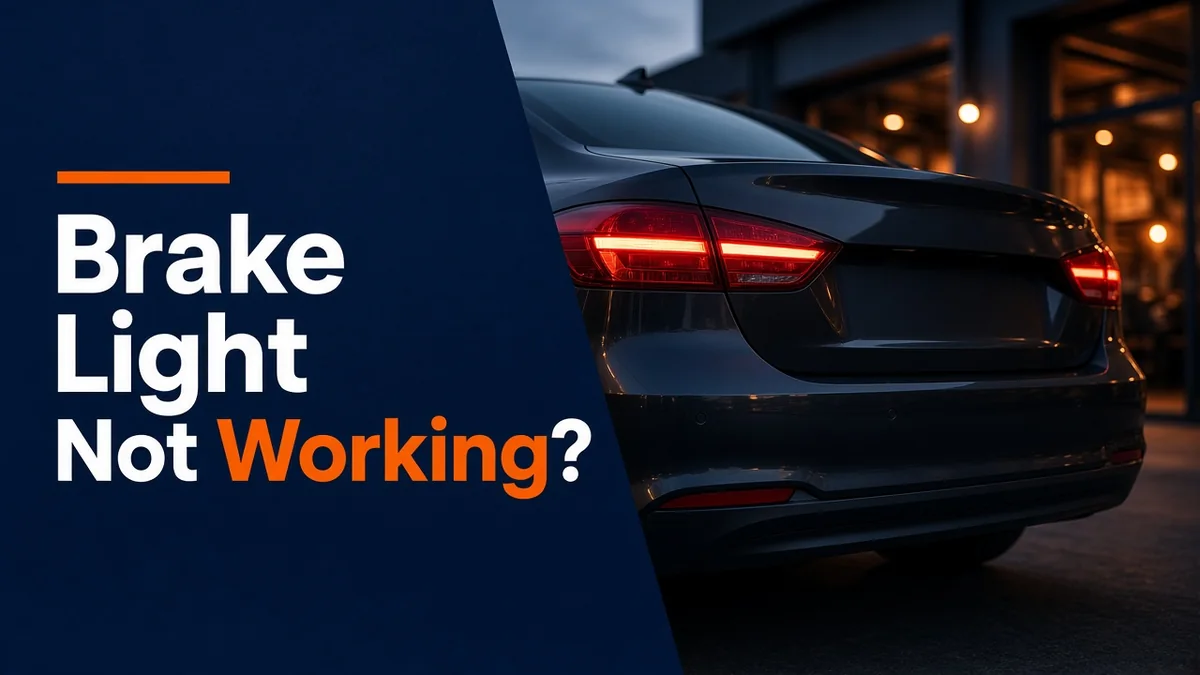
When a brake light stops working, the cause is usually one of four things: a burned-out bulb, a blown fuse, a faulty brake light switch at the pedal, or a wiring or socket problem. The pattern tells you where to start. If only one light is out, it is almost always the bulb or its socket. If all the brake lights are out at once, check the fuse and the brake light switch first. Most of these fixes cost under $150, and a bulb swap is often a five-minute job you can do yourself.
Tools You Need to Fix Brake Lights
- Replacement bulbs (the correct number from your manual or a parts store lookup)
- Screwdriver or trim tool to remove the lens or trunk liner
- Spare fuses of the correct amperage
- Test light or multimeter for checking power at the socket
- Dielectric grease for bulb sockets
- Contact cleaner or a small wire brush for corroded sockets
- Gloves (skin oils shorten halogen bulb life)
Most bulb and fuse fixes take 10 to 30 minutes with basic hand tools.
How to Check Your Brake Lights by Yourself
- Use a reflection: back up close to a garage door, window or shop front at night and press the pedal while watching in your mirrors.
- Record a video: prop your phone behind the car, start recording and press the pedal.
- Wedge the pedal: gently hold the pedal down with a sturdy stick or broom handle against the seat with the engine off, then walk around the back.
- Ask a helper: the quickest method, especially for checking the third light.
Diagnose by Symptom
| What you see | Most likely cause | First thing to check |
|---|---|---|
| One side out | Burned-out bulb | Swap the bulb; inspect the socket |
| Both sides and third light out | Fuse or brake light switch | Check the fuse, then the switch |
| Only the third (center) light out | Bulb or LED strip, or its wiring | Check the bulb or connector |
| Brake lights stay on all the time | Switch misadjusted or pedal stop missing | Look for a missing rubber bumper at the pedal |
| Lights flicker or work intermittently | Loose socket, corrosion or bad ground | Clean the socket and check the ground wire |
| Brake light works as a tail light only | Dual-filament bulb with one filament broken | Replace the bulb |
| New bulb, still not working | Wrong bulb type, bad socket or wiring | Confirm the bulb number and test for power |
Cause 1: a Burned-Out Bulb
Incandescent brake bulbs wear out like any other bulb, and it is by far the most common cause of a single dead light. Many cars use a dual-filament bulb that serves as both the tail light and the brake light, so a bulb can glow dimly at night but fail to brighten when you brake. Look at the old bulb: a broken or blackened filament confirms it.
How to Replace a Brake Light Bulb
- Check your owner’s manual for the bulb number and how to access it.
- Open the trunk or hatch and remove the access panel, or unbolt the tail light housing if your car requires it.
- Twist the socket counterclockwise to remove it from the housing.
- Pull or twist the old bulb out of the socket.
- Insert the new bulb without touching the glass if possible.
- Test the light with the pedal before reassembling.
- Refit the socket and housing, making sure the seal sits properly to keep water out.
Common Brake Light Bulb Numbers
| Bulb | Type | Where it is used |
|---|---|---|
| 7443 | Dual-filament wedge | Brake and tail light in many Asian-brand cars |
| 7440 | Single-filament wedge | Separate brake or turn light |
| 1157 | Dual-filament bayonet | Brake and tail light in many older cars |
| 1156 | Single-filament bayonet | Brake, turn or reverse light |
| 3157 | Dual-filament wedge | Brake and tail light in many American cars |
| 3156 | Single-filament wedge | Brake or turn light |
| 921 | Single-filament wedge | Often the third brake light |
Bulb numbers vary by model and trim, so confirm yours in the manual or with a parts store lookup before buying.
Cause 2: a Blown Fuse
If every brake light is out at once, including the third light, the fuse for the stop-lamp circuit is a prime suspect. The fuse box is usually under the hood or under the dashboard on the driver’s side, and the lid or owner’s manual shows which fuse protects the brake lights. A blown fuse has a broken metal strip inside. Replace it with one of the same amp rating. If the new fuse blows again, there is a short circuit that needs to be traced.
Cause 3: a Faulty Brake Light Switch
The brake light switch is a small plunger switch mounted above the brake pedal. When you press the pedal, it closes the circuit to the brake lights. When it fails or slips out of adjustment, the lights may not come on, may stay on, or may work only when you press hard.
Because the same switch also signals the car’s computer that you are braking, a bad switch can cause other symptoms:
- Cruise control that will not engage or will not cancel
- A shifter that will not come out of Park, because many cars need a brake signal to release it
- Push-button start that will not respond to the brake pedal
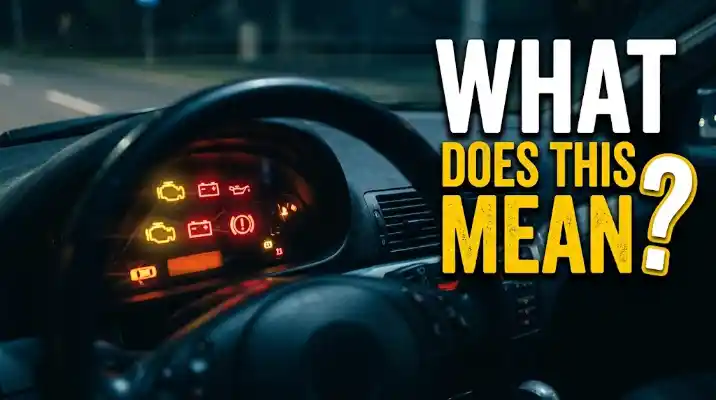
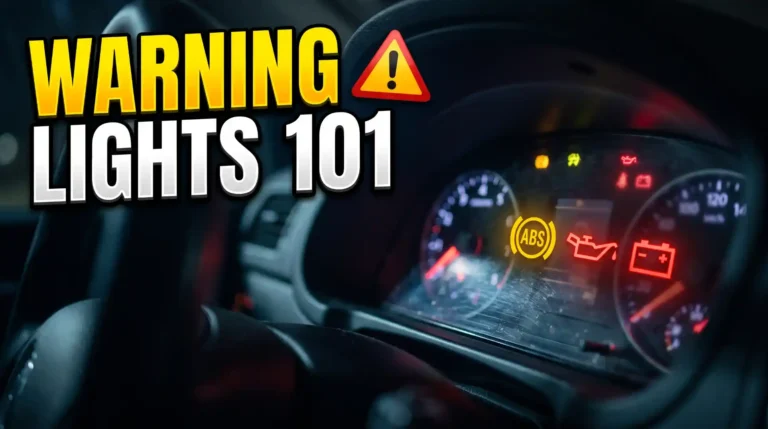
- Warning lights on the dash, such as ABS or traction control lights; our guide to ABS, oil and battery warning lights covers what they mean
Replacing the switch usually costs about $75 to $350 at a shop, depending on how hard it is to reach. The part itself is cheap: many aftermarket switches sell for roughly $10 to $25, and most parts-store listings fall between about $17 and $90 depending on the vehicle.
How to Test a Brake Light Switch
- Find the switch on a bracket above the brake pedal arm and unplug its connector.
- Set a multimeter to continuity or ohms.
- Probe the two terminals for the brake light circuit (check a wiring diagram if the switch has more than two pins).
- With the pedal released, the brake light contacts should read open; press the pedal and they should show continuity. On most switches the plunger is pushed in when the pedal is up, and the contacts close when the pedal moves away from it.
- No change between pressed and released means the switch has failed or is badly out of adjustment.
Can You Replace a Brake Light Switch Yourself?
On many cars, yes, in about 15 to 30 minutes. Most switches either twist a quarter turn to unlock or are held by a locknut. Unplug the connector, remove the old switch, fit the new one and plug it in. Many self-adjusting switches set themselves: pull the plunger fully out, install the switch with the pedal pulled up, then let the pedal return. Check that the brake lights come on with light pedal pressure and turn off when you let go. If the switch is buried behind trim or tied into cruise control wiring, a shop may be easier.
Cause 4: Wiring, Sockets and Grounds
Water getting into a tail light housing can corrode the socket contacts, so the bulb cannot make a good connection. A broken ground wire, damaged wiring in the trunk hinge area, or a poorly spliced trailer wiring kit can also cut power to the lights. Signs include flickering, lights that work when you tap the housing, or a green crust on the socket contacts. Cleaning the contacts with electrical contact cleaner and a small brush often fixes corrosion; damaged wiring needs repair.
Third Brake Light Not Working
The center high-mounted stop lamp (CHMSL), or third brake light, has been required on new passenger cars in the US since the 1986 model year and on light trucks since 1994. If only the third light is out:
- Bulb or LED failure: many third brake lights are LED assemblies that must be replaced as a unit.
- Wiring through the trunk lid or liftgate: the harness flexes every time you open it and wires can break inside the rubber boot.
- Water intrusion: a leaking seal can corrode the connector.
- Loose connector: common after trunk, spoiler or headliner work.
A failed third brake light can fail a state safety inspection in some states, so fix it even if the main lights work.
Trailer Brake Lights Not Working
- Bad ground: the most common cause. The trailer’s white ground wire must connect to clean, bare metal.
- Corroded plug: clean the vehicle and trailer connectors and apply dielectric grease.
- Blown trailer fuse or relay in the vehicle’s fuse box.
- Wiring converter: vehicles with separate brake and turn bulbs may need a powered converter module for the trailer.
- Test with a circuit tester at the vehicle plug to see whether the problem is the vehicle or the trailer.
Brake Lights That Stay On
If your brake lights glow even when you are not touching the pedal, look up under the dash. Many pedals press against the switch through a small rubber or plastic bumper. When that bumper falls out, the switch never fully releases. A new bumper costs a few dollars. Otherwise the switch may be misadjusted or failed. Lights stuck on will drain the battery overnight and confuse drivers behind you, so fix it promptly; our guide to telling whether your battery is dead helps if it has already drained.
LED Brake Lights
Many newer cars use LED brake lights built into the tail light assembly. Individual LEDs rarely fail, but when a section goes dark, the whole assembly often has to be replaced, which can cost from about $100 to several hundred dollars. If you convert from bulbs to aftermarket LED bulbs, choose ones designed for your car; some cause bulb-out warnings or flicker because they draw less current than the original bulbs.
Brake Light Repair Costs
| Repair | Typical cost |
|---|---|
| Brake light bulb (DIY) | $5–$20 |
| Bulb replacement at a shop | $20–$60 |
| Fuse | Under $5 (DIY) |
| Brake light switch replacement | $75–$350 |
| Socket or wiring repair | $100–$300 |
| LED tail light assembly | $100–$800+ |
Is It Illegal to Drive With a Brake Light Out?
In the US, every state requires working brake lights, and a burned-out brake light is a common reason for a traffic stop. Cars built since the 1986 model year must also have a center high-mounted stop light, the third brake light. Many police officers issue a warning or a fix-it ticket that is dismissed once you prove the repair, but rules vary by state. A dead brake light can also fail a state safety inspection; our guide to car inspections covers what inspectors check.
Why it matters: brake lights are how drivers behind you know you are slowing down. With a light out, especially at night or in rain, the risk of being rear-ended goes up. Replace a dead bulb as soon as you notice it, and until then leave extra space and brake early and gently.
Related guides: dashboard symbols and meanings, what to do after a car accident and how to check car fluids.
Brake Light FAQ
Common signs are brake lights that do not come on or stay on, cruise control problems, and a shifter that will not leave Park. You may also see ABS or traction control warning lights.
It varies by car. Look at the fuse box lid or your owner’s manual for the stop-lamp or brake-light fuse, often in the under-dash fuse box.
Yes. All US states require working brake lights. Many officers give a warning or a fix-it ticket, but fines vary by state.
The bulb may be the wrong type, inserted incorrectly, or the socket may be corroded. If no brake lights work, the fuse or switch is more likely than the bulb.
Common causes are a failed LED or bulb, broken wires where the harness flexes in the trunk lid or liftgate, a loose connector or water corrosion.
It is not a good idea. Drivers behind you may get no warning when you brake, it is illegal in every state, and on many cars the shifter will not leave Park or cruise control will misbehave. Replace the switch as soon as you can.