Studded Tires and Tire Chains: Where They’re Legal and When to Use Them
Studded tires have small metal pins in the tread that bite into ice, giving the best grip available on glare ice and hard-packed snow. Most US states allow them only in winter, commonly from around October or November through March or April, a few allow them year-round, and some ban or heavily restrict them because they wear grooves into pavement. Tire chains are a temporary add-on for deep snow and steep mountain roads, and some states require drivers to carry or fit them when chain controls are posted. Rules change, so check your state department of transportation before winter.
How Studded Tires Work
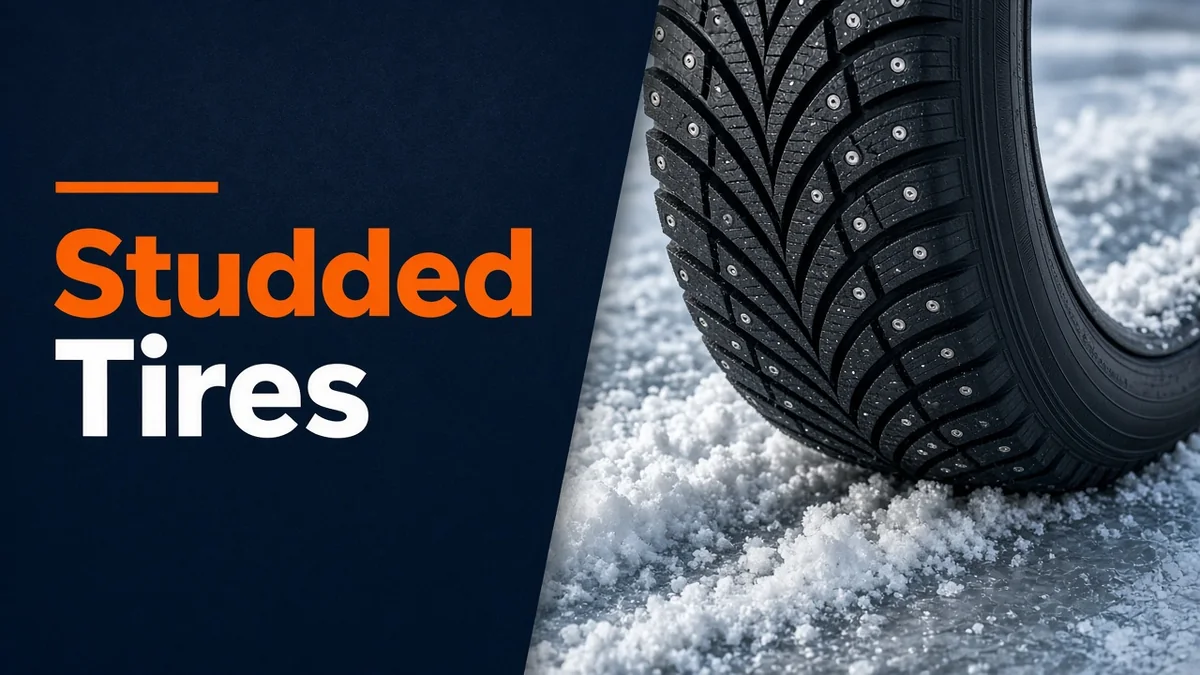
Studded tires are winter tires with tungsten carbide pins set into the tread blocks. Each stud protrudes slightly so it can dig into ice where rubber alone would slip. Some winter tires come pre-studded; others are “studdable” with molded holes where a tire shop can install studs.
Studded Tires vs Studless Winter Tires vs All-Season
| Studded winter tires | Studless winter tires | All-season tires | |
|---|---|---|---|
| Glare ice | Best | Good | Poor |
| Packed snow | Very good | Very good | Fair |
| Deep snow | Good | Good | Poor to fair |
| Dry pavement | Worse grip, noisy | Good | Best |
| Wet pavement | Worse | Good | Good |
| Road wear | Damages pavement | Normal | Normal |
| Legal everywhere? | No | Yes | Yes |
For most drivers in snowy regions, studless winter tires are the best all-round choice. Studded tires make most sense where roads are frequently icy, such as mountain passes, rural roads and northern states with long freeze-thaw seasons. Our winter car prep and snow tires guide covers choosing and fitting winter tires.
Where Are Studded Tires Legal?
Studded tire laws are set by each state and can change. Broadly:
- Seasonal permission: most northern and mountain states allow studs during a winter window, with fines for using them outside the season.
- Year-round permission: a smaller number of states allow studs all year.
- Bans or restrictions: some states prohibit studs or allow only lightweight studs, because of pavement damage.
- Out-of-state drivers: the rules of the state you are driving in apply, so check before road trips.
Examples of seasonal windows include California (November 1 through April 30), Washington (November 1 through March 31) and Oregon (November 1 through March 31), though states can extend dates in bad winters. Always confirm the current rules with your state DOT or DMV.
How to Use Tire Chains
Chains wrap around the tire to add traction in deep snow and on ice. They are designed for short, slow stretches, not for normal driving on clear roads.
- Buy the right size: chains must match your tire size, and some vehicles have limited clearance and require low-profile chains or cables.
- Practice at home: fit them once in dry conditions so you know how.
- Fit to the drive wheels: front wheels on front-wheel drive, rear on rear-wheel drive; check the manual for all-wheel drive.
- Pull over safely: well off the road before fitting them.
- Tighten and recheck: after driving a short distance.
- Drive slowly: typically under about 30 mph, avoid sudden acceleration and braking, and remove chains on clear pavement.
Chains and clearance: chains that are the wrong size or fitted to a car without enough clearance can damage brake lines, sensors and bodywork. Check your owner’s manual before buying; some cars prohibit traditional chains and allow only specific traction devices.
Chain Laws and Traction Rules
Mountain states often post chain controls during storms. California uses levels that range from requiring chains on most vehicles to allowing four-wheel-drive vehicles with snow tires to proceed. Colorado has a traction law that requires adequate tires, often snow-rated or all-weather tires with enough tread, or chains or approved traction devices when it is in effect. Some states require commercial trucks to carry chains during winter months. Fines for ignoring chain controls can be significant, especially if your vehicle blocks a road.
Pros and Cons of Studded Tires
| Pros | Cons |
|---|---|
| Best grip on ice and hard-packed snow | Noisy on dry pavement |
| Confidence on mountain and rural roads | Reduced grip on dry and wet pavement |
| Shorter stopping distances on ice | Illegal or restricted in some states and seasons |
| Useful for early-morning black ice | Wear grooves into roads; some states charge fees |
| Must be swapped off before the legal season ends |
Studded Tire Tips
- Buy a full set of four; mixing studded and non-studded tires causes unstable handling
- Break in new studded tires gently for the first few hundred miles so studs seat properly
- Mount them on a second set of wheels to make seasonal swaps cheaper
- Check tread depth each season; our guide to how long tires last covers wear
- Remove them promptly when the legal season ends
Winter driving puts extra strain on the whole car. Our guides to warming up your car in winter and stopping car windows fogging up cover other cold-weather habits, and preventing rust explains how to deal with road salt.
Related guides: car maintenance schedule by mileage, car storage and tire size calculator.
Studded Tires and Chains FAQ
In many states, yes, but usually only during a winter season. Some states allow them year-round, and some ban or restrict them. Check your state’s current rules.
Commonly from around October or November through March or April, depending on the state. California’s window, for example, is November 1 through April 30.
On glare ice, yes. On dry, wet or slushy pavement, studless winter tires usually perform better and are quieter.
Most chain makers recommend staying below about 30 mph. Always follow the chain manufacturer’s guidance.
Sometimes. Chain controls often exempt AWD or 4WD vehicles with snow-rated tires at lower levels, but not in the most severe conditions.
It is not recommended. Use four studded tires to keep grip balanced front and rear.