Does Car AC Use Gas? How Much It Affects Your MPG
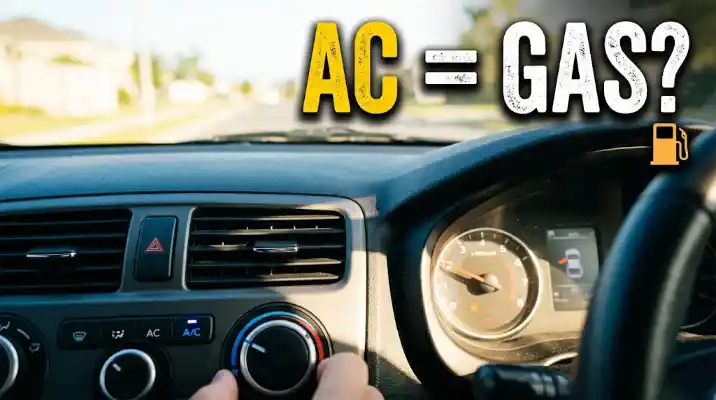
Does car AC use gas? It does, but less than many drivers think at highway speed. Yes, using the air conditioning in a gas car does use extra fuel. The AC compressor is driven by the engine, so the engine burns more gas to run it. According to the US Department of Energy’s fueleconomy.gov, in very hot conditions AC use can reduce a conventional car’s fuel economy by more than 25%, especially on short trips. On milder days and longer drives the impact is much smaller. At highway speeds, the AC is often about as efficient as driving with the windows down, because open windows add drag.
Here is how car AC affects fuel use, when windows-down driving saves more, how hybrids and EVs are different, and practical ways to stay cool while using less fuel.
Key Takeaways
- AC uses gas: the engine powers the compressor, so fuel use rises.
- Biggest effect: very hot days and short trips, where it can cut fuel economy by over 25%.
- Low speeds: windows down usually uses less fuel.
- Highway speeds: use the AC; open windows add aerodynamic drag.
- Fan only (AC off) uses almost no extra fuel.
How Car Air Conditioning Uses Fuel
In a gasoline or diesel car, a belt from the engine drives the AC compressor. When the AC is on, the compressor adds load to the engine, and the engine burns more fuel to keep the same speed. The harder the system works, on a scorching day with the cabin set cold and the fan on high, the more fuel it takes. The blower fan alone, with the AC button off, uses very little energy.
How Much Gas Does the AC Use?
| Situation | Typical impact on fuel economy |
|---|---|
| Very hot day, short trips, cabin heat-soaked | Can exceed 25% reduction |
| Hot day, longer drives | Moderate reduction, often in the single digits to low teens (%) |
| Mild day, AC on low or economy setting | Small reduction |
| Fan only, AC compressor off | Negligible |
The first minutes of a drive are the most expensive, because the AC is working hardest to pull heat out of a hot cabin. On a long highway drive, the added load is spread over many miles, so the percentage impact is lower. Newer cars with efficient variable-displacement compressors and better cabin insulation also tend to use less energy for cooling.
AC vs Windows Down: Which Uses Less Gas?
It depends on your speed. Open windows increase aerodynamic drag, and drag rises sharply with speed.
- Around town and at lower speeds: open windows usually use less fuel than the AC.
- At highway speeds: the extra drag from open windows can use about as much fuel as the AC, or more, so fueleconomy.gov recommends using the AC at highway speeds.
Comfort and safety matter too: in extreme heat, the AC keeps you alert, and open windows at speed are noisy and can let in rain and debris.
Does AC Affect Hybrids and Electric Cars?
Yes, and often more on a percentage basis. Hybrids and EVs use electric AC compressors powered by the high-voltage battery. Because these cars are so efficient to begin with, the energy used for cooling is a bigger share of the total. In an EV, heavy AC use on a hot day reduces driving range; in a hybrid, it can make the engine run more often. Pre-cooling an EV while it is still plugged in uses grid power instead of battery range.
Does the Heater Use Gas?
In a conventional gas car, the heater mostly uses waste heat from the engine’s coolant, so it adds very little fuel use, apart from the blower fan. However, the defroster setting often runs the AC compressor to dry the air, which does use some fuel. In EVs, heating is one of the biggest drains on range in cold weather.
How to Use Your AC More Efficiently
- Vent first: open the windows or doors for a minute before driving to let hot air escape, then close them and turn on the AC.
- Use recirculation once the cabin is cooling, so the system cools already-cool air instead of hot outside air.
- Do not over-cool: set a comfortable temperature instead of maximum cold with the fan on high the whole drive.
- Park in the shade or use a windshield sunshade to keep the cabin cooler.
- Use Eco or economy climate modes if your car has them.
- Combine errands into one trip so the AC is not repeatedly cooling a hot car.
- Keep the system healthy: a clean cabin air filter and a clean condenser help the AC work efficiently.
- Remove roof racks and cargo boxes when not in use; they add drag either way.
Other Hot-Weather Fuel Economy Tips
- Check tire pressure; underinflated tires waste fuel.
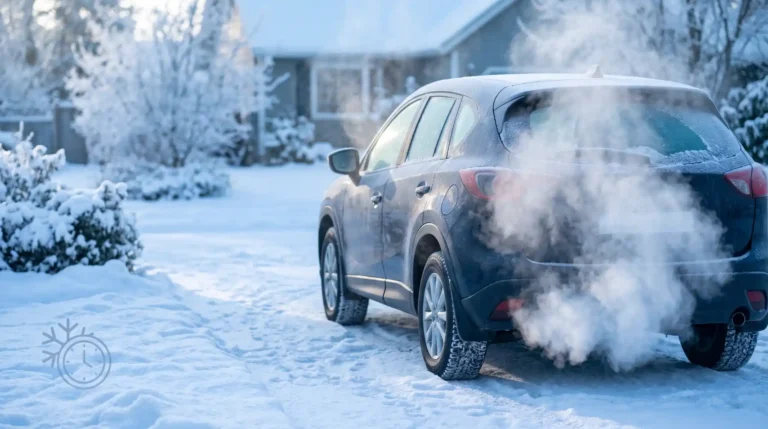
- Avoid long idling to keep the car cool; idling burns fuel and gets zero miles per gallon.
- Drive smoothly and at moderate speeds.
- Remove unnecessary weight from the trunk.
Is It Worth Turning the AC Off to Save Gas?
For most drivers, the savings from avoiding AC are modest compared with the comfort and safety it provides in real heat. Use the windows around town on pleasant days, the AC on the highway and in hot weather, and the efficiency tips above. If your AC is running constantly but not cooling well, the system may be low on refrigerant or have another problem, which also wastes fuel.
Try the calculator: use our fuel cost calculator to estimate your gas costs.
Car AC and Fuel FAQ
Yes. In gas and diesel cars the engine drives the AC compressor, so running the AC burns extra fuel.
In very hot conditions it can reduce fuel economy by more than 25 percent, especially on short trips, according to fueleconomy.gov. On mild days and longer drives the effect is much smaller.
At lower speeds, open windows usually use less fuel. At highway speeds, the drag from open windows can cost as much as the AC, so using the AC is recommended.
Very little. The blower fan uses a small amount of electrical power, but the AC compressor is what adds most of the extra fuel use.
Yes. EVs use battery power for cooling, so heavy AC use on hot days reduces range. Pre-cooling while plugged in helps.
In gas cars, the heater mostly uses waste engine heat and adds little fuel use. Defrost mode often runs the AC compressor, which uses some fuel.
Yes, once the cabin has cooled. Recirculating already-cool air means the AC works less than when cooling hot outside air.
Avoid long idling. It burns fuel with no miles traveled. Use shade, sunshades and pre-cooling features instead.