Car Storage: Options, Costs and How to Store a Car Long Term
Car storage typically costs $50 to $150 a month for an outdoor parking space, $100 to $300 for a covered spot, $125 to $250 for an enclosed 10×20 storage unit, and $150 to $450 or more for indoor climate-controlled storage. Most cars fit in a 10×20-foot unit; larger trucks and SUVs may need 10×25 or 10×30. Whichever you choose, prepare the car properly so the battery, tires, fuel and seals survive the time it sits.
This guide compares storage options and prices, explains what size you need and what facilities require, and gives a step-by-step checklist for storing a car long term and bringing it back to life afterward.
Key Takeaways
- Outdoor: cheapest, about $50–$150 a month, but exposed to sun and weather.
- Covered: about $100–$300 a month; protects from sun and hail.
- Indoor unit: about $125–$250 for a 10×20; climate control adds roughly 20–30%.
- Prep matters: fresh oil, a full tank with stabilizer, a battery maintainer and correct tire pressure.
- Insurance: keep at least comprehensive coverage; many facilities require it.
Car Storage Options and Costs
| Type | Typical monthly cost | Protection | Best for |
|---|---|---|---|
| Outdoor uncovered parking | $50–$150 | Security fence and gate only | Short-term, budget, daily drivers |
| Covered parking (carport style) | $100–$300 | Sun, rain and hail from above | Mid-term storage in sunny or hail-prone areas |
| Indoor drive-up storage unit (10×20) | $125–$250 | Enclosed, private, weather-protected | Most long-term storage |
| Climate-controlled indoor | $150–$450+ | Stable temperature and humidity | Classic, collector and luxury cars, 6+ months, humid climates |
| Peer-to-peer garage or driveway rental | Often $50–$200 | Varies | Flexible, local options |
| Specialty or collector car storage | $300–$600+ | Climate control, security, battery care, detailing | High-value vehicles |
Prices vary widely by city: urban storage can cost twice as much as rural storage. Many facilities offer first-month discounts, so compare the ongoing rate, not just the promotion.
What Size Storage Unit Do You Need for a Car?
| Unit size | Fits |
|---|---|
| 10×15 ft | Very small cars and compact coupes, with little room to spare |
| 10×20 ft | Most cars, small SUVs and minivans |
| 10×25 ft | Larger SUVs and many pickups |
| 10×30 ft | Full-size crew-cab pickups, or a car plus other items |
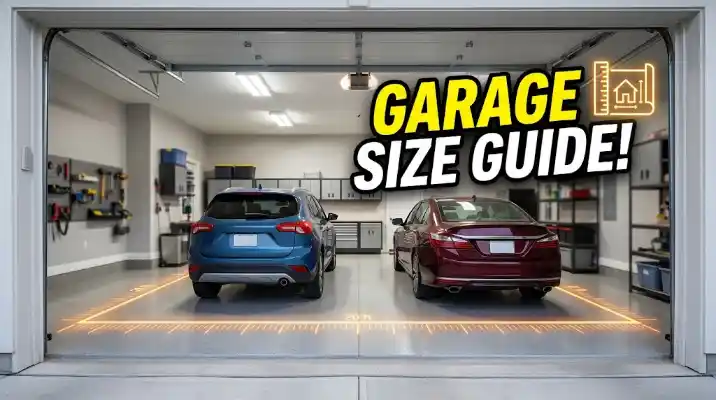
Measure your vehicle’s length, width with mirrors and height, and check the unit’s door opening, not just the floor size. Leave room to open at least one door.
Can You Store a Car in a Storage Unit?
Yes, at most self-storage facilities, but they usually have rules:
- The car must usually be registered and insured, and in some cases in running condition.
- You must usually be the registered owner or show authorization.
- Working on the car, running the engine for long periods and storing fuel cans are typically prohibited.
- Leaking fluids must be controlled; some facilities require a drip pan.
- A lock of your own and a rental agreement that lists the vehicle are standard.
How to Prepare a Car for Long-Term Storage
For storage of a month or more, these steps prevent the most common problems: dead batteries, flat-spotted tires, stale fuel, moisture and pests.
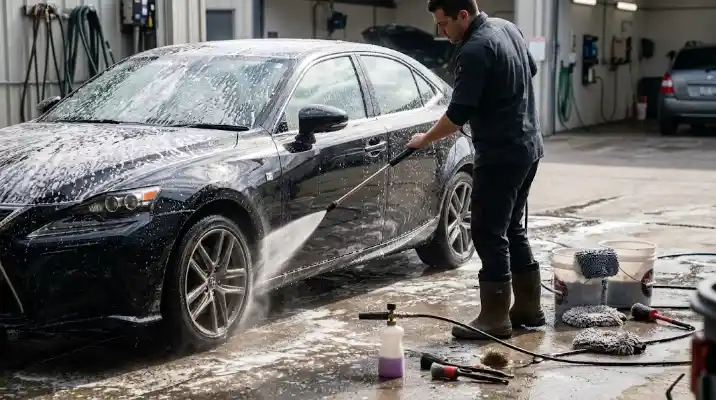
- Wash and wax it: dirt, bird droppings and sap can damage paint over time. Clean the interior and remove food and trash.
- Change the oil: used oil contains contaminants that can harm engine parts when the car sits.
- Fill the tank and add fuel stabilizer: a full tank reduces condensation, and stabilizer keeps gasoline fresh for months. Drive a few miles so it circulates.
- Top up fluids: coolant, brake fluid and washer fluid.
- Protect the battery: connect a battery maintainer if the facility allows power access, or disconnect the negative cable for storage without power.
- Inflate the tires: set them to the recommended pressure or slightly above to reduce flat spots. For very long storage, some owners use jack stands to take weight off the tires.
- Keep pests out: block the exhaust tip and air intake with steel wool or covers (with a reminder note on the steering wheel), and use rodent deterrents; avoid mothballs inside the cabin.
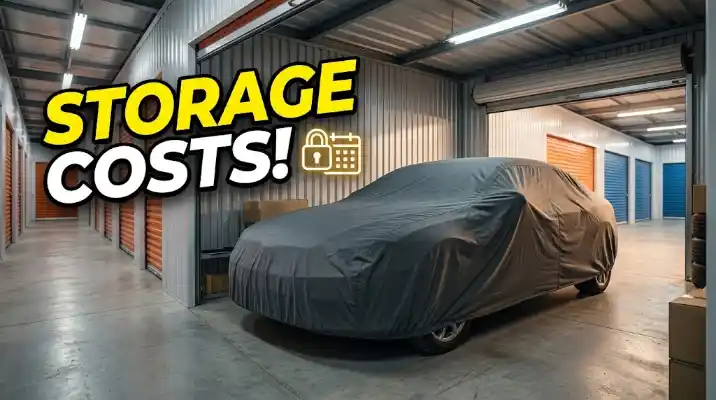
- Use a breathable car cover indoors or a weather-rated cover outdoors, not a plastic tarp, which traps moisture.
- Do not engage the parking brake for long storage, since pads can stick to rotors. Use wheel chocks instead.
- Handle paperwork: talk to your insurer about storage or reduced coverage, and check whether your state offers a non-operational or storage registration status.
Insurance for a Stored Car
Do not simply cancel insurance on a stored car. Liability coverage may not be needed while it sits, but comprehensive coverage protects against theft, fire, vandalism, flooding and storage-facility damage, and many facilities and lenders require it. Some insurers offer storage or “parked car” coverage at a lower cost. Also check whether canceling insurance would trigger registration problems in your state; some states require continuous coverage unless you surrender the plates.
Short-Term Storage (Under a Month)
For a few weeks, you usually only need to park in a safe spot, fill the tank, check tire pressure and, if possible, connect a battery maintainer. If someone can start and drive the car for 15–20 minutes every couple of weeks, that helps, but short idling in the driveway without driving can do more harm than good because it creates moisture without fully warming the engine.
Bringing a Car Out of Storage
- Remove exhaust and intake covers, rodent deterrents and the car cover.
- Look for signs of pests, leaks and damaged wiring under the hood.
- Check and adjust tire pressure.
- Reconnect or check the battery; charge it if needed.
- Check oil, coolant and brake fluid levels.
- Start the car and let it idle a minute, watching for warning lights.
- Test the brakes gently at low speed; light surface rust on rotors usually clears after a few stops.
- Drive gently for the first few miles and wash the car.
Storing an Electric Vehicle
EVs store differently. Most manufacturers recommend leaving the high-voltage battery around 50% to 70% charge, not full or near empty, and many suggest keeping the car plugged in with a storage or reduced charge limit if a charger is available. The small 12-volt battery can still go flat, so follow the owner’s manual for long-term storage mode.
How to Save on Car Storage
- Compare several facilities and ask about long-term rates.
- Choose covered rather than indoor storage if your car is not valuable or sensitive to humidity.
- Share a larger unit with another item you need to store.
- Look at peer-to-peer rentals of garages and driveways in your area.
- Pay several months in advance if the facility offers a discount.
Car Storage FAQ
Usually about $50 to $150 a month outdoors, $100 to $300 covered, $125 to $250 in an indoor 10 by 20 unit and $150 to $450 or more for climate-controlled storage, depending on location.
A 10 by 20 foot unit fits most cars, small SUVs and minivans. Larger SUVs and pickups may need a 10 by 25 or 10 by 30 unit.
Yes, most self-storage facilities allow it, but they usually require the car to be registered and insured and do not allow working on it or storing fuel cans.
Wash it, change the oil, fill the tank and add fuel stabilizer, connect a battery maintainer or disconnect the battery, inflate the tires, keep pests out and use a breathable cover.
If you cannot use a battery maintainer, disconnect the negative cable to prevent the battery from draining. A maintainer is the better option when power is available.
Keep at least comprehensive coverage to protect against theft, fire, flooding and damage. Many storage facilities and lenders require insurance.
It is worth it for classic, collector or luxury cars and for storage longer than about six months in humid or very hot or cold climates. It typically costs 20 to 30 percent more.
Many cars can sit a few weeks without problems. Beyond about a month, prepare the car for storage to protect the battery, tires, fuel and seals.