Car Breathalyzer (Ignition Interlock): How It Works and What It Costs
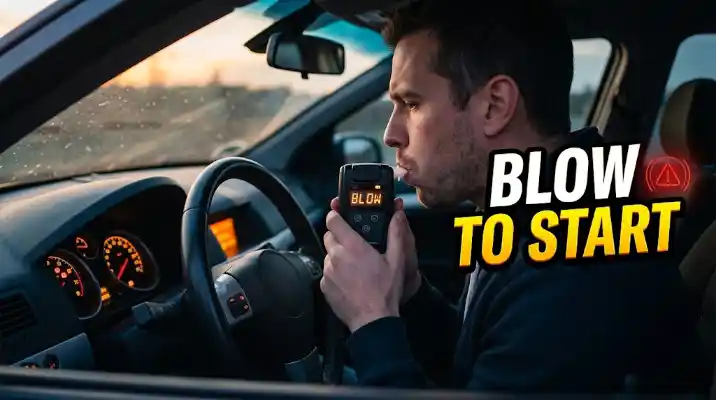
A car breathalyzer, officially called an ignition interlock device (IID), is a small breath-testing unit wired into a car’s ignition. The driver must blow into it before the engine will start, and again at random intervals while driving. If it detects alcohol above a set limit, usually around 0.02 breath alcohol concentration, the car will not start and the result is recorded and reported. Most people get one because a court or state DMV requires it after a DUI or DWI.
This guide explains how interlocks work, what they typically cost, what to expect day to day, and how they differ from the personal breathalyzers you can buy to check yourself.
Key Takeaways
- Purpose: stops the car from starting if the driver has been drinking.
- Who needs one: usually drivers ordered to by a court or DMV after a DUI; rules differ by state.
- Typical cost: about $70–$150 to install, $60–$150 a month to lease and calibrate, and $50–$150 to remove.
- Rolling retests: you will be asked to blow again while driving, with a few minutes to pull over safely.
- Personal breathalyzers are a different product and cannot tell you it is safe to drive.
Important: this article is general information, not legal advice. Interlock requirements, program lengths and fees are set by each state and your court order. Check with your state DMV, your interlock provider or a DUI attorney for the rules that apply to you.
How an Ignition Interlock Device Works
- Startup test: you turn the key or press start, and the device asks for a breath sample. You blow steadily into the mouthpiece for a few seconds, sometimes with a hum or a specific breathing pattern that makes it harder for someone else to blow for you.
- Result: if your breath alcohol is below the set limit, the car starts. If it is above, the car stays locked and you must wait before retesting.
- Rolling retests: after you start driving, the device asks for more samples at random times, commonly every 10 to 30 minutes or so. You get a few minutes to pull over safely before blowing.
- Recording and reporting: every test, failure, missed retest and any sign of tampering is logged. Many devices also take a photo of the person blowing. The data is downloaded at regular service visits and sent to your monitoring authority.
- Calibration visits: you return to the service center, often every 30 to 60 days, to download data and recalibrate the device.
A missed or failed rolling retest does not shut the engine off while you drive, which would be dangerous. Instead, it is logged, and some devices sound the horn or flash the lights until you stop the car and turn it off.
How Much Does a Car Breathalyzer Cost?
| Cost item | Typical range |
|---|---|
| Installation | $70–$150 |
| Monthly lease, monitoring and calibration | $60–$150 per month |
| Removal at the end of the program | $50–$150 |
| Missed appointment, lockout reset or violation fees | $25–$100+ each, varies by provider |
| Insurance filing (such as an SR-22) and higher premiums | Varies widely by state and insurer |
Over a typical 6 to 12 month requirement, many drivers pay roughly $500 to $2,000 in interlock costs alone, not counting fines, court fees or increased insurance. Some states offer reduced-cost programs for drivers who qualify based on income, so ask your provider or DMV.
Who Has to Install an Ignition Interlock?
Every US state has an ignition interlock law, but the details vary widely. Depending on the state, an interlock may be required for:
- All DUI or DWI convictions, including many first offenses
- Repeat offenses or high blood alcohol levels
- Refusing a chemical test
- Getting a restricted license so you can drive to work or school during a suspension
Program lengths range from a few months to several years, and some states require a clean period with no violations before the device can come off. Organizations such as MADD support interlock requirements because research reviewed by NHTSA shows interlocks reduce repeat drunk driving while they are installed.
What Can Cause a Failed Test?
Interlocks detect alcohol in your breath, including from sources other than drinks. Common culprits include:
- Mouthwash and some breath sprays that contain alcohol
- Hand sanitizer used right before blowing
- Some foods and drinks, such as fermented foods, ripe fruit, certain baked goods, kombucha or energy drinks, can briefly leave alcohol in the mouth
- Cigarette smoke or vaping right before a test can interfere with the sensor
Most providers recommend waiting about 15 minutes after eating, drinking anything other than water, smoking or using mouthwash, and rinsing your mouth with water before you blow. If you fail, wait and retest; mouth alcohol usually clears quickly, while alcohol from drinking does not.
Living With an Interlock: Practical Tips
- Allow extra time: the startup test takes a minute or two, and warm-up can take longer in very cold weather.
- Keep your service appointments: missing a calibration visit can lock the car and be reported as a violation.
- Only you should drive the car, or anyone who does must be trained on the device, since every test is recorded.
- Never try to bypass it: tampering, disconnecting it or having someone else blow is illegal and is detected.
- Protect your battery: interlocks draw a little power; if the car sits for long periods, a battery maintainer helps.
- Tell your mechanic before any repair that involves the battery or electrical system.
Personal Breathalyzers vs Ignition Interlocks
The term “car breathalyzer” is also used for personal breathalyzers: keychain or plug-in devices, usually $20 to $200, that let you check your own breath alcohol level. They are a different product with a different purpose.
| Ignition interlock device | Personal breathalyzer | |
|---|---|---|
| Purpose | Legally required device that controls whether the car starts | Personal estimate of your alcohol level |
| Installed in the car | Yes, wired to the ignition | No, handheld or phone-connected |
| Accuracy | Fuel-cell sensor, professionally calibrated | Varies; cheaper semiconductor sensors are less accurate |
| Legally meaningful | Yes, results are reported | No |
| Cost | $60–$150 a month plus fees | $20–$200 one-time |
A personal breathalyzer reading below the legal limit does not mean you are safe to drive. Alcohol keeps absorbing into your blood after your last drink, devices can read low, and impairment starts well below the 0.08 legal limit in most states. If you have been drinking, the safest choice is not to drive.
Will New Cars Have Built-In Breathalyzers?
Federal law passed in 2021 directed NHTSA to develop a standard for technology that prevents drunk or impaired driving in new cars. Researchers and automakers are testing passive systems that detect alcohol through touch sensors or cabin air, rather than a device you blow into. As of 2026 there is no requirement in effect for new cars, and the timeline depends on the rulemaking process.
For more safety know-how, see our driving and safety guides.
Car Breathalyzer FAQ
A car breathalyzer, or ignition interlock device, is a breath-testing unit connected to the ignition. The driver must pass a breath alcohol test before the car starts and again at random times while driving.
Installation usually costs about $70 to $150, plus about $60 to $150 a month for leasing, monitoring and calibration, and about $50 to $150 to remove the device at the end.
Most devices are set to about 0.02 breath alcohol concentration, far below the 0.08 legal driving limit, though the exact setting depends on the state program.
The engine will not shut off while you drive, but the failure is recorded and reported. Some devices sound the horn or flash the lights until you pull over and turn the car off.
Yes. Alcohol-based mouthwash, some breath sprays and certain foods can cause a positive reading. Wait about 15 minutes and rinse your mouth with water before testing.
It depends on your state and court order. Requirements range from a few months to several years, and some programs require a period with no violations before removal.
Anyone who drives the car must take the breath tests, and all results are logged under the program. Check your program rules before letting someone else drive.
Some fuel-cell personal breathalyzers are reasonably accurate, but cheaper models can read low or high. None can tell you it is safe to drive after drinking.