How Much Does a Car Weigh? Average Weights by Vehicle Type
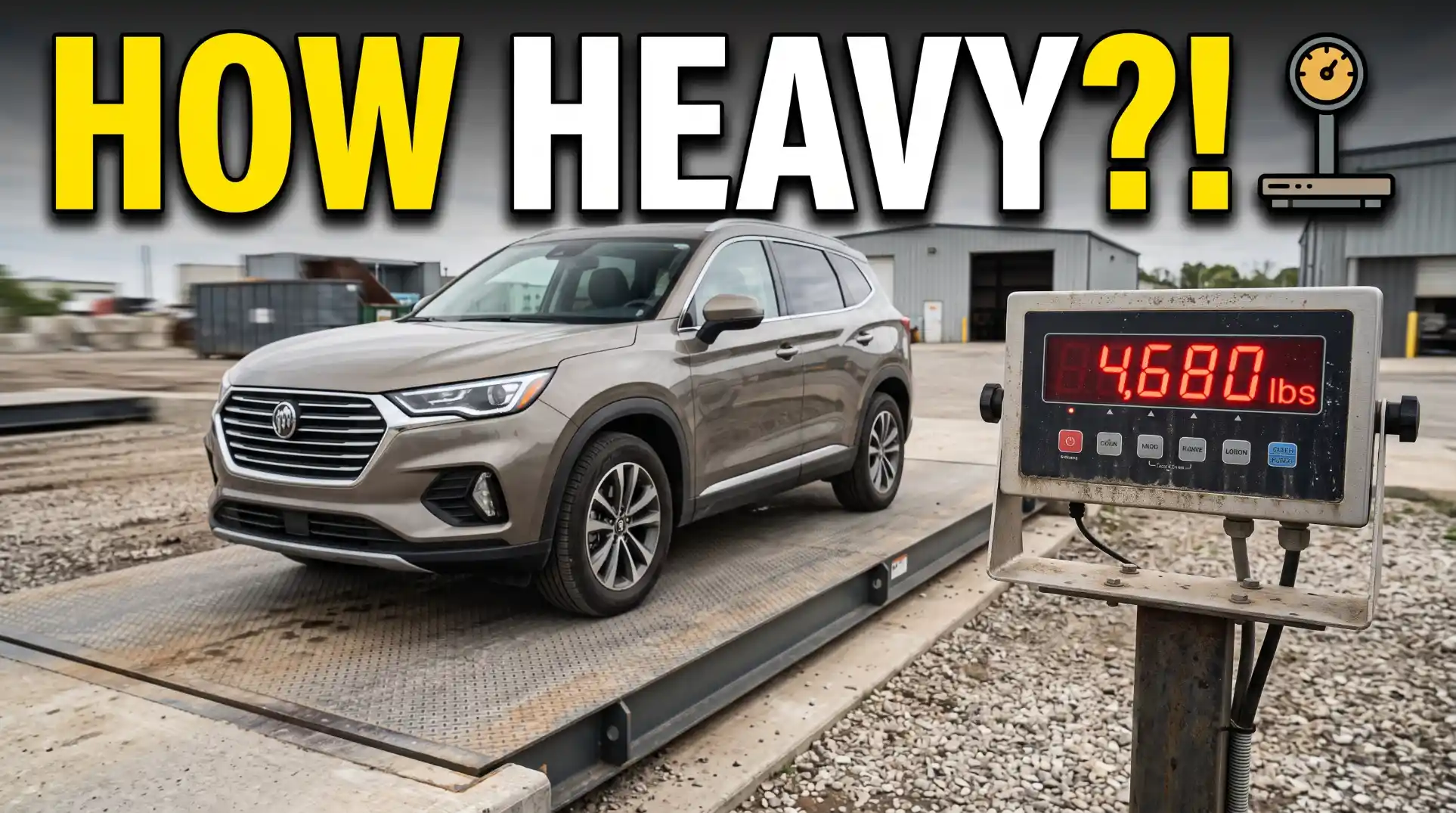
How much does a car weigh? More than most people guess. The average new vehicle sold in the US weighs about 4,350 pounds (roughly 2 tons), according to the EPA’s 2025 Automotive Trends Report, which covers model year 2024. Small cars typically weigh 2,500 to 3,200 pounds, midsize sedans about 3,300 to 3,600 pounds, SUVs 3,500 to 6,000 pounds, and full-size pickups 4,500 to 6,000 pounds or more. Electric vehicles are usually several hundred pounds heavier than similar gas models because of their batteries.
Below you will find typical weights by vehicle type, the difference between curb weight and GVWR, how to find your own car’s weight, and why weight matters for safety, towing and running costs.
Key Takeaways
- Average new vehicle: about 4,354 lb (EPA, model year 2024).
- Small car: about 2,500–3,200 lb. Midsize sedan: about 3,300–3,600 lb.
- SUVs and pickups: commonly 4,000–6,000 lb; heavy-duty trucks more.
- EVs often weigh 10–30% more than comparable gas cars.
- Find your car’s weight in the owner’s manual or on the driver door-jamb sticker (GVWR).
How Much Does a Car Weigh by Type?
| Vehicle type | Typical curb weight (pounds) | Approx. in tons |
|---|---|---|
| Microcar (such as a two-seat city car) | About 1,800–2,200 | About 1 |
| Subcompact or compact car | 2,500–3,200 | 1.25–1.6 |
| Midsize sedan | 3,300–3,600 | 1.65–1.8 |
| Full-size sedan | 3,600–4,300 | 1.8–2.15 |
| Compact SUV or crossover | 3,300–3,900 | 1.65–1.95 |
| Midsize SUV | 4,000–4,800 | 2–2.4 |
| Full-size SUV | 5,200–6,000 | 2.6–3 |
| Minivan | 4,300–4,700 | 2.15–2.35 |
| Half-ton pickup truck | 4,500–5,700 | 2.25–2.85 |
| Heavy-duty pickup | 6,000–8,000+ | 3–4+ |
| Compact or midsize EV | 3,800–4,800 | 1.9–2.4 |
| Large electric SUV or pickup | 5,500–9,000+ | 2.75–4.5+ |
Weights vary with engine, trim, drivetrain and options; all-wheel drive, larger engines, panoramic roofs and bigger batteries all add weight. Check your exact model for precise figures.
Why Cars Keep Getting Heavier
EPA data shows new vehicles today are heavier on average than a decade ago, driven mainly by the shift from sedans to SUVs and pickups, more safety equipment and technology, and the growth of electric vehicles with heavy battery packs. The average weight in the EPA’s preliminary 2025 figures was higher still.
Curb Weight vs Gross Weight vs GVWR
| Term | Meaning |
|---|---|
| Curb weight | The car with all standard equipment and fluids, including a full tank of fuel, but no passengers or cargo |
| Gross vehicle weight | The actual weight at any moment, including people and cargo |
| GVWR (gross vehicle weight rating) | The maximum total weight the manufacturer says the vehicle can safely carry, including itself, passengers and cargo |
| Payload capacity | GVWR minus curb weight: how much people and cargo you can add |
| GCWR (gross combined weight rating) | Maximum weight of the vehicle plus a loaded trailer |
| Towing capacity | Maximum trailer weight the vehicle is rated to pull |
How to Find Your Car’s Weight
- Door-jamb sticker: the driver-side door jamb label lists the GVWR, axle weight ratings and often the maximum occupant and cargo weight.
- Owner’s manual: usually lists curb weight and towing limits in the specifications section.
- Manufacturer website or window sticker: lists curb weight for each trim.
- A public scale: truck stop scales can weigh your vehicle for a small fee if you need the exact loaded weight.
How Much Do Car Parts Weigh?
| Part | Approximate weight |
|---|---|
| Engine (complete, typical passenger car) | 300–700 lb |
| Car battery (12-volt) | 30–60 lb |
| EV battery pack | About 700–2,000+ lb depending on size |
| Wheel and tire (passenger car) | 35–60 lb each |
| Tire alone | 20–30 lb for most passenger cars |
| Car seat (vehicle seat) | 40–80 lb |
Why Car Weight Matters
- Fuel economy and range: heavier vehicles need more energy to move, reducing mpg or EV range.
- Braking and handling: more weight means longer stopping distances and more wear on brakes and tires.
- Safety: in a crash between two vehicles, occupants of the heavier vehicle generally fare better, while heavier vehicles can cause more harm to smaller cars and pedestrians.
- Towing and loading: overloading beyond GVWR or axle ratings can damage suspension, tires and brakes and is unsafe.
- Parking and lifts: some parking garages, driveway surfaces and car lifts have weight limits.
- Registration and tolls: some states base registration fees on weight.
- Shipping and towing costs: heavier vehicles cost more to tow or transport.
Tips for Staying Within Weight Limits
- Check your payload before loading passengers, luggage and roof boxes.
- Remember a trailer’s tongue weight counts toward your vehicle’s payload.
- Keep tires inflated to the door-jamb pressure, especially when fully loaded.
- Remove unnecessary heavy items from the trunk to save fuel.
Car Weight FAQ
The average new vehicle sold in the US weighs about 4,354 pounds, according to the EPA’s 2025 Automotive Trends Report covering model year 2024.
Most subcompact and compact cars weigh about 2,500 to 3,200 pounds.
Compact SUVs typically weigh 3,300 to 3,900 pounds, midsize SUVs 4,000 to 4,800 pounds and full-size SUVs 5,200 to 6,000 pounds.
Half-ton pickups usually weigh about 4,500 to 5,700 pounds, and heavy-duty pickups 6,000 to 8,000 pounds or more.
Yes. Battery packs add hundreds of pounds, so EVs typically weigh 10 to 30 percent more than comparable gas vehicles.
Curb weight is the empty vehicle with fluids. GVWR is the maximum safe total weight including passengers and cargo. The difference is the payload capacity.
A typical passenger car engine weighs about 300 to 700 pounds, depending on size and materials.
Check the owner manual or manufacturer specifications for curb weight, and the driver door-jamb sticker for the GVWR.