Tire Dry Rot, Cupping and Sidewall Bubbles: What They Mean
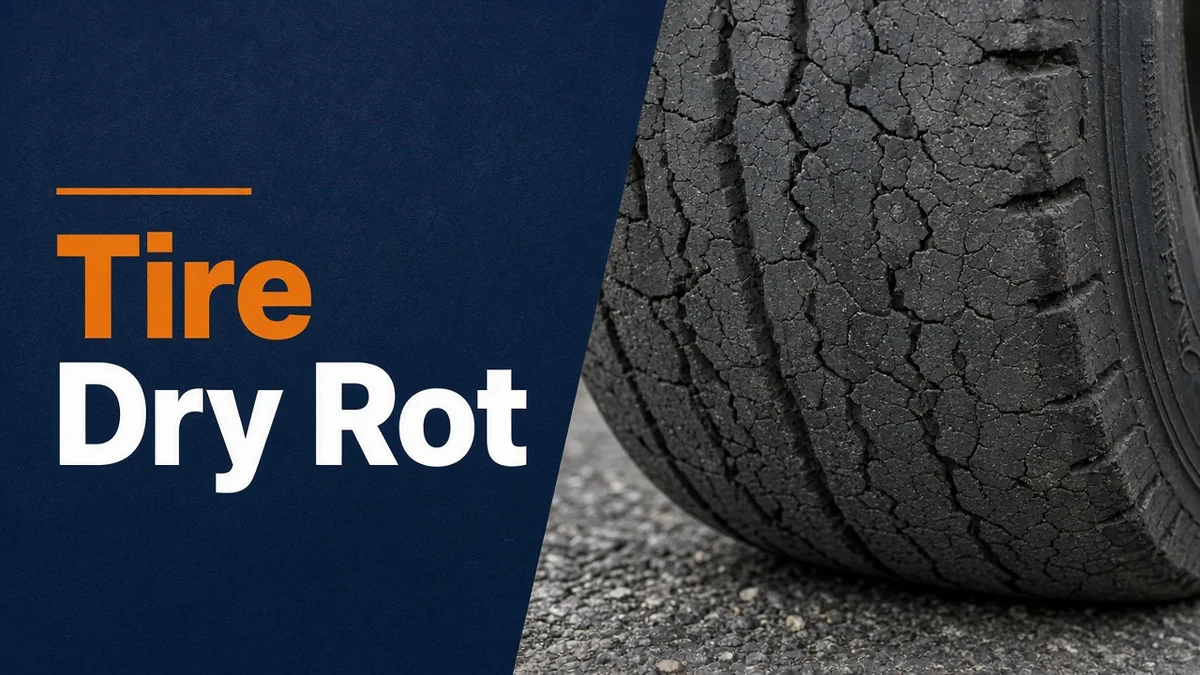
Tire dry rot is cracking in the rubber caused by age, sunlight, heat and ozone breaking down the oils that keep a tire flexible. It shows up as small cracks in the sidewall or between the tread blocks, often with a faded, grayish color. Cupping is a pattern of scooped-out dips around the tread, usually caused by worn shocks or struts or poor balance. A sidewall bubble is a bulge where the internal cords are broken, typically from a pothole or curb impact. Deep dry rot and any sidewall bubble mean the tire should be replaced. Cupping means the tire and the cause both need attention.
Tire Damage at a Glance
| Problem | What It Looks Like | Main Cause | Safe to Drive? |
|---|---|---|---|
| Dry rot (weather cracking) | Fine cracks on sidewall or between tread blocks, faded gray color | Age, UV, heat, ozone, long storage | Light: monitor. Deep or widespread: replace |
| Cupping (scalloping) | Dips spaced around the tread, feels wavy by hand | Worn shocks or struts, imbalance, misalignment | Short term, but fix cause and replace tire if severe |
| Sidewall bubble / bulge | A raised lump on the sidewall | Impact damage breaking internal cords | No. Replace immediately |
| Tread separation | Bulge or wave in the tread, vibration | Age, heat, defects, underinflation | No. Replace immediately |
What Is Tire Dry Rot?
Tires contain oils and chemical protectants (antiozonants and waxes) that keep the rubber supple. Driving flexes the rubber and helps bring those protectants to the surface. Over time, and faster with sun, heat and lack of use, they deplete. The rubber hardens and small cracks form, a process tire makers call weather checking, ozone cracking or sidewall cracking.
Signs of Dry Rot
- Cracks on the sidewall: fine lines at first, sometimes in a spider-web pattern, growing deeper over time.
- Cracks in the tread grooves: at the base of the tread blocks, harder to spot.
- Faded, chalky gray color instead of deep black.
- Hard, brittle rubber that feels stiff or crumbles at the edges.
- Slow air loss from cracks near the bead or valve stem.
What Causes Dry Rot?
- Age (the biggest factor, even on tires that look new)
- Direct sunlight and UV exposure
- High heat and hot climates
- Ozone from the air, electric motors and some generators
- Sitting unused for months (RVs, trailers, classic and stored cars)
- Under-inflation, which increases flexing and heat
- Harsh cleaners or petroleum-based tire shine products
Cars and trailers that sit are especially prone. Our car storage guide covers how to protect tires during long-term parking.
Is It Safe to Drive on Dry Rotted Tires?
It depends on the severity. Very fine surface crazing on an otherwise young tire is often cosmetic, but it is a sign to watch closely. Tires with deep cracks, cracks you can catch a fingernail in, cracks in the tread grooves, or any exposed cords or steel belts are not safe. Dry rot weakens the tire structure and increases the risk of a sudden blowout or tread separation, especially at highway speed, in heat or under a heavy load. When in doubt, have a tire shop inspect them.
| Severity | What You See | Action |
|---|---|---|
| Minor | Very fine, shallow surface lines only on the sidewall | Monitor at every fill-up; plan replacement |
| Moderate | Cracks you can catch a fingernail in; many cracks | Replace soon; avoid long highway trips and heavy loads |
| Severe | Deep cracks, cracks in tread grooves, exposed cords, bulges | Replace before driving |
Can Dry Rot Be Repaired?
No. Tire dressings and “restorers” can make rubber look darker, but they cannot reverse cracking or restore strength. The only fix for dry rot beyond minor surface lines is replacement.
What Is Tire Cupping?
Cupping, also called scalloping, is uneven wear where patches of tread are worn lower than others in a repeating pattern around the tire. Run your hand around the tread: a cupped tire feels wavy. It often causes a rhythmic humming, “wub-wub” noise or vibration that changes with speed.
Causes of Cupping
- Worn shocks or struts: the tire bounces instead of staying planted, wearing in patches. This is the most common cause.
- Wheel or tire imbalance.
- Misalignment, especially excessive toe.
- Worn suspension parts: ball joints, bushings, tie rods or wheel bearings.
- Skipping rotations, especially on rear tires of front-wheel-drive cars.
Replacing a cupped tire without fixing the cause leads to the same wear on the new tire. Our suspension repair cost guide lists typical prices for shocks, struts and related parts, and if you feel vibration, see why your car is shaking.
What Is a Sidewall Bubble?
A sidewall bubble or bulge forms when the tire’s internal cords break, usually after hitting a pothole, curb or road debris hard. Air pressure pushes the outer rubber through the weak spot, creating a raised lump. The tire may look fine otherwise and hold air normally.
- It cannot be repaired. Patches and plugs are not permitted on sidewalls.
- It can fail without warning, often at speed or when hitting another bump.
- Low-profile tires are more prone because there is less sidewall to absorb impacts.
- Check for a bent wheel and alignment problems after the impact that caused it.
Some tire warranties and road hazard plans cover impact damage, so check your paperwork before paying for a new tire.
Other Tire Damage to Watch For
- Tread separation: a bulge or wave across the tread, often with a thumping vibration.
- Exposed cords or steel belts: visible fabric or wire. Replace immediately.
- Feathering: tread ribs worn smooth on one side and sharp on the other, usually alignment.
- Center or edge wear: over-inflation or under-inflation.
- Flat spots: from hard braking with locked wheels or long storage.
How Old Is Too Old for a Tire?
Check the DOT code on the sidewall. The last four digits show the week and year the tire was made. For example, “2321” means the 23rd week of 2021. Many vehicle and tire manufacturers recommend inspecting tires annually after about 5 years and replacing them around 6 to 10 years from the manufacture date, regardless of tread depth. Always follow your vehicle and tire maker’s guidance.
Our guide on how long tires last explains mileage and age limits in more detail, and our tire size calculator helps confirm the right replacement size.
How to Prevent Dry Rot and Uneven Wear
- Keep tires inflated to the pressure on your door-jamb placard, and check monthly
- Park in a garage or shade, or use tire covers for RVs and trailers
- Drive the vehicle regularly; tires last longer when they flex and warm up
- Clean tires with mild soap and water; avoid harsh degreasers
- Use water-based tire dressings rather than petroleum-based ones
- Rotate tires every 5,000 to 7,500 miles and get alignments checked annually
- Replace worn shocks and struts before they cup your tires
- Store removed tires cool, dry, out of sunlight and away from electric motors
Safety note: Never drive at highway speed on a tire with a sidewall bulge, exposed cords, deep cracking or tread separation. If you spot one, install the spare or call roadside assistance, and replace the damaged tire before driving further.
Related guides: How long do tires last? · Car storage guide · Tire size calculator
Tire Damage FAQs
Dry rot shows up as small cracks on the sidewall or between the tread blocks, often with a faded, grayish color. The rubber may feel hard and brittle.
Tires with only faint surface lines can usually be monitored, but tires with deep cracks, cracks in the tread grooves or exposed cords are unsafe and should be replaced.
No. Dressings can improve appearance, but they cannot repair cracks or restore strength. Tires with significant dry rot must be replaced.
It varies, but visible cracking often starts around 5 to 6 years, sooner in hot, sunny climates or when a vehicle sits unused for long periods.