Wheel Alignment: Signs You Need One and What It Costs
You likely need a wheel alignment if your car pulls to one side, the steering wheel sits off-center when driving straight, or your tires are wearing unevenly on the inner or outer edges. A four-wheel alignment typically costs about $100 to $200, and a front-end (two-wheel) alignment about $50 to $100, with trucks, luxury cars and vehicles with driver-assistance cameras costing more. Most shops suggest checking alignment every year or two, after new tires, and after hitting a big pothole or curb.
Signs You Need a Wheel Alignment
- The car pulls or drifts: on a straight, flat road you have to hold the wheel to one side.
- Off-center steering wheel: the logo is crooked when driving straight.
- Uneven tire wear: the inner or outer edge wears faster, or the tread feels feathered.
- Squealing tires: at low speeds or in gentle turns.
- Loose or wandering steering: the car does not track straight.
- After an impact: a pothole, curb or accident can knock the alignment out.
A crooked steering wheel or pull can also come from tire pressure differences or a sticking brake, so check tire pressures first. If you also feel vibration, our guide to why your car is shaking covers balance and other causes, since vibration usually points to balance rather than alignment.
What a Wheel Alignment Adjusts
| Angle | What it is | Effect when wrong |
|---|---|---|
| Toe | Whether the fronts of the tires point in or out, viewed from above | Rapid feathered tire wear and a crooked steering wheel; the most common adjustment |
| Camber | The inward or outward tilt of the tire, viewed from the front | Wear on the inner or outer edge; pulling |
| Caster | The forward or backward tilt of the steering axis, viewed from the side | Poor straight-line stability, heavy or light steering, pulling |
Not every vehicle allows every angle to be adjusted; many cars only have adjustable toe from the factory, with camber and caster set by the suspension design unless aftermarket parts are added.
How to Check Your Alignment at Home
You cannot measure alignment angles precisely without shop equipment, but these simple checks tell you whether it is time for a professional alignment:
- Straight-road test: on a flat, straight, empty road, loosen your grip briefly at a safe, low speed. A car that drifts steadily to one side may be out of alignment (road crown can cause a slight drift to the right).
- Steering wheel position: check whether the steering wheel is centered when the car is going straight.
- Tire wear check: look for wear on only the inner or outer edge, or a feathered pattern you can feel by running your hand across the tread.
- Tire pressure: set all tires to the placard pressure first, since a low tire can cause pulling too.
- Listen: tires squealing during normal, gentle turns can indicate excessive toe.
How Much Does a Wheel Alignment Cost?
| Alignment type | Typical cost |
|---|---|
| Front-end (two-wheel) alignment | $50–$100 |
| Four-wheel alignment | $100–$200 |
| Trucks, SUVs and luxury vehicles | $150–$250 |
| Alignment plus ADAS camera or radar calibration | $250–$600+ |
| Lifetime alignment packages | Often $150–$250 one time, with conditions |
Prices vary by shop and region. If parts such as tie rods or control arms are worn, they must be replaced first, because an alignment cannot hold on loose parts; our guide to suspension repair costs covers those prices.
What Can Add to the Cost of an Alignment
- Seized or rusted adjusters: extra labor, or replacement bolts, cam kits or tie rod ends.
- Worn parts found during inspection: tie rods, ball joints or control arm bushings must be replaced before a car can be aligned properly.
- Camber kits: vehicles that are lowered, lifted or have limited factory adjustment may need aftermarket parts.
- ADAS calibration: cars with lane-keeping cameras or radar may need a steering angle sensor reset or camera calibration, often about $100 to $400 extra.
- Specialty vehicles: large trucks, performance cars and luxury vehicles often cost more.
Ask for a before-and-after printout of the alignment readings. A reputable shop will provide it.
Two-Wheel vs Four-Wheel Alignment
A two-wheel alignment adjusts only the front wheels and suits some vehicles with a solid rear axle. A four-wheel alignment checks and adjusts all four wheels and is what most modern cars with independent rear suspension need, including most front-wheel-drive and all-wheel-drive vehicles. A thrust-angle alignment sets the front to match a non-adjustable rear axle.
How Often Should You Get an Alignment?
- When you buy new tires, to protect the investment
- After hitting a large pothole or curb, or after an accident
- After replacing steering or suspension parts
- When you notice any of the warning signs
- As a check every one to two years, or every other oil change on some schedules
Many shops check alignment during tire rotations; our car maintenance schedule by mileage shows how these services fit together.
What Happens If You Skip an Alignment?
Poor alignment mainly costs you tires. Wrong toe settings can wear a new set in a fraction of its normal life. It can also reduce fuel economy slightly, make the car tiring to drive on long trips and, in severe cases, affect handling in emergencies. Our guide to how long tires last shows how much alignment and other factors affect tire life.
Sudden pulling can be a different problem: if the car suddenly pulls hard, especially while braking, or the steering feels loose or clunks, the cause may be a stuck brake caliper, a damaged tire or a broken suspension part rather than alignment. Have it inspected before driving far.
Can You Keep Driving With Bad Alignment?
You can usually drive a car with mild misalignment, but it costs you over time. Tires wear unevenly and may need replacing thousands of miles early, fuel economy drops slightly, and the car may pull or wander, which is tiring on long drives. Severe misalignment after hitting a curb or pothole can also signal bent suspension parts, which can affect handling and safety. If the steering wheel is badly off-center or the car pulls hard, get it inspected soon.
What Happens During an Alignment
- The technician checks tire pressure and inspects tires, steering and suspension parts for wear.
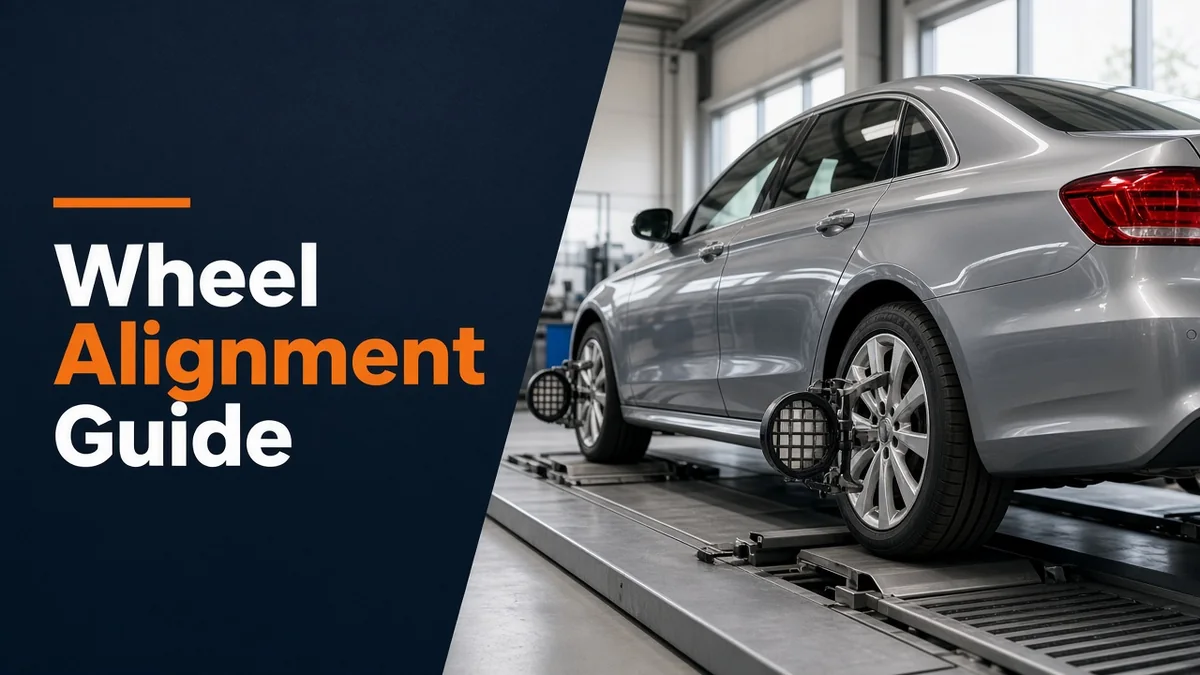
- Sensors or targets are mounted on each wheel.
- The alignment machine measures current angles and compares them with the manufacturer’s specifications.
- The technician adjusts toe, and camber and caster where possible.
- The steering wheel is centered, and many shops road-test the car.
- You receive a before-and-after printout of the measurements.
The job usually takes about an hour. Ask for the printout; it shows exactly what was out of specification and what was changed.
Alignment and Driver-Assistance Systems
On newer cars with lane-keeping, adaptive cruise or automatic emergency braking, the steering angle sensor and forward cameras or radar may need recalibration after an alignment. Some shops include it; others charge separately or send you to a dealer. Ask before booking.
Related guides: winter car prep and snow tires, car inspection and tire size calculator.
Wheel Alignment FAQ
About $100 to $200 for a four-wheel alignment and $50 to $100 for a front-end alignment. Trucks, luxury cars and ADAS recalibration cost more.
Usually about an hour, longer if parts need replacing or cameras need recalibration.
It can. A hard pothole or curb hit can change the alignment or bend suspension parts.
No. Alignment adjusts the angles of the wheels; balancing adds small weights so each wheel spins without vibration.
Usually not by itself. Vibration more often comes from unbalanced tires or worn parts, while bad alignment causes pulling and uneven wear.
You can spot signs such as pulling, an off-center steering wheel and uneven tire wear, but measuring and adjusting camber, caster and toe requires a professional alignment machine.