How to Check Brake Fluid (Low Level, Leaks, Color)
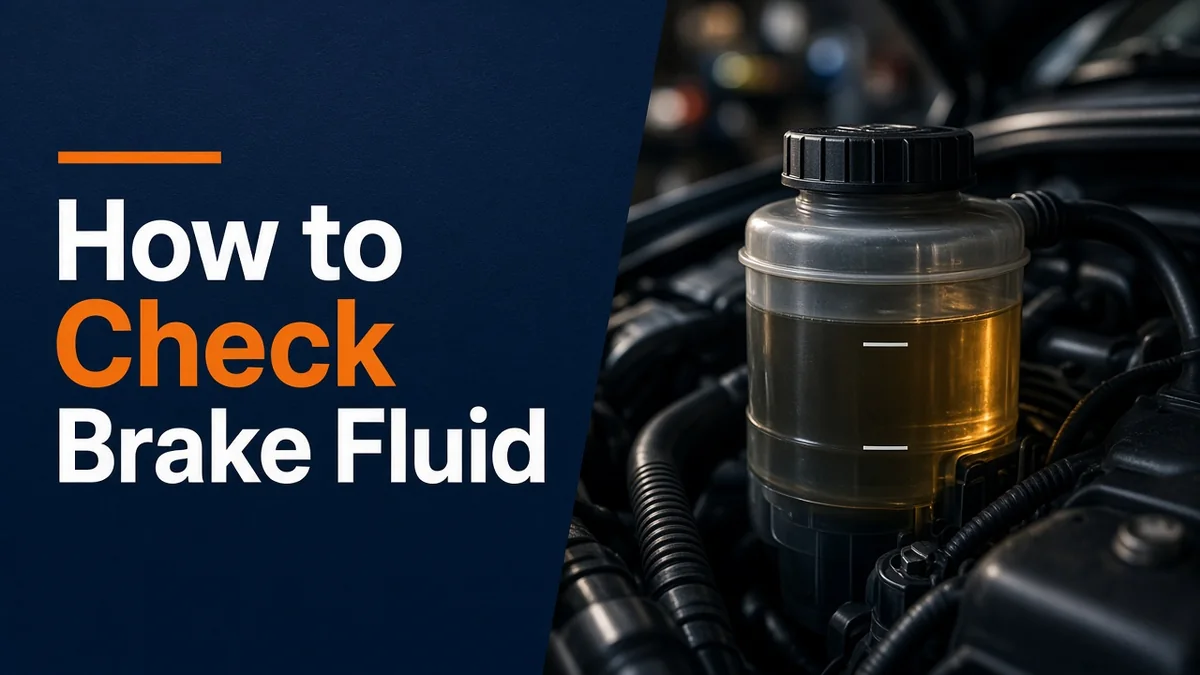
To check brake fluid, park on level ground with the engine off, open the hood and find the brake fluid reservoir, a small translucent plastic tank usually on the driver’s side near the firewall, on top of the master cylinder. The fluid level should sit between the MIN and MAX marks on the side. Fresh brake fluid is clear to light amber; dark brown or cloudy fluid is old and due for replacement. A level at or below MIN usually means worn brake pads or a leak, so have the brakes checked rather than just topping up.
Where Is the Brake Fluid Reservoir?
The brake fluid reservoir sits on top of the brake master cylinder, usually on the driver’s side of the engine bay near the firewall, directly in front of the steering wheel. It is a small, translucent plastic tank with MIN and MAX lines and a cap marked with a brake symbol or the fluid type, such as “DOT 3” or “DOT 4.” On some European cars it may be under a plastic cowl panel. On many hybrids and EVs it is in the same general location, often under a cover.
What You Need
- A clean, lint-free rag or paper towel
- A flashlight
- The correct brake fluid from a new, sealed bottle (only if you need to top up)
- Gloves and eye protection
- Optional: brake fluid test strips or an electronic tester
How to Check Brake Fluid Step by Step
- Park on level ground and turn the engine off: let the car sit for a few minutes.
- Find the reservoir: look for a small plastic tank with a cap marked with a brake symbol or the words brake fluid and a DOT rating.
- Clean the cap area: wipe dirt away so nothing falls in if you open it.
- Check the level through the side: most reservoirs are translucent, so you can read the level against the MIN and MAX lines without opening them.
- Check the color: hold a flashlight behind the reservoir or, if the fluid is hard to see, open the cap briefly and look.
- Close the cap firmly: brake fluid absorbs moisture from the air, so keep the reservoir sealed.
If you are checking brake fluid, it is worth checking your other fluids at the same time. Our guide to checking car fluids covers oil, coolant, washer fluid and more.
Brake Fluid Color Chart
| Color | Condition | What to do |
|---|---|---|
| Clear to light yellow | New or nearly new | Nothing |
| Amber or golden | Normal aging | Check the service interval |
| Brown | Moisture and contamination building up | Plan a brake fluid flush |
| Dark brown to black | Old or overheated fluid | Flush soon and inspect the brakes |
| Cloudy or with particles | Contaminated | Have the system inspected |
Some special fluids are tinted, and DOT 5 silicone fluid is usually purple, so compare against what is normal for your car.
Why Is My Brake Fluid Low?
Brake fluid is not burned or used up like engine oil. The level in the reservoir drops for two main reasons:
- Worn brake pads: as pads wear, the caliper pistons move outward and hold more fluid, so the reservoir level slowly falls. This is normal and gradual.
- A leak: from a brake line, hose, caliper, wheel cylinder or the master cylinder. A leak can drop the level quickly and is dangerous.
If the level has dropped noticeably, check pad thickness and look for wet spots near each wheel or under the car. Rust on metal brake lines is a common leak source in salty climates.
Soft pedal or brake light on: if the pedal feels spongy, sinks toward the floor, or the red brake warning light comes on, the system may be low on fluid or leaking. Do not keep driving normally. Stop safely and have the car inspected or towed.
Signs of Low or Bad Brake Fluid
- A soft, spongy or low brake pedal
- The red brake or low-fluid warning light on the dashboard; see our guide to dashboard symbols and meanings
- Longer stopping distances
- ABS warning light, in some cars
- Grinding or squealing along with low fluid, pointing to worn pads
- A burning smell after heavy braking
How to Test Brake Fluid for Moisture
Brake fluid absorbs moisture from the air, which lowers its boiling point and can cause a soft pedal or brake fade under hard use. Color gives a rough idea, but a test is more accurate:
- Test strips: dip a strip into the reservoir and compare the color change with the chart on the package. Inexpensive and easy.
- Electronic pen testers: estimate water content with a probe; convenient but vary in accuracy.
- Boiling point testers: used by many shops, they heat a small sample to measure its actual boiling point.
As a rule of thumb, fluid with about 3% or more water content is due for replacement. Many automakers recommend a brake fluid change every two to three years regardless.
How to Add Brake Fluid
- Confirm the fluid type printed on the reservoir cap or in your owner’s manual.
- Use a sealed, fresh bottle; brake fluid absorbs moisture once opened.
- Clean around the cap and remove it.
- Pour slowly up to the MAX line, not above it.
- Replace the cap tightly and wipe up any spills immediately.
Brake fluid can damage paint, so rinse any spill with water right away. Remember that topping up hides the reason the level was low; if you add fluid, have the pads and lines checked.
Which Brake Fluid Does Your Car Need?
| Type | Base | Notes |
|---|---|---|
| DOT 3 | Glycol | Common in many older and some current cars |
| DOT 4 | Glycol | Higher boiling point; common in modern and European cars; generally usable where DOT 3 is specified |
| DOT 5.1 | Glycol | High-performance glycol fluid; compatible with DOT 3 and 4 systems |
| DOT 5 | Silicone | Not compatible with DOT 3, 4 or 5.1; used in some classic and military vehicles |
Never mix DOT 5 silicone fluid with glycol-based fluids, and never use engine oil, power steering fluid or transmission fluid in a brake system; they destroy the rubber seals.
How Often Should Brake Fluid Be Changed?
Brake fluid absorbs moisture over time, which lowers its boiling point and can corrode internal parts. Many manufacturers recommend changing it every two to three years, though intervals vary widely, and some list it by mileage. Check your owner’s manual or our car maintenance schedule by mileage. A brake fluid flush typically costs about $80 to $150 at a shop.
What Brake Fluid Service Costs
| Service | Typical Cost (US) |
|---|---|
| Bottle of DOT 3 or DOT 4 fluid | About $8–$20 |
| Brake fluid top-off at a shop | Often free or under $30 |
| Brake fluid test | Often free during an inspection |
| Brake fluid flush (full exchange) | About $100–$200 |
| Flush on vehicles needing a scan tool (ABS bleed) | About $150–$250 |
If the fluid was low, the shop should also check pad thickness and look for leaks, since that is usually why the level dropped.
How Often Should You Check Brake Fluid?
Check the level about once a month or at every oil change, and any time the brake pedal feels different. A slow drop over months usually tracks pad wear; a sudden drop means a leak. Brake checks are also part of many state car inspections.
Related guides: how to check car oil, car noises explained and why your car is shaking.
Checking Brake Fluid FAQ
Fresh glycol brake fluid is clear to light yellow. It darkens to amber and then brown as it absorbs moisture. Dark brown or black fluid should be replaced.
You can top up to the MAX line with the correct fluid, but low fluid is a symptom, so find out whether the pads are worn or there is a leak.
Commonly every two to three years, but follow your owner’s manual, as intervals vary by manufacturer.
It is best to check with the engine off and the car parked on level ground. Some manuals suggest pumping the brake pedal first on cars with certain ABS systems, so follow your owner’s manual.
Dark brown fluid, a failed moisture test strip, a soft or spongy pedal, or reaching the time interval in your manual, often every two to three years, all mean it is time to change it.