How to Fix Squeaky Brakes (And Why They Squeal)
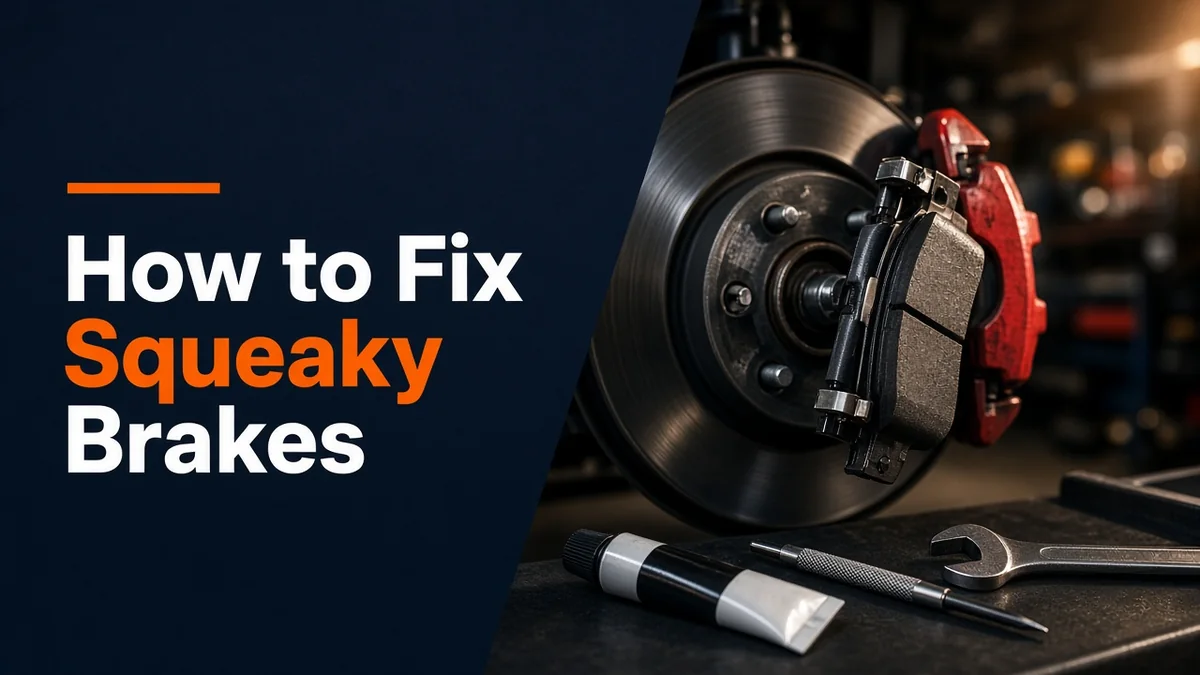
To fix squeaky brakes, first find the cause. If the squeal is constant and your pads are old, the built-in wear indicator is telling you the pads need replacing. If the brakes are new or the pads are thick, the usual fix is to clean the brakes and apply high-temperature brake grease to the back of the pads, the anti-rattle clips and the caliper slide pins, never to the pad face or rotor. Squeaks that only happen on damp mornings usually disappear after a few stops and are harmless.
Why Do Brakes Squeak?
A brake squeal is a vibration. When the pad and rotor rub, tiny vibrations can resonate through the caliper and bracket at a high frequency you hear as a squeal. Anything that changes how the pad sits or how the metal parts contact each other can start or stop that vibration.
| When it squeaks | Likely cause | Fix |
|---|---|---|
| First few stops in the morning or after rain | Surface rust or moisture on the rotors | Nothing; it clears after a few stops |
| Constantly, pads not replaced in years | Wear indicator touching the rotor | Replace the brake pads |
| Right after new brakes were fitted | Missing grease, no shims, pads not bedded in | Lubricate contact points; bed in the pads |
| Only when braking lightly | Pad vibration or glazing | Clean, deglaze or replace pads; add shims |
| When turning or at slow speed with no braking | Wear indicator, dust shield rubbing, or a stuck caliper | Inspect the brake assembly |
| Squeal plus grinding | Pads worn to metal | Replace pads and likely rotors immediately |
Diagnose the Squeak by When It Happens
| When It Squeaks | Most Likely Cause | What to Do |
|---|---|---|
| First few stops in the morning or after rain | Surface rust or moisture on rotors | Usually harmless if it stops after a few stops |
| Every stop, high-pitched squeal | Pad wear indicator touching the rotor | Replace pads soon |
| Right after a brake job | Pads not bedded in, missing shims or lubricant | Bed in pads; return to shop if it continues |
| Light braking only, disappears with firm pressure | Pad vibration, glazed pads or rotors | Clean, lubricate contact points, add shims |
| While driving, not braking | Wear indicator, stuck caliper, bent dust shield or debris | Inspect soon |
| In reverse only | Pad movement in the bracket or rust ridge | Often harmless; lubricate and check hardware |
How to Fix Squeaky Brakes Step by Step
These steps assume you are comfortable removing wheels and working on brakes. If not, a shop can do this quickly and inexpensively.
- Lift and support the car safely: loosen the lug nuts, raise the car on a jack, and set it on jack stands before removing the wheel.
- Inspect the pads and rotor: measure pad thickness and look for grooves, glazing, uneven wear or a lip on the rotor.
- Remove the caliper and pads: unbolt the caliper, hang it with a wire so it does not stretch the brake hose, and remove the pads.
- Clean the parts: spray brake cleaner on the bracket, clips and caliper (not on rubber boots) to remove dust and old grease.
- Lubricate the right spots: apply a thin layer of high-temperature brake grease to the pad backing plates or shims, the ends of the pads where they sit in the clips, and the caliper slide pins.
- Replace worn hardware: fit new anti-rattle clips and shims if the old ones are bent or missing.
- Reassemble and torque: refit the pads and caliper and tighten bolts and lug nuts to the specified torque.
- Bed in the pads: make several moderate stops from about 30 to 35 mph, then several from 45 mph, without coming to a complete stop and holding the pedal.
Keep grease off the friction surfaces: any grease or brake cleaner residue on the pad face or rotor reduces braking power. If grease gets on a pad, replace it; clean a contaminated rotor with brake cleaner. Always pump the brake pedal several times before driving after brake work.
Why Are My New Brakes Squeaking?
New brakes can squeak for a few simple reasons:
- Pads not bedded in: new pads need a few hundred miles of normal driving, or a deliberate bedding procedure, to transfer an even layer of material onto the rotor.
- No lubrication: contact points were not greased, or the old hardware was reused.
- Missing or wrong shims: shims dampen vibration; some cheap pads come without them.
- Old rotors with new pads: grooved or glazed rotors prevent the new pads from seating evenly.
- Pad material: semi-metallic pads are naturally noisier than ceramic pads.
A little noise in the first days is common. If it continues after a couple of weeks, ask the shop to recheck the installation.
Squeaky Brakes Caused by Rust
Rotors are bare cast iron, so a thin layer of rust forms overnight in humid weather or after a car wash. The first few brake applications scrape it off, often with a scraping or squeaking sound. This is normal. Cars that sit for weeks can develop heavier rust that takes longer to clear and may cause pulsing; in that case, see our guide to car storage for how to prevent it.
Can You Stop Brake Squeal Without Removing the Wheels?
Anti-squeal sprays and quick fixes exist, but most cannot reach the right spots without disassembly, and spraying anything near the pads risks contaminating them. The reliable fix is cleaning and lubricating the contact points with the parts removed. If the squeal is from the wear indicator, no product will fix it; the pads need replacing.
Brake Noises Compared: Squeak vs Squeal vs Grind
- Light squeak: often dust, moisture or a lack of lubrication. Usually not urgent.
- High-pitched squeal on every stop: the metal wear indicator is warning you that pads are nearly worn out.
- Grinding or growling: metal-on-metal contact or debris. Get the brakes inspected right away.
- Clicking or clunking: loose caliper hardware or pads shifting in the bracket.
- Squeal plus burning smell: possible stuck caliper or dragging brake.
Anti-Squeal Products Explained
- Brake shims: thin metal or rubber layers on the back of the pad that dampen vibration. Reuse or replace them with every pad change.
- Anti-squeal compound: a paste or spray applied to the back of the pad (never the friction surface) to reduce vibration.
- Brake lubricant: high-temperature grease for slide pins and pad contact points.
- Brake cleaner: removes dust and grease from rotors and hardware.
Never spray lubricants such as WD-40 on rotors or pads. It can contaminate the friction surfaces and reduce braking.
When Squeaky Brakes Are Dangerous
- The squeal turns into grinding or growling
- The pedal feels soft, low or pulsing
- The car pulls to one side when braking
- Stopping takes noticeably longer
- The brake warning light is on (see our dashboard symbols guide)
Any of these deserves a prompt inspection. Grinding in particular means metal is contacting metal. Our guide to car noises explained covers other sounds that are easy to confuse with brake noise, and if the steering wheel shakes when you brake, why your car is shaking explains rotor-related vibration.
How Much Does It Cost to Fix Squeaky Brakes?
| Fix | Typical cost |
|---|---|
| Clean and lubricate brakes (per axle) | $50–$150 at a shop |
| New brake hardware kit | $15–$40 in parts |
| Brake pad replacement (per axle) | $150–$300 |
| Pads and rotors (per axle) | $300–$600 |
| DIY brake grease and cleaner | $15–$25 |
How to Prevent Squeaky Brakes
- Use quality pads with shims and new hardware at every brake job
- Make sure contact points are cleaned and greased during installation
- Bed in new pads properly
- Drive the car regularly to keep rotor surfaces clean
- Replace pads before the wear indicator starts squealing
Brake inspections are part of routine service; our car maintenance schedule by mileage shows when they are usually done.
Related guides: how to check car fluids, car inspection and suspension repair cost.
Squeaky Brakes FAQ
Usually for a short time, if braking feels normal. But a constant squeal can mean the pads are worn, and grinding means they need replacing immediately.
Clean the brake hardware and apply high-temperature brake grease to the pad backs, clips and slide pins. Replace the pads if the wear indicator is squealing.
Cleaning and lubricating typically costs $50 to $150 per axle. If the pads are worn, replacement usually costs $150 to $300 per axle.
Light braking lets the pads vibrate against the rotor at a frequency you can hear. Missing shims, dry contact points or glazed pads are common causes. Lubricating the hardware and adding shims usually fixes it.