
Transmission Slipping: How to Tell and What Causes It
A slipping transmission feels like the engine revs jump up but the car does not speed up to match, as if it briefly slipped into neutral. You may also notice delayed engagement when shifting into Drive or Reverse, a surge of RPM between gears, sluggish acceleration on hills, or a burning smell. The most common causes are low or burnt transmission fluid, worn internal clutches or bands, a faulty shift solenoid or valve body, and torque converter problems. Check the fluid first; low fluid is the cheapest fix.
What Transmission Slipping Feels Like
- The engine revs climb when you accelerate, but the car does not gain speed as it should
- A pause or flare in RPM between gears, then a hard engagement
- The car hesitates or feels sluggish, especially uphill or with a load
- A delay of a second or more after shifting into Drive or Reverse
- The transmission seems to change gears on its own or drop out of gear
- A burning smell after driving
Common Causes of Transmission Slipping
| Cause | Why it causes slipping | Typical fix |
|---|---|---|
| Low transmission fluid | Not enough pressure to hold clutches | Fix the leak and refill with the correct fluid |
| Old or burnt fluid | Lost friction properties and cooling | Fluid service; inspect for wear |
| Worn clutch packs or bands | Friction material worn down | Rebuild or replace the transmission |
| Faulty shift solenoid | Fluid is not routed correctly to engage gears | Replace the solenoid or solenoid pack |
| Valve body problems | Sticking valves cause wrong pressures | Repair or replace the valve body |
| Torque converter problems | Poor power transfer or lock-up issues | Replace the torque converter |
| Software or sensor faults | Wrong shift timing or pressure commands | Update software; replace sensors |
| Wrong fluid type | Incorrect friction characteristics | Drain and refill with the correct fluid |
Slipping in Manual, Automatic and CVT Transmissions
Automatic Transmissions
In a conventional automatic, slipping usually traces back to hydraulic pressure or worn friction materials. Clutch packs rely on fluid pressure to clamp together; low fluid, internal leaks or worn clutches let them slip under load.
Manual Transmissions
In a manual car, what feels like transmission slipping is almost always a worn clutch. Signs include the engine revving without acceleration in higher gears, a clutch pedal that engages very high, and a burning smell. A clutch replacement typically costs about $1,000 to $2,500, much less than a gearbox. Our guide to driving a manual car covers habits that make clutches last.
CVT Transmissions
A CVT uses a belt or chain between pulleys. Slipping can feel like a sudden surge in RPM, a whine or a shudder, and may point to belt wear, low fluid or pressure problems. CVTs are sensitive to the correct fluid type and service interval.
How to Check a Slipping Transmission
- Check the fluid level and condition: with the engine warm and running, if your car has a dipstick. Low, dark or burnt-smelling fluid is a major clue. Our guide to checking car fluids explains the basics.
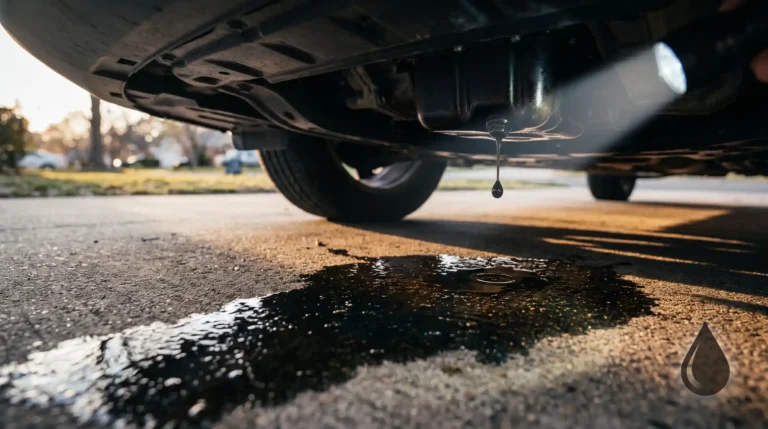
- Look for leaks: red or brown spots under the car point to a leak; see our fluid leaks guide.
- Scan for trouble codes: many slipping problems store codes; our check engine light guide explains how they are read.
- Note when it happens: cold or hot, which gear, uphill or on flat roads.
- Have a transmission specialist road-test it: and get a written diagnosis before agreeing to major work.
Slipping at highway speed is dangerous: a sudden loss of drive in traffic can leave you unable to accelerate. If the transmission slips badly, will not engage or enters limp mode, pull over safely and have the car towed rather than driving on it.
Is It Safe to Drive With a Slipping Transmission?
It is not safe to keep driving normally. A slipping transmission may fail to deliver power when you need it, such as merging onto a highway or crossing an intersection, and it can suddenly lose drive entirely. Slipping also creates heat that damages clutches and fluid quickly, so every mile can make the eventual repair more expensive.
- Mild, occasional slip: drive gently and directly to a shop; check the fluid level first if you can.
- Frequent slipping, flaring revs or delayed engagement: limit driving to a short trip to a repair shop.
- Slipping with a burning smell, warning light or no movement in some gears: have the car towed.
Can a Slipping Transmission Be Fixed?
Often, if you catch it early. Topping up fluid and fixing a leak, replacing a solenoid, updating software or servicing the valve body can cost from about $150 to $1,500. If the clutches or bands are worn, a rebuild or replacement is usually needed, which commonly costs several thousand dollars. Continuing to drive on a slipping transmission generates heat and debris that damage other parts, so delay usually raises the cost.
Cost to Fix a Slipping Transmission by Cause
| Cause | Typical Fix | Typical Cost (US) |
|---|---|---|
| Low fluid from a leak | Repair leak and refill | About $100–$500 |
| Old or burnt fluid (early stage) | Fluid change or drain-and-fill | About $100–$250 |
| Faulty shift solenoid | Replace solenoid or pack | About $150–$800 |
| Software or adaptation issue | Update or relearn | About $100–$250 |
| Worn clutch in a manual car | Clutch replacement | About $1,000–$2,500 |
| Torque converter problem | Replace torque converter | About $600–$2,000+ |
| Worn internal clutches or bands | Rebuild or replacement | About $2,000–$8,000+ |
Typical US shop ranges; costs vary by vehicle. A proper diagnosis with code scan, fluid inspection and road test comes first.
Do Transmission Additives Fix Slipping?
Additives and “slip fix” products claim to restore friction or swell seals. They may mask mild symptoms temporarily, but they cannot replace worn friction material or fix mechanical and electrical faults. Many transmission specialists advise against them in modern transmissions. The correct fluid at the correct level is the real first step.
How to Prevent Transmission Slipping
- Keep the fluid at the correct level and fix leaks promptly
- Change the fluid on schedule, sooner if you tow or drive in heavy traffic
- Use only the fluid type your transmission requires
- Avoid towing beyond your vehicle’s rating
- Come to a full stop before shifting between Drive and Reverse
Fluid service intervals are listed in our car maintenance schedule by mileage.
Related guides: do automatic cars have a clutch, car noises explained and towing costs.
Transmission Slipping FAQ
The engine revs rise but the car does not accelerate as expected, or it feels like the car briefly drops into neutral before catching again.
Yes. Low fluid is one of the most common causes, because the transmission cannot build enough pressure to hold its clutches.
It is not recommended. Slipping creates heat and wear, and a sudden loss of drive in traffic can be dangerous.
In a manual car, slipping is usually the clutch, which is cheaper to fix. In an automatic, internal clutches inside the transmission slip.
They may mask mild symptoms briefly but cannot repair worn parts. Ask a transmission specialist before using them.
Sudden slipping is often caused by a quick loss of fluid from a leak, a failing solenoid, an electrical fault or a torque converter problem. Check the fluid level and have the codes read.