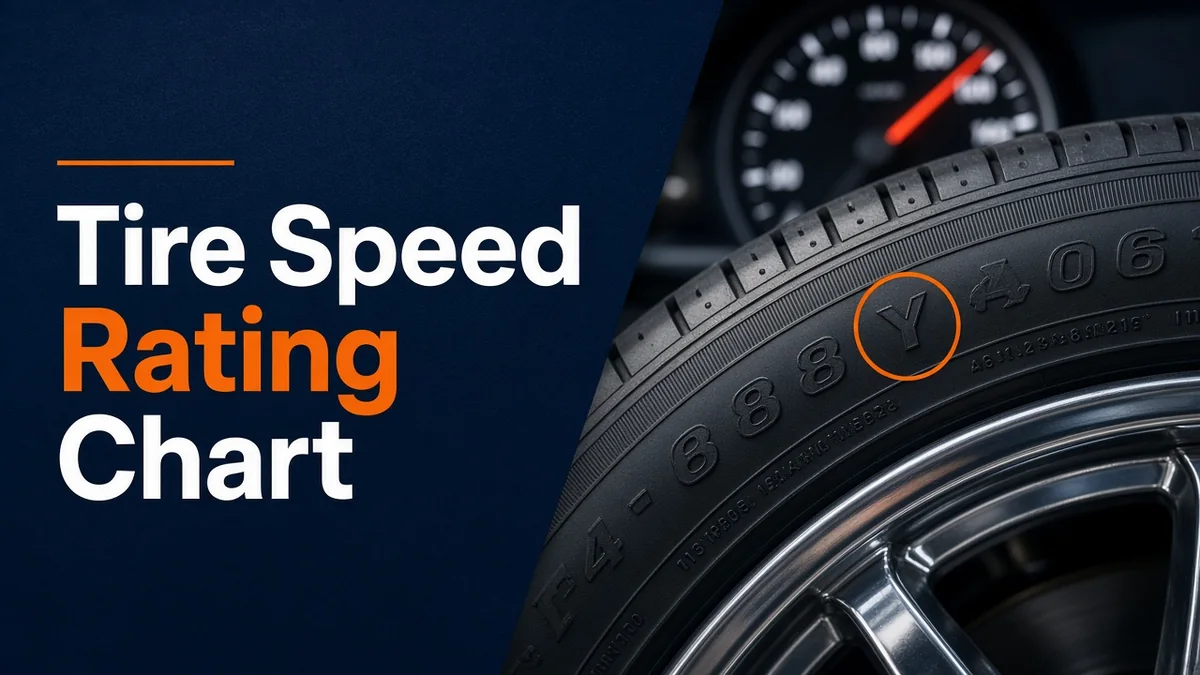
Tire Speed Rating Chart
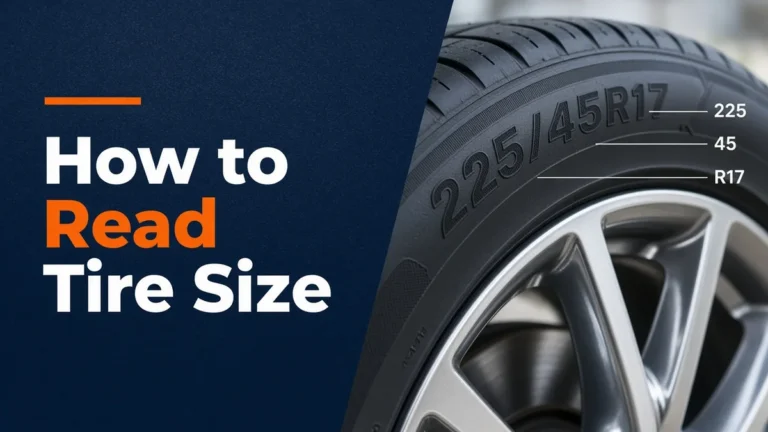
A tire speed rating is the letter after the load index in a tire’s service description, such as the V in 225/45R17 94V. It shows the maximum speed the tire can safely sustain under its rated load in controlled testing: for example, S means 112 mph, T 118 mph, H 130 mph, V 149 mph, W 168 mph and Y 186 mph. Most everyday cars use S, T or H tires, while performance cars use V, W or Y. Replacement tires should match or exceed the speed rating on your vehicle’s tire placard, with winter tires the common exception.
Tire Speed Rating Chart
| Rating | Max speed (mph) | Max speed (km/h) | Typical use |
|---|---|---|---|
| L | 75 | 120 | Off-road and some light truck tires |
| M | 81 | 130 | Temporary spare tires |
| N | 87 | 140 | Temporary spares, some light truck tires |
| P | 93 | 150 | Some light truck tires |
| Q | 99 | 160 | Winter and light truck tires |
| R | 106 | 170 | Heavy-duty light truck tires |
| S | 112 | 180 | Family sedans, minivans |
| T | 118 | 190 | Family sedans, minivans, SUVs |
| U | 124 | 200 | Less common passenger tires |
| H | 130 | 210 | Sport sedans, many modern passenger cars |
| V | 149 | 240 | Sports cars, performance sedans |
| W | 168 | 270 | High-performance cars |
| Y | 186 | 300 | Exotic and very high-performance cars |
| (Y) | Above 186 | Above 300 | Tires tested above Y speeds |
| ZR (in size) | Above 149 | Above 240 | Legacy marking for high-speed tires, used with a W, Y or (Y) rating |
How to Find Your Tire’s Speed Rating
Look at the sidewall for the tire size followed by two or three numbers and a letter. In 215/55R17 94V, the 94 is the load index and V is the speed rating. Your vehicle’s recommended speed rating is on the tire placard inside the driver’s door jamb and in the owner’s manual. The same sidewall also shows the tire’s size, construction and manufacturing date.
How Speed Ratings Are Determined
Speed ratings come from laboratory testing. The tire is loaded and run against a large drum at increasing speeds for set periods until it reaches the target speed for its rating. The rating reflects the tire’s ability to handle heat and stress at speed when properly inflated and not overloaded. Underinflation, overloading, damage or wear all reduce a tire’s real-world capability below its rating.
Why Speed Rating Matters Beyond Top Speed
Most people never drive near their tires’ rated speed, but the rating still matters. Higher-rated tires are typically built with stiffer sidewalls and construction that handle heat better. That often means sharper steering response and more grip, sometimes at the cost of a firmer ride and shorter tread life. Automakers choose the rating to match the car’s performance and handling, so changing it can alter how the car feels.
Can You Use a Different Speed Rating?
| Choice | Is it okay? |
|---|---|
| Same rating as original | Yes, the safest choice |
| Higher rating than original | Generally yes; handling may feel firmer |
| Lower rating than original | Generally not recommended; may affect handling and warranty |
| Lower-rated winter tires | Often acceptable; many automakers allow it, but you must respect the lower speed limit |
| Mixing ratings on one car | Avoid; if unavoidable, put the higher-rated pair on the rear and never exceed the lowest rating |
The lowest rating sets your limit: if your tires have mixed speed ratings, or you fit a temporary spare, the lowest-rated tire determines your safe maximum speed. Most compact spares are rated for about 50 mph and are for short distances only.
Speed Ratings and Winter Tires
Winter tires often carry Q, S, T or H ratings, which may be lower than your car’s all-season tires. Many automakers and tire makers accept this for winter use, since winter driving speeds are usually lower and the grip benefit is large. Some performance winter tires carry V ratings. Our winter car prep and snow tires guide explains when winter tires make sense.
Speed Rating vs Load Index
The speed rating and load index work together as the service description. The load index shows how much weight each tire can carry; the speed rating shows how fast it can go carrying that load. Never choose a replacement tire with a lower load index than the original, especially on trucks and SUVs that tow or haul. Our tire size calculator helps compare sizes if you are considering a change.
Do Speed Ratings Affect Insurance or Warranty?
There is no general US law requiring you to match the original speed rating on a passenger car, but fitting lower-rated tires can raise questions with a tire warranty, a vehicle warranty claim or, in the event of a crash, an insurer. Matching or exceeding the placard rating avoids those issues.
Tire Care Still Matters Most
- Keep tires inflated to the door-jamb placard pressure
- Do not overload the vehicle beyond its rated capacity
- Replace damaged tires and those with bulges or cuts
- Replace tires by age as well as tread; our guide to how long tires last covers both
Related guides: car maintenance schedule by mileage, car inspection and why your car is shaking.
Tire Speed Rating FAQ
It is a letter showing the maximum speed a tire can sustain under its rated load in testing, such as H for 130 mph or V for 149 mph.
It is the last letter in the service description after the tire size, such as the V in 215/55R17 94V.
Higher-rated tires usually handle heat and cornering better, but they can ride firmer and wear faster. Matching the original rating is usually best.
H was originally a high-speed rating created before the modern letter sequence, so it kept its place at 130 mph between U and V.
Many everyday cars use S, T or H ratings. Check the tire placard on your driver’s door jamb.
ZR is a legacy marking for tires rated above 149 mph, now used alongside a W, Y or (Y) rating in the service description.