Brake Fluid Flush Cost and How Often to Do It
A brake fluid flush typically costs about $80 to $150 at an independent shop or chain in 2026 and about $150 to $225 or more at a dealer. Doing it yourself costs about $15 to $40 in fluid plus a bleeder kit. Most manufacturers recommend replacing brake fluid every two to three years, because the fluid absorbs moisture over time, which lowers its boiling point and can corrode brake parts from the inside. Some European brands call for it every two years regardless of mileage.
Brake Fluid Flush Cost by Provider
| Where | Typical cost | Notes |
|---|---|---|
| Independent repair shop | $80–$150 | Good value; may bundle with brake jobs |
| Chain or quick-service shop | $70–$130 | Watch for upselling if not due |
| Dealer | $150–$225+ | Uses factory-specified fluid; higher labor rates |
| Mobile mechanic | $100–$175 | Convenient |
| DIY | $15–$40 plus tools | One or two bottles of fluid and a bleeder kit |
Prices are higher for vehicles that need a scan tool to cycle the ABS pump during the flush, or for high-performance brake systems and DOT 5.1 fluid.
Brake Fluid Flush Cost by Vehicle Type
| Vehicle Type | Typical Flush Cost (US) | Why It Varies |
|---|---|---|
| Compact or midsize car | About $90–$150 | About 1 quart of DOT 3 or DOT 4 |
| SUV, minivan or pickup | About $100–$180 | Longer lines, sometimes more fluid |
| European or luxury car | About $130–$250 | Often DOT 4 low-viscosity fluid; some need a scan tool |
| Vehicle requiring an ABS scan-tool bleed | About $150–$250 | Extra labor to cycle the ABS module |
| Performance car with racing fluid | About $150–$300 | High-temperature DOT 4 or DOT 5.1 fluid |
Most flushes take about 30 to 60 minutes.
What a Brake Fluid Flush Includes
- Removing most of the old fluid from the master cylinder reservoir
- Adding fresh fluid of the correct DOT type
- Pushing new fluid through each brake line by bleeding each wheel in order until clean fluid comes out
- On many ABS-equipped cars, cycling the ABS unit so fluid in the pump and valves is replaced
- Topping up to the full mark and checking for a firm pedal
A brake bleed and a brake flush use the same process. A bleed removes air after repairs; a flush replaces all the old fluid with new.
How Often Should Brake Fluid Be Flushed?
| Situation | Typical interval |
|---|---|
| Most manufacturers | Every 2–3 years |
| Many European brands | Every 2 years |
| Mileage-based schedules | Often 30,000–45,000 miles |
| Towing, mountains or hot climates | Toward the short end, or as the manual specifies |
| Track or performance driving | Often every year or before events |
Some owner’s manuals list brake fluid only under severe service or not at all, so check yours. Our car maintenance schedule by mileage shows where it typically fits.
Why Brake Fluid Needs Replacing
Standard brake fluid (DOT 3, DOT 4 and DOT 5.1) is hygroscopic, meaning it absorbs moisture from the air through hoses, seals and the reservoir cap. As water content rises, the fluid’s boiling point drops. During heavy braking, low-boiling fluid can form vapor bubbles, which compress and make the pedal go soft, a condition called brake fade. Moisture also corrodes steel lines, calipers and the ABS unit from the inside, which can lead to expensive repairs.
Signs You Need a Brake Fluid Flush
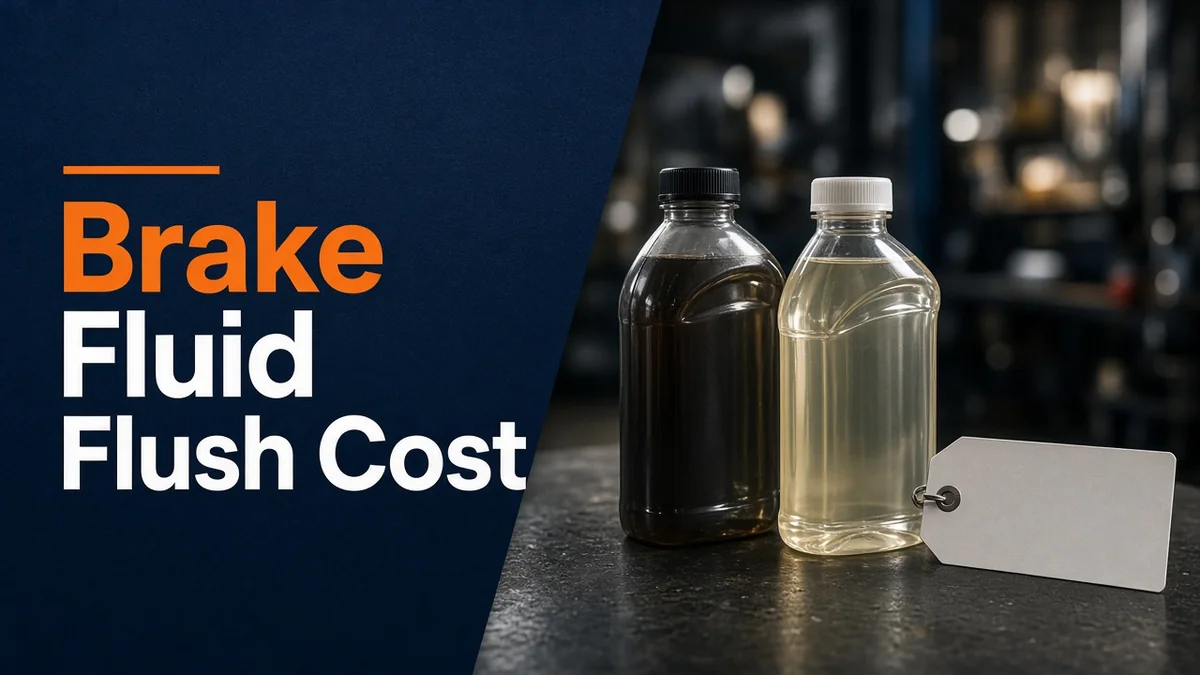
- Brake fluid that looks dark amber, brown or cloudy in the reservoir
- A soft or spongy pedal that has not been explained by leaks or worn pads
- It has been more than 2 to 3 years since the last change
- A test strip or tester shows high moisture or copper content
- The brake warning or ABS light is on (see our dashboard symbols guide)
Our guide to checking car fluids shows where the brake fluid reservoir is and how to judge the color.
A soft pedal is a warning: if your brake pedal suddenly feels spongy, sinks or needs pumping, have the brakes checked right away rather than waiting for a scheduled flush. It can mean a leak, air in the system or a failing master cylinder.
Brake Fluid Types and What They Cost
| Fluid | Dry Boiling Point (minimum) | Typical Price per Bottle | Notes |
|---|---|---|---|
| DOT 3 | 401°F (205°C) | About $5–$12 | Common in many older and domestic vehicles |
| DOT 4 | 446°F (230°C) | About $8–$20 | Common in European and many newer cars |
| DOT 5.1 | 500°F (260°C) | About $12–$25 | Glycol-based, compatible with DOT 3/4 systems |
| DOT 5 (silicone) | 500°F (260°C) | About $15–$30 | Not compatible with DOT 3, 4 or 5.1; used in some classic and military vehicles |
Boiling points are the minimum dry values set by the federal standard (FMVSS 116). Always use the type printed on your reservoir cap. Most cars need about one quart for a full flush.
Flush vs Bleed vs Top-Off
- Top-off: adds fluid to the reservoir. Cheap, but does not remove moisture or contaminants.
- Bleed: pushes a small amount of fluid through the lines to remove air, usually after brake work.
- Flush: replaces all the old fluid with new fluid at every wheel. This is the maintenance service most automakers call for every two to three years.
Is a Brake Fluid Flush Worth It?
Yes, when it is actually due. It is inexpensive preventive maintenance that protects parts costing hundreds or thousands of dollars, such as calipers and the ABS unit, and keeps braking consistent under heavy use. It is not worth paying for when a shop recommends it on a car that had fresh fluid a year ago with no signs of contamination. Ask to see a test result or check your records.
DIY Brake Fluid Flush
A DIY flush is possible with a helper or a one-person bleeder kit. You will need one to two quarts of the correct DOT fluid in sealed bottles, a wrench for the bleeders, clear tubing and a catch bottle. Work from the wheel farthest from the master cylinder to the nearest, never let the reservoir run dry, and keep bleeding until fresh, clear fluid comes out. Vehicles that need an ABS scan-tool procedure are better left to a shop. Brake fluid damages paint, so wipe up spills immediately.
Money-Saving Tips
- Combine a flush with brake pad or rotor work to share labor
- Compare independent shop and dealer prices for the same service
- Check the fluid condition yourself before agreeing to a flush
- Keep records so you know when it was last done
Brake systems are also checked during many state safety inspections, and rust on brake lines, a common issue in snowy climates, is covered in our guide to preventing rust.
Related guides: car noises explained, car total cost of ownership calculator and why your car is shaking.
Brake Fluid Flush FAQ
About $80 to $150 at most independent and chain shops, and about $150 to $225 or more at dealers.
Yes, when it is due. Old fluid absorbs moisture, which lowers its boiling point and can corrode brake components.
Moisture builds up, which can cause a soft pedal under heavy braking and internal corrosion of lines, calipers and the ABS unit.
Usually about 30 minutes to an hour at a shop.
Yes, with the right fluid, a bleeder kit or helper, and careful technique. Cars that need an ABS scan-tool procedure are best done by a shop.
Fresh brake fluid is clear to light yellow. Dark amber or brown fluid is old and should be replaced.