Oil Change Guide: What’s Included, Cost and How Often
An oil change is routine maintenance where old engine oil is drained, the oil filter is replaced and fresh oil of the correct grade is added. At a shop it usually takes 15 to 45 minutes and typically costs about $35 to $75 with conventional oil or about $65 to $125 with full synthetic. Most modern cars need one every 5,000 to 10,000 miles, or at least once or twice a year, but the only interval that matters for your car is the one in its owner’s manual.
What Is an Oil Change and Why Does Your Engine Need One?
Motor oil does three jobs at once. It keeps metal parts such as pistons, bearings and the camshaft from touching, it carries heat away from the hottest parts of the engine, and it holds dirt, soot and tiny metal particles in suspension so they end up in the filter instead of on engine surfaces.
Oil does not last forever. Heat breaks down its additives, fuel and moisture dilute it, and the filter slowly clogs. Old oil protects less, which leads to faster wear, sludge that blocks narrow oil passages, and in the worst case a seized engine. An oil change resets all of that for a fraction of the cost of engine repair. If you want to see the oil’s condition yourself between services, our guide to checking your car’s oil shows how to read the dipstick.
What Is Included in an Oil Change?
Every shop, from a quick-lube chain to a dealer, should do the core steps below. The extras vary a lot, so ask what is included before you agree to the price.
The Core Service
- Drain the old oil: the technician removes the drain plug on the oil pan and lets the old oil run out.
- Replace the oil filter: the old filter comes off and a new one goes on, usually with a little fresh oil on the rubber gasket.
- Reinstall the drain plug: ideally with a new crush washer or gasket, tightened to the correct torque.
- Refill with new oil: the right viscosity (such as 0W-20 or 5W-30) and amount for your engine, often 4 to 6 quarts for a typical car.
- Check the level and look for leaks: the engine runs briefly, then the dipstick is checked.
- Reset the reminder: the oil-life monitor or maintenance light is reset and a window sticker or digital reminder shows the next due date.
Extras at a Full-Service Oil Change
Many shops add a multi-point inspection. Common items include:
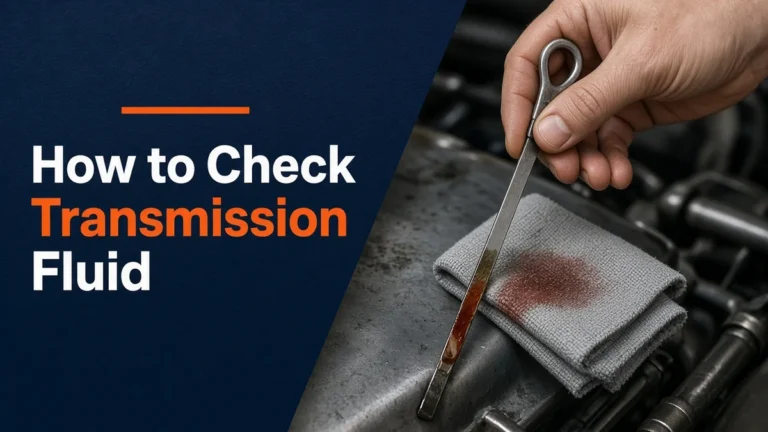
- Topping off washer fluid and checking coolant, brake fluid, power steering fluid and transmission fluid where there is a dipstick
- Checking tire pressure and looking at tread wear
- Inspecting the engine air filter, cabin air filter and wiper blades
- Checking lights, belts and hoses
- Lubricating chassis grease points on vehicles that still have them
These checks can catch problems early, but they are also where upselling happens. A dirty-looking air filter is easy to verify yourself: our step-by-step guide to changing a car air filter takes about ten minutes and costs far less than most shop prices.
What Usually Costs Extra
- Full synthetic oil when the advertised price is for conventional
- Extra quarts beyond the five included in most package prices
- Specialty or cartridge-style filters
- Engine air filter, cabin filter and wiper replacement
- Engine flushes and oil additives, which most automakers do not require
Do Shops Top Off Your Fluids or Change Transmission Fluid?
Most full-service and quick-lube oil changes include a top-off of easy-to-reach fluids such as washer fluid, and a check of coolant, brake fluid and power steering fluid. Topping off is not the same as replacing: a transmission fluid change, coolant flush or brake fluid flush is a separate service with its own price. If a shop recommends one, ask where your manual lists it before saying yes. One more catch: some advertised low prices cover only a basic package, so confirm that the oil filter and the right type of oil are included before the work starts.
Types of Motor Oil and What the Numbers Mean
The oil your shop puts in matters as much as how often you change it. Your owner’s manual lists two things: the viscosity grade (such as 0W-20 or 5W-30) and the performance standard the oil must meet. Match both.
| Oil Type | What It Is | Typical Change Interval | Best For |
|---|---|---|---|
| Conventional | Refined crude oil with additives | About 3,000–5,000 miles | Older, simple engines that specify it |
| Synthetic blend | Mix of conventional and synthetic base oils | About 5,000–7,500 miles | Moderate protection at a lower price |
| Full synthetic | Highly refined or man-made base oils | About 7,500–10,000+ miles | Most newer cars, turbo engines, extreme heat or cold |
| High-mileage | Oil with seal conditioners (conventional or synthetic) | Similar to its base oil | Engines over about 75,000 miles with minor leaks or oil use |
Intervals are general ranges. Your car’s oil-life monitor or maintenance schedule always takes priority.
How to Read a Viscosity Grade
In a grade like 5W-30, the first number with the “W” (winter) describes how easily the oil flows when cold. A lower number flows faster at startup, which is when most engine wear happens. The second number describes thickness at normal operating temperature. Many newer engines call for thin oils such as 0W-20 or 0W-16 to improve fuel economy. Using a thicker oil than specified can reduce efficiency and, in some engines, affect variable valve timing.
Look for the Right Approval
- API service symbol (“donut”): API SQ, first licensed on March 31, 2025, is the current gasoline engine standard and replaces API SP; SQ oils also work in older engines that called for SP or earlier categories.
- ILSAC starburst or shield: ILSAC GF-7A oils carry the familiar starburst, and GF-7B oils carry a shield mark that is used only on SAE 0W-16. Since March 31, 2026, oils certified only to the older GF-6A can no longer display the starburst, so check the label if your manual calls for a starburst oil.
- Automaker approvals: many GM vehicles require dexos1 oil; many European cars require specific approvals such as VW 504 00 or MB 229.71. Using an unapproved oil can create warranty problems.
How Much Does an Oil Change Cost?
The price depends mostly on the type of oil, how much your engine takes and where you go. The ranges below are typical US prices; local rates, coupons and dealer maintenance plans can move them up or down.
| Oil type | Typical shop price | Best for |
|---|---|---|
| Conventional | $35–$75 | Older, simpler engines whose manual allows it |
| Synthetic blend | $45–$90 | A middle ground for moderate driving |
| Full synthetic | $65–$125 | Most modern engines, turbocharged engines, long intervals |
| High-mileage | $50–$100 | Engines past roughly 75,000 miles with minor seepage |
| DIY (parts only) | $25–$60 | Anyone comfortable lifting the car safely |
Dealers usually charge more than independent shops and quick-lube chains, but they use factory filters and may bundle a free inspection. Large trucks and European cars that take 7 or more quarts of a specific approved oil can cost well above these ranges.
How Often Do You Need an Oil Change?
The old rule of changing oil every 3,000 miles is outdated for most cars built in the last two decades. Modern engines and oils last longer, and many manufacturers now specify 5,000 to 10,000 miles between changes, often with a time limit of 6 or 12 months even if you barely drive.
- Follow the manual first: the interval printed in your owner’s manual or shown by the oil-life monitor is set for your exact engine.
- Use the severe schedule when it applies: short trips, stop-and-go traffic, towing, dusty roads and extreme heat or cold all call for shorter intervals.
- Do not skip the time limit: oil ages even when the car sits, so low-mileage cars still need changes at least once a year.
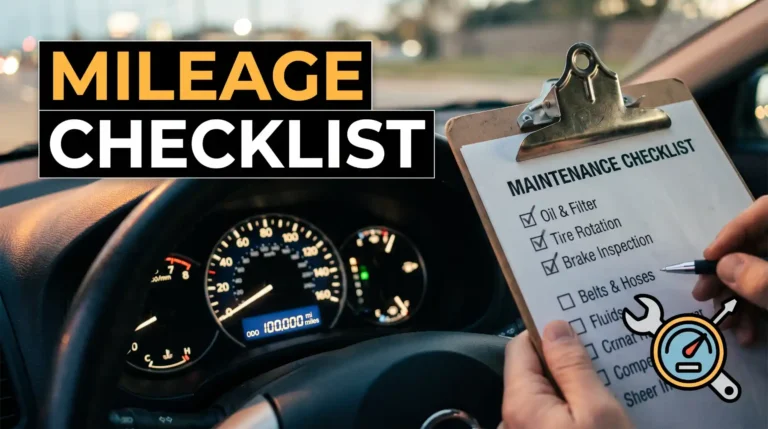
Our car maintenance schedule by mileage shows how oil changes fit alongside tire rotations, filters and other services.
Signs Your Car Needs an Oil Change
- The oil-change or maintenance reminder is on, or the sticker date has passed
- The oil on the dipstick is below the minimum mark or looks black and gritty
- The engine sounds louder, with ticking or knocking on start-up
- You notice a burning oil smell or see oil spots under the car
- The oil pressure warning light comes on (stop driving and check the level right away)
Oil pressure light: a red oil-can symbol means the engine is not getting enough oil pressure. Pull over safely and turn the engine off. Check the level; if it is low, add oil, and if the light stays on, have the car towed instead of driving. Our guide to oil, ABS and battery warning lights explains what each light means.
How Long Does an Oil Change Take?
At a drive-in quick-lube shop, the work itself takes about 15 to 30 minutes. A dealer or general repair shop may need an hour or more because your car waits in line with other jobs. Doing it yourself usually takes 30 to 60 minutes once you have the tools, including time for the oil to drain fully.
Where to Get an Oil Change: Dealer vs Quick Lube vs Independent Shop vs DIY
| Option | Typical Price (Synthetic) | Pros | Cons |
|---|---|---|---|
| Dealership | About $80–$150 | Factory-spec oil and filter, trained on your model, records kept | Usually most expensive; may need an appointment |
| Quick lube chain | About $70–$130 | Fast, no appointment, frequent coupons | Upselling is common; stay in the car or watch the work |
| Independent shop | About $60–$120 | Good value, can spot other problems | Quality varies; ask what oil and filter they use |
| Tire and auto chains | About $60–$120 | Can bundle with tire rotation | Wait times vary |
| Do it yourself | About $35–$70 in parts | Cheapest, you control the oil and filter | Tools, time, jack stands and proper oil disposal needed |
Prices are typical US ranges for common cars using full synthetic oil. European cars, trucks and engines that need 6 quarts or more cost more.
Quick-Lube Chains at a Glance
| Chain | How it works | Worth knowing |
|---|---|---|
| Walmart Auto Care | Book an appointment while you shop | Service packages start at $28.88; check what the base package includes |
| Valvoline Instant Oil Change | Stay in your car, about 15 minutes | Full-service package covers up to 5 quarts and chassis lubrication where needed |
| Take 5 Oil Change | Stay in your car, about 10 minutes | Includes fluid top-offs and a tire pressure check |
| Jiffy Lube | Drive in, about 15 minutes for its signature service | Bundles a multi-point check with the oil and filter change |
Prices and package details change often and vary by location, so compare the out-the-door price for your specific car and oil type before you go.
Does Changing Your Oil Somewhere Else Void Your Warranty?
No. Under the federal Magnuson-Moss Warranty Act, an automaker cannot void your warranty just because an independent shop did the work or you did it yourself. What matters is that the service was done on time with oil and filters that meet the specifications in your manual. Keep receipts showing the date, mileage, oil type and filter used, and log your own changes with parts receipts if you do them at home.
What to Check After an Oil Change
A quick check before you drive away catches most mistakes, such as a loose drain plug or the wrong oil.
- Read the invoice: it should list the oil grade (for example 0W-20), the oil type, the number of quarts and the filter part number.
- Check the dipstick (on cars that have one) after the engine has been off a few minutes. The level should be between the marks, not above the full line.
- Look under the car after it sits for a few minutes. Fresh drips near the drain plug or filter mean something is loose.
- Confirm the oil-life monitor was reset and the oil pressure light is off.
- Check the reminder sticker matches your car’s actual interval, not a generic 3,000 miles.
- Keep the receipt: it is your proof of maintenance for warranty claims and resale.
Common Oil Change Mistakes to Avoid
- Using the wrong viscosity: a 5W-30 in an engine designed for 0W-20 can affect protection and fuel economy.
- Overfilling: too much oil can foam and damage seals; the level should sit between the dipstick marks.
- Reusing the drain plug washer: an old crush washer is a common cause of slow drips afterward.
- Overtightening the filter or plug: hand-tight plus the specified turn for filters, and the correct torque for plugs.
- Ignoring leaks: fresh spots after a service usually mean a loose plug or a double gasket on the filter. Our guide to car oil leaks covers other causes.
How to Save Money on Oil Changes
- Check the manual interval so you are not changing oil more often than needed
- Compare the out-the-door price, including oil type and extra quarts
- Decline engine flushes and additives unless your manufacturer calls for them
- Check filters and wipers yourself before paying for replacements
- Consider doing it yourself if you have a safe way to lift the car and a place to recycle used oil
Electric vehicles skip this job entirely: as our guide explains, electric cars do not need oil changes, although hybrids still do.
Related guides: how to check car fluids, dashboard symbols and meanings and what the check engine light means.
Oil Change FAQ
Typically about $35 to $75 with conventional oil and $65 to $125 with full synthetic in the US. Large engines, specialty oils and dealer service cost more.
Follow your owner’s manual or oil-life monitor. Many modern cars specify 5,000 to 10,000 miles, with a time limit of 6 to 12 months.
It can be if the inspection is genuine and the price is fair, because it catches low fluids and worn parts early. Verify any recommended replacements before paying for them.
Old oil protects less, so engine wear speeds up and sludge can form. Skipping changes repeatedly can lead to expensive engine damage and can complicate warranty claims.
Yes, if you can lift the car safely on ramps or jack stands, have the right oil and filter, and can take the used oil to a recycling point. Many auto parts stores accept used oil.
A proper oil change always includes a new oil filter. The engine air filter and cabin filter are separate items that may cost extra.