Why Does My Car Smell Like Gas? (And What Other Car Smells Mean)
Why does my car smell like gas? Any fuel smell deserves attention. A car usually smells like gas because fuel or fuel vapor is escaping somewhere: a loose or worn gas cap, a leak in the evaporative emissions (EVAP) system, a leaking fuel line or injector seal, or an engine running too rich. A faint whiff right after filling up or on a cold start can be normal. A strong or lasting gas smell, especially inside the cabin or with fuel dripping under the car, is a fire risk and needs attention right away.
This guide explains what a gas smell means in each situation, what the likely repairs cost, and what other common car smells such as rotten eggs, maple syrup or burning rubber are telling you.
Key Takeaways
- Check the gas cap first: a loose or cracked cap is the cheapest and most common cause.
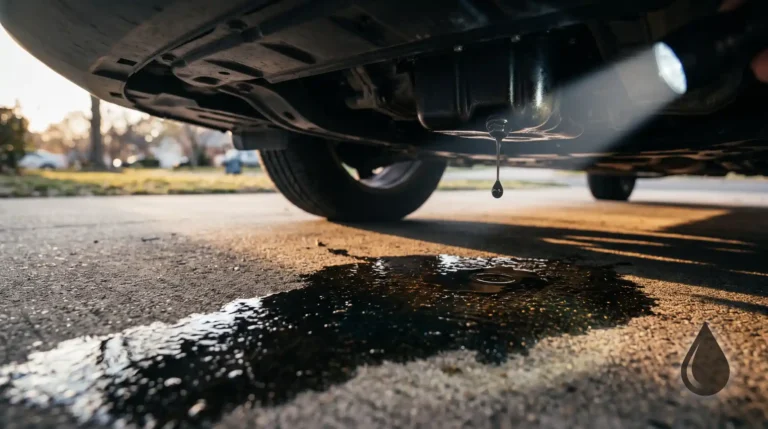
- Puddle or drip under the car? Do not drive it. Fuel leaks can cause fires.
- Gas smell plus check engine light: often an EVAP leak; codes P0455 and P0456 are common.
- Sweet smell: coolant leak. Rotten eggs: catalytic converter or fuel mixture problem.
- Exhaust smell inside the car: open the windows and get it checked; exhaust can contain carbon monoxide.
Safety note: if you smell strong gasoline and see fuel dripping or pooling, turn the engine off, do not smoke or use anything that sparks, move away from the car and call for a tow. If you smell exhaust inside the cabin, open the windows, stop as soon as it is safe, and do not drive with the windows closed until the leak is fixed. Carbon monoxide is odorless and can build up where exhaust leaks in.
Common Causes of a Gas Smell in Your Car
| Cause | Other clues | Typical repair cost |
|---|---|---|
| Loose, damaged or missing gas cap | Check engine light, code P0455/P0457 | $15–$40 for a new cap |
| EVAP system leak (purge or vent valve, charcoal canister, hoses) | Smell near the rear or engine bay, check engine light | $150–$600 |
| Leaking fuel line or hose | Wet spot or drip, strong smell while parked | $150–$700 |
| Leaking fuel injector seal or injector | Smell in engine bay, rough running | $150–$900 |
| Bad fuel pressure regulator | Black smoke, poor fuel economy, fuel in vacuum hose | $200–$500 |
| Engine running rich (bad sensor, misfire) | Fuel smell from exhaust, poor mileage | $100–$500+ |
| Leaking fuel tank, filler neck or pump seal | Smell after filling up, stain under the rear | $300–$1,500+ |
| Loose spark plug or oil contaminated with fuel | Smell from engine or oil filler cap | $100–$400 |
Prices are typical US independent-shop ranges for parts and labor and vary by vehicle.
Gas Smell by Situation
Right After Filling Up
A brief smell after refueling is common, especially if a little fuel splashed on your shoes, hands or the car. If the smell lasts for hours, or you smell it every time you fill up, suspect a leaking filler neck, a worn gas cap seal or an EVAP problem. Avoid “topping off” after the pump clicks off, since overfilling can push liquid fuel into the EVAP system and damage the charcoal canister.
When You Start the Car
A faint fuel smell for a few seconds on a cold start can be normal, because the engine runs rich until it warms up. A strong smell on every start, or one that lingers, can point to a leaking injector O-ring, a fuel pressure regulator problem or an exhaust leak near the engine.
When the Heat or AC Is On
If the smell comes through the vents, fuel vapor from the engine bay is being drawn into the fresh-air intake near the base of the windshield. Look for leaks around the fuel rail, injectors and fuel lines. Driving behind an old or poorly running vehicle can also push fumes through your vents for a short time.
While Parked or in the Garage
A gas smell in a closed garage after the car sits usually means a leak in the fuel tank, lines or EVAP system. Check the floor under the car for drips or stains. This is one to fix quickly because fuel vapor can collect in enclosed spaces.
Gas Smell From the Exhaust
If the exhaust smells of raw fuel, the engine is burning more fuel than it should. Common causes are a misfire, a faulty oxygen or coolant temperature sensor, a leaking injector or a failing fuel pressure regulator. You may also notice black smoke, a rough idle and worse fuel economy.
Does a Gas Smell Set Off the Check Engine Light?
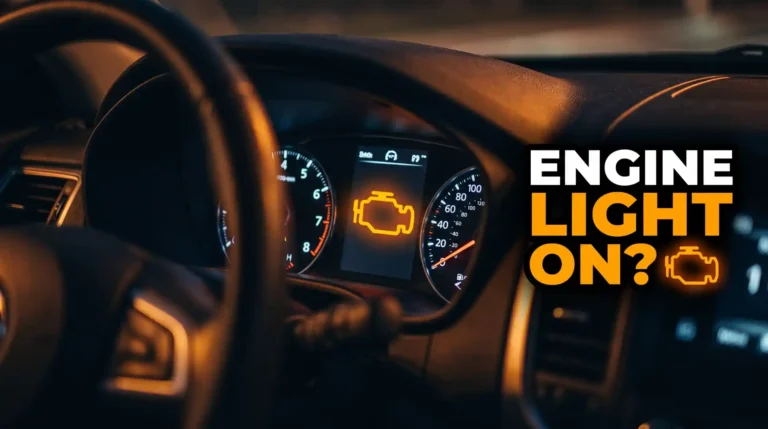
Often, yes. Your car’s EVAP system seals in fuel vapor from the tank and burns it in the engine instead of releasing it into the air. When the system detects a leak it turns on the check engine light. Codes such as P0455 (large leak), P0456 (very small leak) and P0457 (loose or missing gas cap) are common. If the light comes on shortly after you fill up, tighten the cap until it clicks and drive for a few days; the light may go off on its own if the cap was the problem.
Is It Safe to Drive If Your Car Smells Like Gas?
- Faint smell after fueling that fades quickly: usually fine.
- Occasional smell with a check engine light: drive carefully to a shop soon and check the gas cap first.
- Strong smell inside the cabin, dizziness or headache: stop, ventilate the car and do not keep driving.
- Visible fuel dripping or pooling: do not drive. Tow the car to a shop.
Other Car Smells and What They Mean
Your nose can catch many problems early. Here is what the most common smells usually mean and how urgent they are.
| Smell | Likely cause | How urgent |
|---|---|---|
| Rotten eggs or sulfur | Catalytic converter overheating or failing, engine running rich, old gear oil, or an overcharged battery | Soon; urgent if the engine runs poorly |
| Sweet, like maple syrup | Coolant (antifreeze) leak from a hose, radiator, water pump or heater core | Soon; watch the temperature gauge |
| Burning oil | Oil leaking onto the hot exhaust, often from a valve cover gasket or after an oil change spill | Soon |
| Burning rubber | Slipping or damaged drive belt, a hose touching a moving part, or a dragging brake | Soon |
| Hot, acrid burning (like carpet) | Overheated brakes or a sticking caliper; parking brake left on | Stop and let brakes cool |
| Burnt toast or burning plastic | Electrical short or overheated wiring | Urgent; fire risk |
| Exhaust fumes inside the cabin | Exhaust leak, damaged exhaust system or poor door and trunk seals | Urgent; carbon monoxide risk |
| Musty or mildew from the vents | Mold on the AC evaporator, clogged drain tube or wet carpet | Not urgent, but unhealthy |
| Burning smell with a manual transmission | Slipping clutch or aggressive clutch use | Soon |
| Rotting food or sour smell | Food, drinks or spills under seats | Clean it |
Rotten Egg Smell
A sulfur or rotten egg smell usually comes from the catalytic converter, which converts hydrogen sulfide in the exhaust into odorless gases. If the engine runs rich or misfires, the converter can overheat and produce that smell, and it may eventually fail. Fix the underlying engine problem first. A leaking or overcharged battery can also smell of sulfur; if the battery case looks swollen or wet, keep sparks away and have it tested.
Sweet or Maple Syrup Smell
Coolant contains ethylene glycol, which smells sweet. You may smell it outside the car after driving, or inside if the heater core is leaking, often with foggy windows and a damp passenger floor. Check the coolant level only when the engine is cold, look for green, orange or pink puddles, and keep an eye on the temperature gauge. Coolant is toxic to people and pets, so clean up spills.
Burning Oil or Burning Rubber
Oil dripping onto the exhaust manifold burns with a sharp, smoky smell and sometimes light smoke from under the hood. A burning rubber smell is often a slipping or frayed serpentine belt or a hose rubbing on a pulley. Both are worth fixing early: oil leaks can become a fire risk, and a failing belt can leave you stranded if it snaps.
Musty or Moldy Smell From the AC
Moisture on the AC evaporator can grow mold, especially if you shut the car off with the AC running. Replace the cabin air filter, use an AC evaporator cleaner, and try turning the AC off but leaving the fan on for a few minutes before you park to dry the system. If the carpet is wet, look for a clogged AC drain or a water leak.
How to Find the Source of a Smell
- Note when the smell appears: after fueling, on start-up, while driving, with the heat or AC on, or after parking.
- Check whether it is stronger inside or outside the car.
- Look under the car for drips and note the color: clear and watery is usually AC condensation, which is normal; brown or black is oil; green, orange or pink is coolant; a clear liquid with a gasoline smell is fuel.
- Open the hood with the engine off and cool, and look and smell around the fuel rail, hoses, belts and oil filler cap.
- If the check engine light is on, have the code read. Many parts stores do it for free, or you can buy an inexpensive OBD-II scanner.
How to Get Rid of a Gas Smell Inside the Car
Fix the leak first; cleaning only hides the problem. If fuel was spilled inside, for example from a gas can, blot up as much as possible, sprinkle baking soda on carpets or mats and vacuum it after several hours, then clean with an enzyme or upholstery cleaner. Airing the car out with the windows open, in a safe place, speeds things up. Replace the cabin air filter if fumes were drawn through the vents.
For more symptoms and what they mean, see our warning lights and car problems guides. Fuel leaks are a common recall item, so check your VIN in the NHTSA recall lookup.
Car Smells FAQ
The most common causes are a loose or worn gas cap, a small EVAP system leak, a brief rich condition on cold start, or fuel vapor from the engine bay entering through the vents. A shop can smoke-test the EVAP system to find small vapor leaks.
It can be. A faint smell after fueling is usually harmless, but a strong or lasting smell, fuel dripping under the car or a smell inside the cabin can mean a fire risk. Turn off the engine and have it inspected.
A faint fuel smell on a cold start can be normal because the engine runs rich until it warms up. A strong smell every time can point to a leaking injector seal, fuel pressure regulator or an exhaust leak.
Yes. A loose, damaged or missing gas cap lets fuel vapor escape and often turns on the check engine light with an EVAP code such as P0457. Tighten it until it clicks or replace it for about $15 to $40.
A rotten egg or sulfur smell usually comes from the catalytic converter, often because the engine is running rich or misfiring. An overcharged or leaking battery can also cause it.
A sweet, maple-syrup smell usually means coolant is leaking from a hose, the radiator, water pump or heater core. Check the coolant level when the engine is cold and watch the temperature gauge.
Burning oil usually means oil is dripping on the exhaust. Burning rubber points to a slipping belt or rubbing hose. An acrid carpet smell often means overheated brakes, and burning plastic can be an electrical short, which needs urgent attention.
Fix any leak first. For spilled fuel, blot it up, cover the area with baking soda, vacuum after several hours and clean with an enzyme or upholstery cleaner, then air the car out and replace the cabin air filter if needed.