Car Dashboard Symbols and Meanings: Complete Warning Light Guide
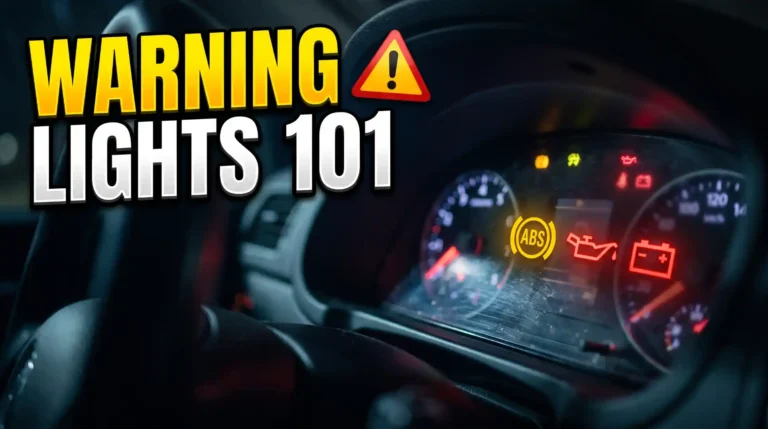
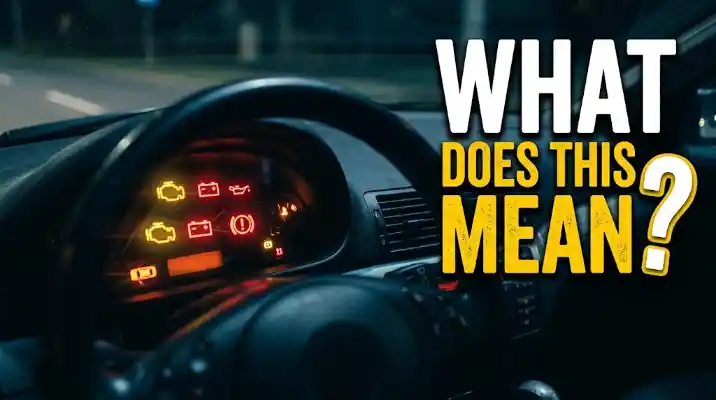
Car dashboard symbols follow a simple color code: red means stop or act now (a serious problem or safety issue), yellow or amber means check soon (something needs attention or a system is off), and green or blue means a system is on and working. The most urgent lights are the red oil pressure, engine temperature, brake and battery warnings, plus a flashing check engine light.
Use the tables below to identify a symbol by its shape and color, see what it means and know what to do. Designs vary slightly between brands, so your owner’s manual has the definitive list for your car.
Key Takeaways
- Red: pull over safely as soon as possible and check the problem.
- Yellow/amber: get it checked soon; a flashing amber light is urgent.
- Green/blue: information only, such as headlights, high beams or cruise control.
- Most urgent: oil pressure, engine temperature, brake system, battery and a flashing check engine light.
- All lights come on briefly at start-up as a bulb check; they should go out after a few seconds.
Red Warning Lights: Act Now
| Symbol (how it looks) | Meaning | What to do |
|---|---|---|
| Oil can with a drip | Low oil pressure | Pull over and turn the engine off right away; check oil level. Do not drive if the light stays on. |
| Thermometer in liquid (or “TEMP”) | Engine overheating | Pull over, turn off the engine and let it cool. Never open a hot radiator cap. |
| Circle with “!” or “BRAKE” | Brake system problem or parking brake on | Release the parking brake. If it stays on, check brake fluid and do not drive until inspected. |
| Battery shape with + and − | Charging system problem (alternator, belt or battery) | Turn off accessories and drive to a shop soon; the car may stall when the battery runs down. |
| Person with a circle (airbag) or “SRS” | Airbag system fault | Airbags may not deploy in a crash. Get it checked promptly. |
| Person wearing a seat belt | Seat belt unfastened | Buckle up; check passenger seats too. |
| Steering wheel with “!” | Power steering fault (red on some cars) | Steering may become heavy. Drive carefully to a shop. |
| Car with open doors, hood or trunk | Door, hood or trunk not closed | Close it fully before driving. |
| Key with an “X” or a key in a car outline | Key not detected or immobilizer problem | Hold the key fob near the start button; replace the fob battery. |
| Triangle with “!” (red on some cars) | Master warning; check the message screen | Read the message and follow its instructions. |
Safety note: if the oil pressure, engine temperature or brake warning comes on while driving, find a safe place to stop as soon as possible and turn off the engine. Continuing to drive can destroy the engine or lead to brake failure. Call for roadside help if you are unsure.
Yellow and Amber Warning Lights: Check Soon
| Symbol (how it looks) | Meaning | What to do |
|---|---|---|
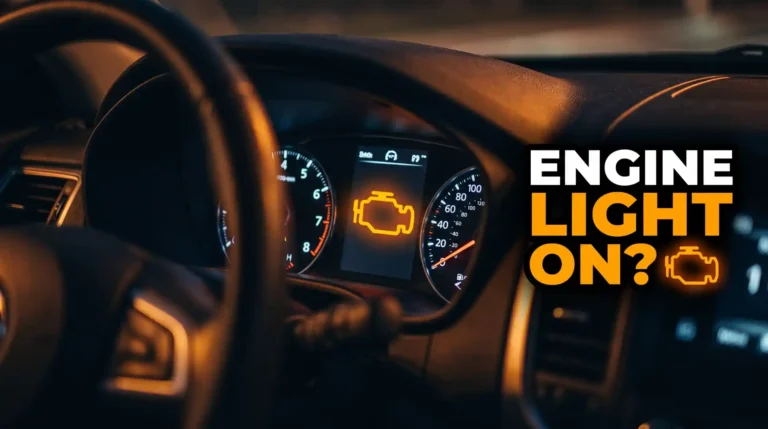
| Engine outline (solid) | Check engine light: an engine or emissions fault | Tighten the gas cap and have the code read soon. |
| Engine outline (flashing) | Severe misfire | Reduce speed and get it checked right away; continued driving can damage the catalytic converter. |
| Horseshoe shape with “!” | Tire pressure (TPMS) low | Check all tires with a gauge and inflate to the door-jamb pressure. A flashing light means a TPMS system fault. |
| Circle with “ABS” | Anti-lock brake fault | Normal brakes still work, but ABS may not. Get it checked. |
| Car with wavy skid lines | Stability or traction control | Flashing: the system is working on a slippery road. Solid: a fault or the system is switched off. |
| Car with skid lines and “OFF” | Stability or traction control turned off | Turn it back on unless you are stuck in snow or mud. |
| Fuel pump | Low fuel | Refuel soon; running empty can damage the fuel pump. |
| Windshield with a spray | Low washer fluid | Refill washer fluid. |
| Wrench, “SERVICE” or “MAINT REQD” | Scheduled maintenance due | Book an oil change or service. |
| Coil (spring) symbol | Diesel glow plugs warming up | Wait until it goes out before starting. |
| Box with dots (diesel particulate filter) | DPF getting full | Drive at steady highway speed for 15–20 minutes, or have it checked. |
| DEF / AdBlue droplet | Diesel exhaust fluid low | Refill DEF soon; some diesels limit speed when empty. |
| Car between lane lines | Lane assist off or fault | Check that the camera area of the windshield is clean. |
| Car with radar waves or “!” | Forward collision or emergency braking system unavailable | Clean sensors; if it stays on, get it checked. |
| Steering wheel with “!” (amber) | Power steering fault | Drive carefully and have it checked. |
| Bulb with “!” | Exterior light bulb out | Check and replace the bulb. |
| Snowflake | Icy road temperature warning | Drive with extra care. |
Green and Blue Lights: Information Only
| Symbol | Meaning |
|---|---|
| Blue headlight with straight lines | High beams on |
| Green headlight | Low beams or automatic headlights on |
| Green arrows | Turn signals or hazards on (both flashing) |
| Green lamp with wavy line | Front fog lights on (rear fog lights are usually amber) |
| Speedometer with an arrow | Cruise control on or set |
| “ECO” or green leaf | Eco driving mode on |
| “READY” or car with arrows | Hybrid or EV ready to drive |
| “A” with a circular arrow | Auto start-stop active |
Symbols on Electric and Hybrid Cars
- Turtle symbol: reduced power; the battery is low or too hot or cold. Charge soon and drive gently.
- Plug symbol: charging cable connected or charging in progress.
- Car with a lightning bolt and “!”: high-voltage system fault. Stop safely and contact the dealer.
- “B” on the gear selector: stronger regenerative braking mode.
Automatic Transmission Symbols
| Letter | Meaning |
|---|---|
| P | Park |
| R | Reverse |
| N | Neutral |
| D | Drive |
| L, 1, 2 or S | Low gears or sport mode, for hills, towing or sportier shifts |
| M or +/− | Manual shifting mode |
| Gear with “!” or “AT” warning | Transmission fault or overheating; drive gently and have it checked |
Why Are All My Dashboard Lights On?
When you first turn the key or press start, most warning lights come on for a moment as a self-test. If several unrelated lights stay on together, such as ABS, traction control, check engine and battery, the cause is often a weak battery, a charging problem or a failed wheel speed sensor, since many systems share data. Have the battery and charging system tested first.
How to Read Warning Light Codes
Many amber lights, especially the check engine light, store a trouble code in the car’s computer. An inexpensive OBD-II scanner, or a free code reading at many auto parts stores, shows the code so you know where to start. Airbag, ABS and some other system codes may need a more advanced scan tool at a shop. Some warning lights are tied to recalls, so check your VIN in the NHTSA recall lookup.
Dashboard Symbols FAQ
Red means a serious problem or safety issue that needs immediate action, yellow or amber means something needs attention soon, and green or blue means a system is on.
The red oil pressure, engine temperature, brake and battery warnings, plus a flashing check engine light. Stop safely as soon as possible if they come on.
It is the master warning light. It tells you to check the message display for details about a specific problem.
That is the tire pressure monitoring (TPMS) warning. At least one tire is low. Check all tires and inflate them to the pressure on the driver door-jamb sticker.
It is the stability or traction control light. Flashing means it is working on a slippery road; staying on means a fault or that the system is switched off.
A solid check engine light usually means you can drive carefully to get it checked soon. A flashing check engine light means a severe misfire, so reduce speed and get help right away.
Often a weak battery, charging system problem or a shared sensor such as a wheel speed sensor. Have the battery and charging system tested first.
It means reduced power, usually because the battery is low or too hot or cold. Charge soon and drive gently.