Grinding Noise When Braking: 10 Causes and How to Fix It
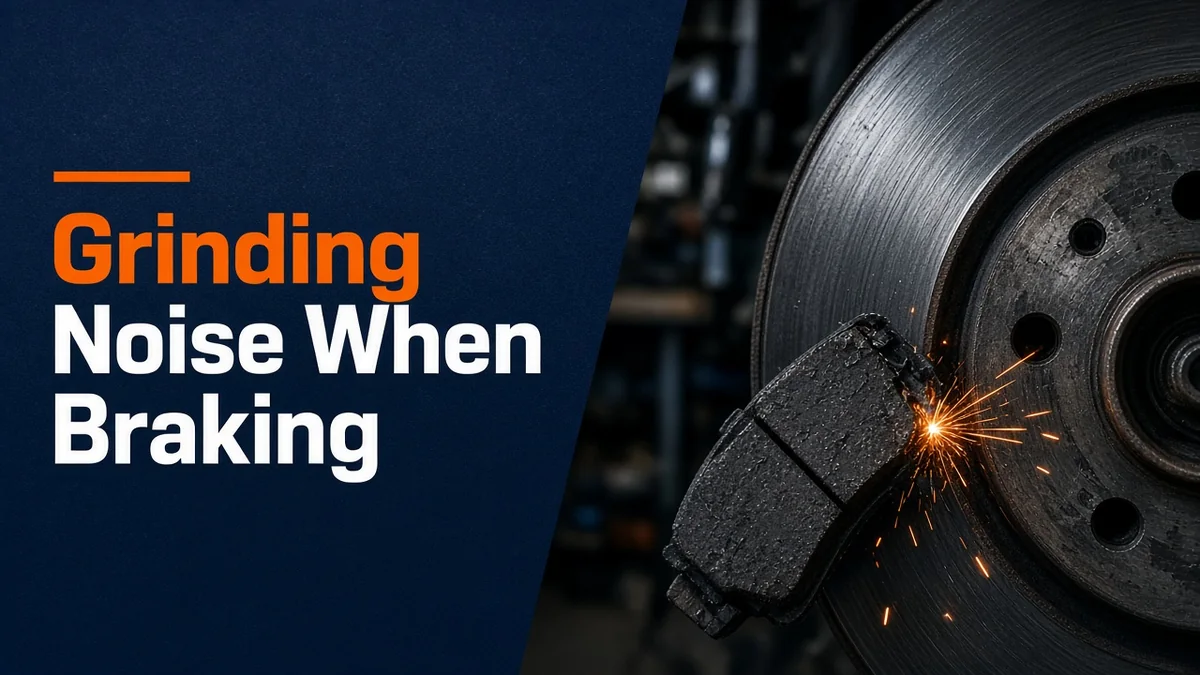
A grinding noise when braking usually means your brake pads are worn down to the metal backing plate and are scraping directly against the rotor. Other common causes are rust on the rotors after the car sits, a stone or debris stuck between the rotor and splash shield, a sticking caliper, low-quality pads, or a worn wheel bearing. Brief grinding on the first few stops of a damp morning is normal. Grinding that lasts, gets louder or comes with a vibration needs a brake inspection right away.
Why Are My Brakes Grinding? Quick Diagnosis
| When You Hear It | Most Likely Cause | Urgency |
|---|---|---|
| Every time you brake, getting louder | Pads worn to metal | High: inspect now |
| First few stops in the morning or after rain | Surface rust on rotors | Low if it goes away |
| Constant scraping, even without braking | Stone/debris, bent dust shield | Medium: check soon |
| Only during hard, sudden stops (pedal pulses) | ABS activating | Normal |
| Grinding or growling that changes when turning | Worn wheel bearing | Medium to high |
| One wheel hot, car pulls to one side | Sticking caliper | High |
| After a new brake job | Improper install, bedding-in, rotor lip | Medium: return to shop |
Common Causes of Grinding Brakes
1. Worn Brake Pads
Brake pads have a layer of friction material bonded to a steel backing plate. Many pads also have a small metal wear indicator that squeals when the pads get thin. If that warning is ignored, the friction material wears away completely and the steel backing plate grinds against the rotor. This causes a harsh, metallic grinding sound, reduces stopping power and quickly gouges the rotor.
2. Damaged, Scored or Worn Rotors
Rotors can develop deep grooves, a raised lip around the outer edge, or uneven thickness. Pads riding on a damaged surface can grind or scrape, and uneven rotors often cause a pulsing pedal or steering wheel shake when braking.
3. Rust on the Rotors
Cast-iron rotors develop a thin layer of surface rust within hours when they get wet. The first few stops scrape it off with a light grinding or scraping sound. This is normal and harmless if it disappears quickly. Cars that sit for weeks can build heavier rust that may need a few firm stops, or in severe cases rotor resurfacing or replacement.
4. Debris Between the Pad and Rotor
A small stone, piece of gravel or road debris can get trapped between the rotor and the caliper or dust shield. It can make a loud, constant grinding or scraping noise, sometimes even when you are not braking.
5. Bent Dust Shield (Backing Plate)
The thin metal shield behind the rotor can get bent during tire work or by road debris and start rubbing the rotor. It makes a scraping sound that usually changes with speed rather than braking.
6. Sticking or Seized Caliper
If a caliper piston or slide pin sticks, the pad stays pressed against the rotor. That wears the pad unevenly, overheats the wheel and can cause grinding. You may notice a burning smell, one wheel much hotter than the others, or the car pulling to one side.
7. Cheap or Wrong Brake Pads
Low-quality pads can contain hard metal chunks that scratch rotors and grind. Aggressive semi-metallic pads can also be noisier than ceramic pads.
8. Worn Wheel Bearing
A failing wheel bearing makes a grinding, humming or growling noise that gets louder with speed and often changes when you turn one way or the other. It is not a brake problem, but it is often mistaken for one. Our guide to common car noises explains how bearing noise differs from brake noise.
9. ABS Activation
During a hard stop on a slippery road, the anti-lock braking system rapidly pulses the brakes. You may hear a grinding or buzzing noise and feel the pedal vibrate. That is normal operation, not a fault.
10. Parking Brake or Drum Brake Problems
On cars with rear drum brakes or a drum-in-hat parking brake, worn shoes, broken springs or a sticking parking brake can make grinding or scraping noises from the rear.
Grinding Vs. Squealing Vs. Squeaking Brakes
| Sound | What It Usually Means |
|---|---|
| High-pitched squeal | Wear indicator touching the rotor, or glazed pads. Pads are getting low. |
| Light squeak | Dust, moisture, missing shims or lack of lubrication |
| Deep grinding or growling | Metal-on-metal contact, debris, or a failing wheel bearing |
| Clicking or clunking | Loose caliper hardware or pads shifting in the bracket |
Is It Safe to Drive With Grinding Brakes?
If the grinding is from light surface rust and goes away after a few stops, yes. If the grinding continues, gets louder or comes with a vibration, pulling or a soft pedal, it is not safe to keep driving normally. Metal-on-metal braking takes longer to stop, can overheat the brakes, and can damage the rotors and calipers within a few hundred miles. Drive gently and directly to a repair shop, or have the car towed if braking feels weak.
What Happens If You Ignore Grinding Brakes?
- Longer stopping distances and a higher risk of a crash
- Rotor damage: a simple pad replacement becomes a pad and rotor job
- Caliper damage: the piston can overextend and leak, adding another expensive part
- Brake fade and overheating on long downhill stretches
- Failed state safety inspection in states that check brakes
Brakes are checked in many state inspections. Our car inspection guide explains what inspectors look for.
How to Fix Grinding Brakes
- Note when the noise happens: every stop, only in the morning, only when turning, or even without braking.
- Look through the wheel spokes: check pad thickness. Less than about 3 mm (roughly 1/8 inch) of friction material means replacement is due.
- Check the rotor surface: deep grooves, a heavy lip or blue heat spots mean the rotor likely needs replacement.
- Check for debris or a bent shield: with the wheel off, look behind the rotor.
- Replace pads and rotors as needed: always in pairs on the same axle.
- Service the calipers: clean and lubricate slide pins and check that pistons retract smoothly.
- Bed in new pads: follow the pad maker’s break-in procedure to prevent noise and vibration.
How Much Does It Cost to Fix Grinding Brakes?
| Repair | Typical Cost per Axle (US) |
|---|---|
| Brake pad replacement | $150–$300 |
| Pads and rotors | $300–$800 |
| Caliper replacement (each) | $250–$700 installed |
| Remove debris or straighten dust shield | $50–$150 |
| Wheel bearing replacement (each) | $200–$600+ |
Prices vary by vehicle, parts quality and labor rates. Performance cars, trucks and European vehicles usually cost more. Catching worn pads before they grind is the easiest way to avoid paying for rotors too.
How to Prevent Grinding Brakes
- Have brakes inspected at every tire rotation or at least once a year
- Replace pads when you first hear squealing from the wear indicator
- Use good-quality pads and rotors suited to your driving
- Drive the car regularly, or take it for a short drive every week or two, to reduce rotor rust
- Avoid riding the brakes on long downhill grades; use a lower gear
- Flush brake fluid at the interval in your owner’s manual
Build brake checks into your routine with our car maintenance schedule by mileage. If you feel shaking along with the noise, our guide to why your car is shaking can help narrow it down.
Safety note: If grinding comes with a soft or sinking pedal, a brake warning light, a strong burning smell or the car pulling hard to one side, stop driving and have the car towed. These can signal a brake failure in progress.
Related guides: Car noises explained · Why is my car shaking? · Car maintenance schedule
Grinding Brakes FAQs
The most common reason is brake pads worn down to the metal backing plate, which then scrapes the rotor. Rust, debris, a sticking caliper or damaged rotors can also cause grinding.
Yes, if it only happens for the first few stops. Moisture creates a thin layer of rust on the rotors overnight, and braking scrapes it off. If the noise lasts all day, get the brakes checked.
Only for a short distance to a repair shop. Grinding from worn pads reduces stopping power and damages rotors and calipers quickly. If braking feels weak, have the car towed.
New brakes can make some noise during the first few miles while they bed in. Loud grinding after a brake job may mean a rotor lip, debris, loose hardware or incorrect installation, so return to the shop.
Not long. Once pads are worn to metal, rotor damage can happen within a few hundred miles or less. Get them inspected as soon as possible.