Sticking Brake Caliper: Symptoms and Replacement Cost
A sticking brake caliper keeps the brake pad pressed against the rotor after you release the pedal. Common signs are the car pulling to one side, a burning smell, one wheel much hotter than the others, heavy brake dust on one wheel, uneven pad wear and reduced fuel economy. The usual causes are seized slide pins, a corroded caliper piston, a collapsed brake hose or old brake fluid. Servicing the slide pins can cost under $150, while replacing a caliper typically costs about $250 to $600 per wheel, often with new pads and rotors if they overheated.
What a Brake Caliper Does
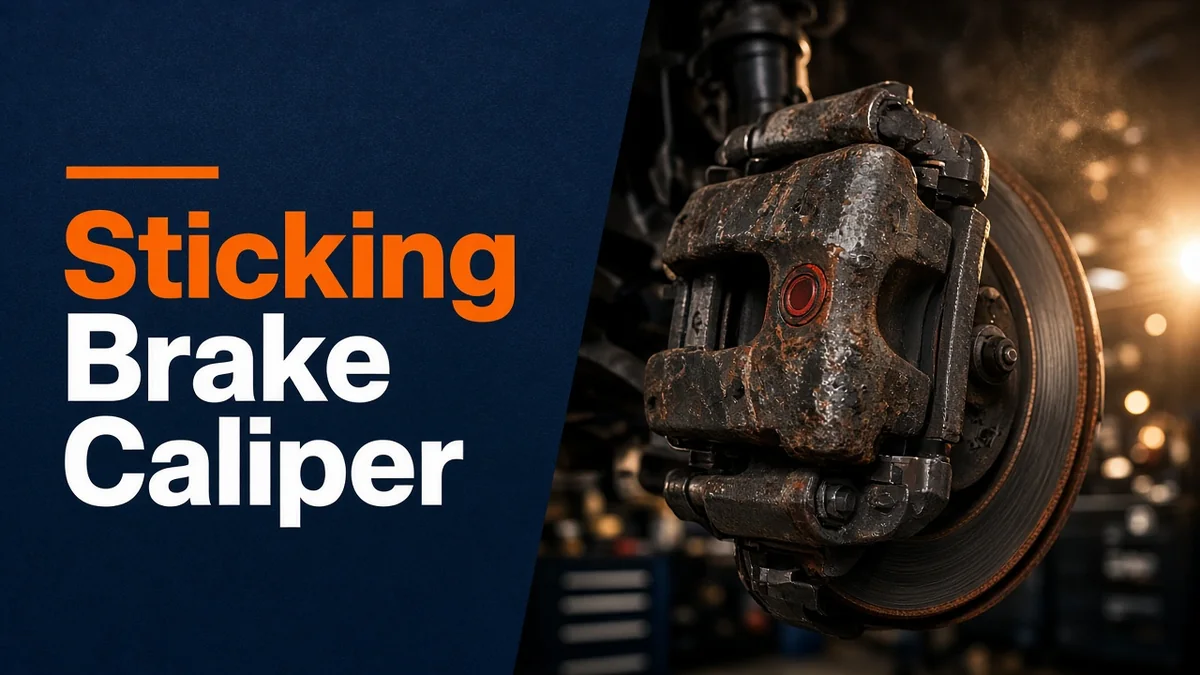
The caliper sits over the brake rotor and holds the brake pads. When you press the pedal, fluid pressure pushes one or more pistons out, squeezing the pads against the rotor. Most cars use floating calipers that slide on two lubricated pins so the pads clamp evenly from both sides. When you release the pedal, the piston seal pulls the piston back slightly and the caliper slides freely, letting the pads relax.
Symptoms of a Sticking Brake Caliper
- Pulling to one side: while driving or braking, toward the sticking caliper.
- Burning smell: from overheated pads, often after a drive.
- One hot wheel: noticeably hotter than the others after driving; do not touch the rotor itself.
- Uneven pad wear: one pad much thinner than the others, or the inner pad worn more than the outer.
- Excess brake dust: on one wheel.
- Dragging or reduced coasting: the car slows quickly when you lift off the accelerator.
- Squealing or grinding: covered in our guide to car noises explained.
- Vibration: from overheated rotors; see our guide to why your car is shaking.
- Lower fuel economy: the engine works against the dragging brake.
What Causes a Brake Caliper to Stick?
| Cause | Why it happens | Typical fix |
|---|---|---|
| Seized slide pins | Grease dries out, pins rust in their bores | Clean, lubricate or replace pins and boots |
| Corroded piston | Moisture in old fluid or a torn boot lets rust form | Rebuild or replace the caliper |
| Collapsed brake hose | An old hose acts like a one-way valve and traps pressure | Replace the hose and bleed |
| Old or contaminated brake fluid | Moisture causes internal corrosion | Flush the brake fluid; repair affected parts |
| Seized pad hardware or clips | Rust pushes pads tight in the bracket | Clean and replace hardware |
| Stuck parking brake mechanism | Rear calipers with integrated parking brakes can seize | Service or replace the caliper or cable |
Rust is a major factor in snowy climates, where road salt attacks brake parts; our guide to preventing rust on a car covers underbody protection.
Why it matters: a dragging brake can overheat until the fluid boils or the pads glaze, reducing braking just when you need it, and in extreme cases it can cause smoke or a fire risk. If you smell strong burning from one wheel or see smoke, pull over and let it cool before driving on, and have it inspected.
How to Check for a Sticking Caliper
- After a short drive, carefully hold your hand near each wheel (not on it) to compare heat, or use an infrared thermometer.
- Lift the car safely and spin each wheel by hand; a sticking brake will feel noticeably harder to turn than the others.
- Look at pad wear through the wheel or with the wheel removed.
- Check the brake hose for cracks or bulges.
- Check the brake fluid color in the reservoir; dark fluid suggests moisture.
Our guide to checking car fluids shows where to find the brake fluid reservoir.
Is There a Temporary Fix for a Stuck Caliper?
Not a safe one. If the car has been sitting and one brake drags lightly at first, a few gentle stops at low speed sometimes free surface rust on the pads and rotor, but a caliper that keeps dragging needs repair. Drive slowly and directly to a shop, or have the car towed if a wheel smokes, the pull is strong or the brake pedal feels different.
Can You Spray WD-40 on Brake Calipers?
No. Penetrating oils such as WD-40 can soak into the pads and rotor and sharply reduce braking, and they can swell the caliper’s rubber boots and seals. Slide pins should be cleaned and lubricated only with a high-temperature silicone or synthetic caliper grease made for brakes, and only on the pins and contact points, never on the pad friction surface or rotor. Brake cleaner is the right spray for removing dirt and dust.
Sticking Caliper Repair Cost
| Repair | Typical cost |
|---|---|
| Clean and lubricate slide pins (per axle) | $80–$150 |
| Slide pin and boot kit (DIY) | $10–$30 |
| Caliper replacement (per wheel) | $250–$600 |
| Remanufactured caliper (part only) | $60–$150 |
| Brake hose replacement (per hose) | $150–$300 |
| Pads and rotors if overheated (per axle) | $300–$600 |
| Brake fluid flush | $80–$150 |
Rear calipers with electronic parking brakes cost more and may need a scan tool to service. Calipers are usually replaced in pairs on the same axle only if both are worn; a single seized caliper can be replaced on its own, though many shops recommend pairs on high-mileage cars.
Can You Fix a Sticking Caliper Yourself?
Cleaning and greasing slide pins is a manageable DIY job during a pad change, using high-temperature caliper grease and new rubber boots. Replacing a caliper requires opening the brake system, so you must bleed the brakes afterward and torque bolts correctly. If you are not comfortable working on hydraulic brakes, have a shop do it.
How to Prevent Calipers From Sticking
- Clean and lubricate slide pins at every brake pad replacement
- Replace torn caliper boots promptly
- Change brake fluid every two to three years
- Replace old rubber brake hoses
- Drive the car regularly; cars that sit tend to seize brakes
Brake inspections and fluid changes appear in our car maintenance schedule by mileage, and the parking brake is part of the same rear caliper on many cars.
Related guides: car inspection, car storage and dashboard symbols and meanings.
Sticking Brake Caliper FAQ
The car pulls to one side, there is a burning smell, one wheel is much hotter than the others, and one set of pads wears faster.
It is not recommended. The dragging brake overheats, wears parts quickly and can reduce braking performance.
Rarely. It may seem to free up temporarily, but the underlying corrosion or seized pins usually return.
Not always. A single failed caliper can be replaced, but many shops recommend pairs on older, high-mileage vehicles.
In extreme cases, a severely dragging brake can overheat enough to smoke and ignite nearby grease or debris. Stop and let it cool if you see smoke.
No. It can contaminate the pads and rotor and damage rubber seals. Use brake cleaner to clean and high-temperature caliper grease on the slide pins only.