Do Electric Cars Have Transmissions or Engines?
Most electric cars do not have a multi-speed transmission or an engine. Instead, they use one or more electric motors connected to a single-speed reduction gear, which is why EVs accelerate smoothly without shifting. Electric motors produce strong torque from zero rpm and spin efficiently across a wide speed range, so extra gears are usually unnecessary. A few performance EVs, such as the Porsche Taycan and Audi e-tron GT, use a two-speed transmission on the rear axle. EVs are driven like automatics, with Park, Reverse, Neutral and Drive, and they have no clutch pedal.
Do Electric Cars Have Transmissions?
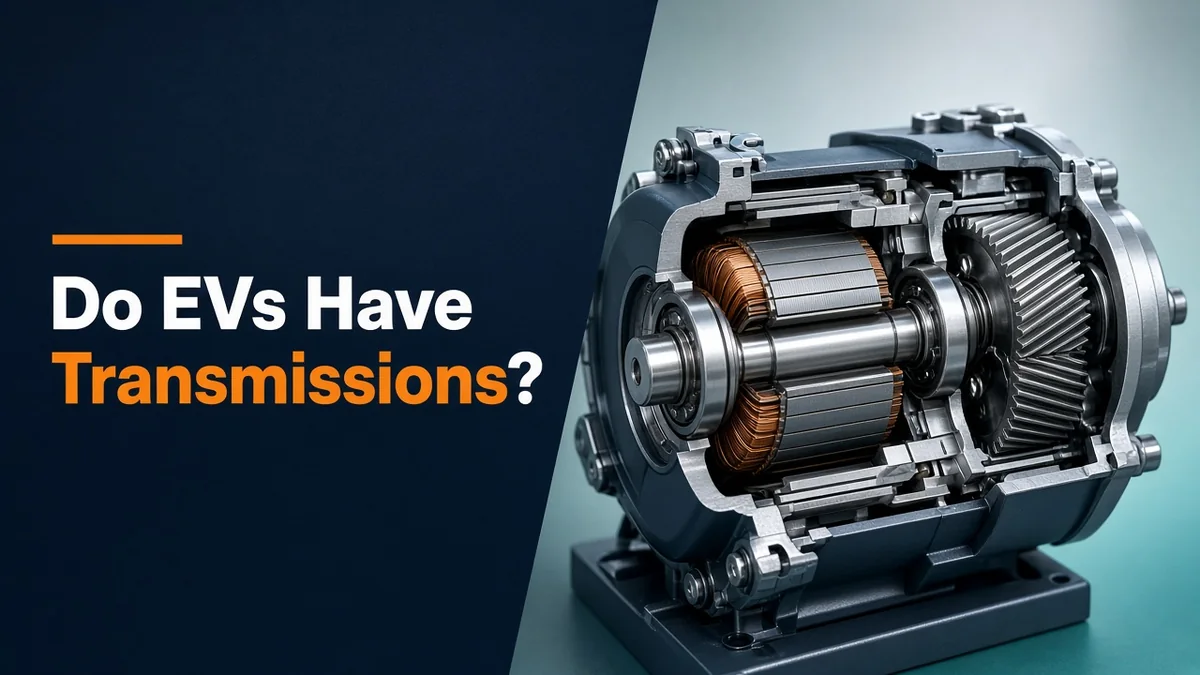
Technically, every EV has a gearbox of sorts: a reduction gear that slows the motor’s very high rotational speed down to a speed suitable for the wheels, usually around 8:1 to 10:1. What EVs lack is a multi-speed transmission that changes gears as you accelerate. The motor, reduction gear and differential are often combined into a single “drive unit” or “e-axle.”
Why EVs Do Not Need Multiple Gears
| Characteristic | Gas Engine | Electric Motor |
|---|---|---|
| Usable rpm range | Roughly 1,000–7,000 rpm | 0 to about 15,000–20,000 rpm |
| Torque delivery | Builds with rpm; weak at very low rpm | Maximum torque available from 0 rpm |
| Needs to idle | Yes | No |
| Efficiency across speed range | Narrow sweet spot | High efficiency across a broad range |
| Gears needed | 6–10 in modern automatics | Usually one |
A gas engine can only produce useful power within a narrow rpm band and cannot run below idle, so it needs many gears and a clutch or torque converter. An electric motor can start from a standstill with full torque and keep pulling to very high rpm, so a single fixed ratio works for city driving and highway cruising.
Do Electric Cars Have Engines?
No. An engine burns fuel to create motion. EVs use electric motors powered by a battery. That is why EVs have no oil changes, spark plugs, exhaust system or fuel tank. Plug-in hybrids and regular hybrids have both a gas engine and electric motors. Some people casually call an EV’s motor its “engine,” but they work completely differently.
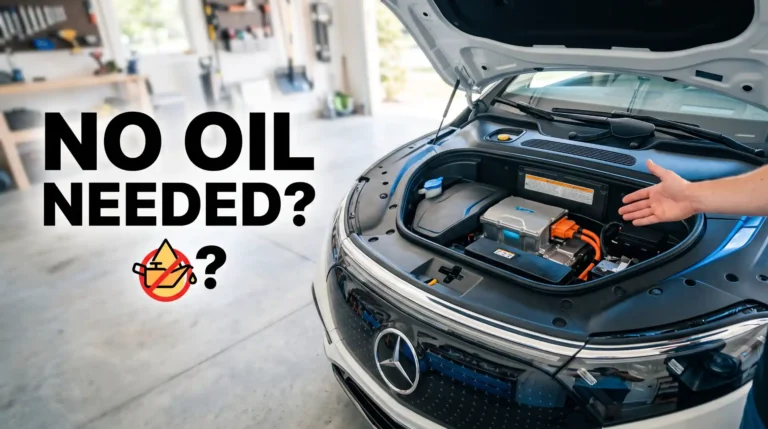
Because there is no engine, EV maintenance is much simpler. See our guide on whether electric cars need oil changes.
Which EVs Have a Two-Speed Transmission?
- Porsche Taycan: uses a two-speed transmission on the rear motor. First gear improves launch acceleration; second gear improves efficiency and top speed.
- Audi e-tron GT / RS e-tron GT: shares the Taycan’s platform and two-speed rear gearbox.
- Historical and experimental EVs: some early EVs and conversions used the car’s original manual gearbox, and some commercial and heavy-duty electric trucks use multi-speed transmissions.
Do Teslas Have a Transmission?
Teslas use the same layout as most EVs: each motor drives the wheels through a single-speed gear reduction, with no gears to shift. Dual-motor versions simply have one drive unit on each axle. Selecting Drive or Reverse just tells the motor which way to spin.
Do Hybrids and Plug-in Hybrids Have Transmissions?
Yes. Because hybrids and plug-in hybrids still have a gas engine, they need a way to blend engine and motor power. Toyota, Lexus and Ford hybrids commonly use a power-split “eCVT” built around a planetary gear set, with no belt and no fixed gears. Honda’s two-motor hybrids mostly drive through the electric motor and lock the engine to the wheels at highway speed. Other hybrids and many plug-ins pair the motor with a conventional automatic or dual-clutch transmission. All of these need transmission fluid service on the schedule in the owner’s manual, unlike a pure EV’s long-life reduction gear.
Can You Get an Electric Car With a Manual Transmission?
Not from mainstream automakers in the US. Some companies have experimented with simulated manual shifting, such as Toyota’s prototypes with a fake clutch pedal and shifter, and some performance EVs offer simulated gear changes through the paddles. Hobbyist EV conversions sometimes keep the original manual gearbox. If you enjoy driving stick, our guide on how to drive a manual car covers the real thing.
Do Electric Cars Have a Clutch?
No. EVs do not need a clutch because the motor can be at zero rpm when the car is stopped and start turning immediately. Like automatic cars, EVs have just two pedals. For how automatics handle engagement, see do automatic cars have a clutch.
How You “Shift” an Electric Car
- P (Park): locks the drive unit, like an automatic.
- R (Reverse): the motor simply spins the other direction; there is no reverse gear.
- N (Neutral): disconnects drive power, used for car washes and towing.
- D (Drive): normal driving.
- B or L mode, or one-pedal driving: increases regenerative braking so the car slows when you lift off the accelerator, recharging the battery.
Maintenance of an EV Drive Unit
The reduction gearbox contains a small amount of gear oil or fluid. Many manufacturers consider it filled for life or specify a change at long intervals, often 100,000 miles or more, or only under severe use. Check your owner’s manual. Drive units are generally very durable because they have far fewer moving parts than a conventional transmission.
Pros and Cons of Single-Speed EV Drive
| Pros | Cons |
|---|---|
| Smooth, seamless acceleration | Slightly less efficient at very high speeds |
| Fewer parts, less maintenance, higher reliability | Top speed limited by motor rpm |
| Lighter and more compact | Less “mechanical” driving feel for enthusiasts |
| Instant response | Some performance trade-offs vs. two-speed designs |
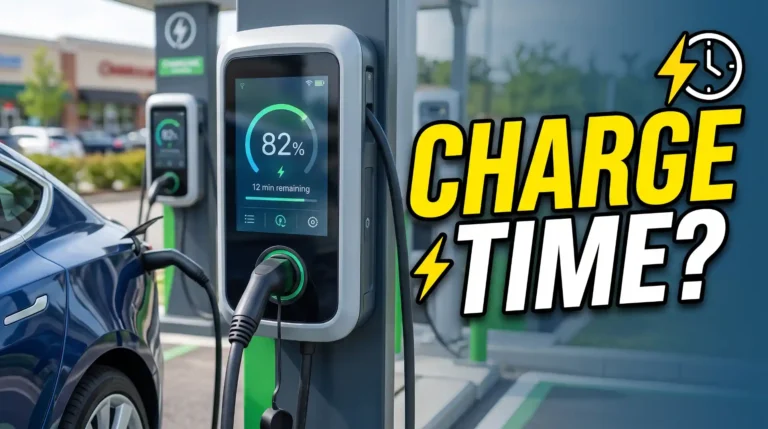
If you are new to EVs, our guide on how long it takes to charge an electric car covers the other big difference from gas cars: refueling.
Safety note: EVs are nearly silent at low speeds and have very quick acceleration. Be careful when parking and pulling out, and watch for pedestrians. Never service high-voltage drive components yourself; orange cables indicate high voltage.
Related guides: Do electric cars need oil changes? · Do automatic cars have a clutch? · How long to charge an EV?
EV Transmission FAQs
Most electric cars do not have a multi-speed transmission. They use a single-speed reduction gear between the motor and wheels. A few performance EVs use two-speed transmissions.
Electric motors produce full torque from zero rpm and operate efficiently across a very wide speed range, so a single gear ratio is enough.
Not from mainstream automakers in the US. Some prototypes simulate manual shifting, and some hobbyist conversions keep the original manual gearbox.
Very little. The reduction gearbox holds a small amount of fluid that many manufacturers consider long-life. Follow your owner’s manual.
Most EVs have a small amount of gear oil or transmission-type fluid in the reduction gearbox. Many makers treat it as long-life or call for a change only at long intervals, so check your owner’s manual.