Nail in Tire: Plug vs Patch and When It Can’t Be Fixed
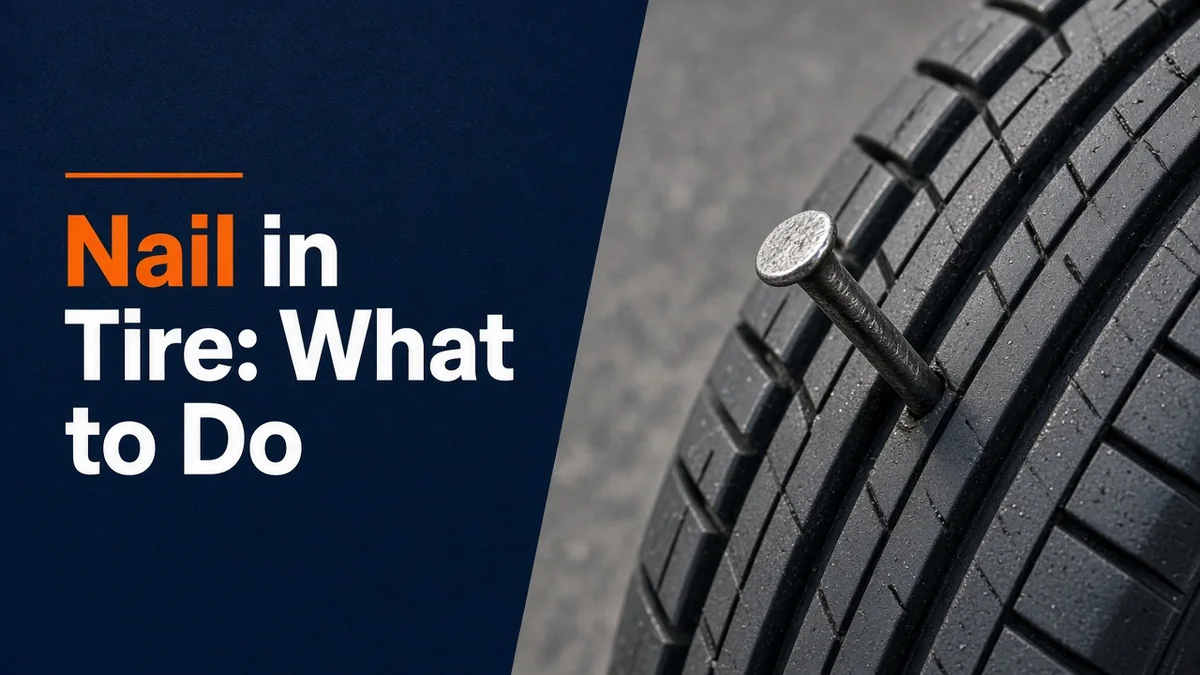
A nail in a tire can usually be repaired if the hole is in the main tread area, no larger than about 1/4 inch (6 mm), and the tire was not driven flat. The proper repair, recommended by the US Tire Manufacturers Association, is a plug-patch combination applied from inside the tire after it is removed from the wheel. It typically costs about $20 to $50 at a shop. A nail in the sidewall or shoulder cannot be safely repaired, and the tire must be replaced.
What to Do When You Find a Nail in Your Tire
- Do not pull the nail out: it is often plugging its own hole, and removing it can turn a slow leak into a flat.
- Check the pressure: use a gauge and compare with the placard on the driver’s door jamb.
- Add air if needed: inflate to the recommended pressure at a gas station or with a portable inflator.
- Note where the nail is: in the center tread, near the edge, or in the sidewall.
- Drive gently to a tire shop: if the tire holds air, a short, slow drive is usually fine. If it keeps losing air, fit the spare.
- Get it repaired properly: ask for a plug-patch repair from the inside.
Do not drive on a flat: driving on a tire with very low pressure destroys the sidewall from the inside within a short distance, making it unrepairable, and it can damage the wheel. If the tire is flat or losing air fast, fit the spare or call for roadside help.
If you do need a tow to a tire shop, our guide to towing costs covers what it usually costs and when roadside assistance plans pay for it.
Can a Tire With a Nail Be Repaired?
It depends on where the nail is and how big the hole is. Industry repair guidelines allow repairs only in the crown, the flat tread area that touches the road. That part of the tire is reinforced by steel belts and flexes less. The shoulder and sidewall flex constantly and cannot hold a repair safely.
| Location or damage | Repairable? | Why |
|---|---|---|
| Center tread, hole up to 1/4 inch | Yes | Within the reinforced repair zone |
| Near the edge of the tread (shoulder) | No | The shoulder flexes too much to hold a repair |
| Sidewall | No | No belt reinforcement; repairs can fail suddenly |
| Hole larger than 1/4 inch or a cut | No | Too large for a safe repair |
| Two punctures close together | Often no | Repairs must not overlap; spacing rules apply |
| Tire driven flat | Often no | Internal damage may be hidden |
| Previous improper repair | Usually no | Must be inspected and may be refused |
Tire Plug vs Patch vs Plug-Patch
Tire Plug
A plug is a sticky, rubber-coated cord pushed into the hole from outside with a reaming tool. It can be done without removing the tire, which is why plug kits are popular for roadside use. The downside is that nobody inspects the inside of the tire, and a plug does not seal the inner liner well, so moisture can reach the steel belts over time.
Tire Patch
A patch is applied to the inside of the tire after it is removed from the wheel. It seals the inner liner, but a patch alone does not fill the hole through the tread, so water and debris can still enter the puncture channel.
Plug-Patch Combination
A combination repair, sometimes called a patch-plug or mushroom patch, fills the puncture channel with a rubber stem and seals the inside with a patch in one piece. The tire is removed and inspected for hidden damage first. This is the repair the US Tire Manufacturers Association recommends as a proper permanent repair.
| Repair type | Typical cost | Permanent? | Tire removed and inspected? |
|---|---|---|---|
| Plug (DIY kit) | $10–$25 for a kit | No, temporary | No |
| Plug at a shop | $10–$30 | No, temporary | No |
| Patch only | $20–$40 | Partial | Yes |
| Plug-patch combination | $20–$50 | Yes, if within guidelines | Yes |
Some tire shops repair punctures for free, especially on tires they sold. Prices are higher for large truck, run-flat or low-profile performance tires.
What Happens During a Proper Tire Repair
Industry guidelines from the U.S. Tire Manufacturers Association call for a tire to be removed from the wheel and inspected from the inside before it is repaired. A proper shop repair usually looks like this:
- Locate the puncture and mark it, then remove the nail or screw.
- Dismount the tire from the wheel.
- Inspect the inside of the tire for damage from being driven while low, such as rubber dust or a crease around the sidewall.
- Confirm the puncture is in the repairable tread area and no larger than 1/4 inch (6 mm).
- Clean and prepare the injury from the inside.
- Fill the hole with a rubber stem and seal the inner liner with a patch (a combination plug-patch).
- Remount, balance and inflate the tire to the placard pressure.
- Check the TPMS sensor and valve stem while the tire is off.
Many tire shops follow this process in about 20 to 45 minutes.
How to Use a Tire Plug Kit in an Emergency
- Park safely on level ground, away from traffic, with the parking brake on.
- Locate the nail and remove it with pliers only when you are ready to plug immediately.
- Push the reaming tool into the hole and work it in and out to clean and shape the channel.
- Thread a plug through the insertion tool so it is centered.
- Push the tool into the hole until about a third of the plug remains outside, then pull the tool straight out, leaving the plug.
- Trim the excess plug level with the tread.
- Inflate to the recommended pressure and check for leaks with soapy water.
- Have the tire inspected and properly repaired as soon as possible.
Tire Sealant and Inflator Kits
Many new cars come with a can of sealant and a small compressor instead of a spare tire. Sealant can seal small tread punctures well enough to reach a shop, but it is a temporary fix. It can make a proper repair messier, and some sealants can clog or damage tire pressure sensors, so tell the shop if you used it. Sealant will not fix sidewall damage or large holes.
How Long Can You Drive With a Nail in Your Tire?
If the tire holds pressure, you can usually drive a short distance carefully to get it repaired, but do not treat it as a long-term solution. The nail can work loose, the hole can grow, and moisture can start corroding the belts. Check the pressure daily until it is fixed. Most cars since 2008 also warn you with the tire pressure monitoring light, one of the symbols covered in our guide to dashboard symbols and meanings.
Tire Repair Cost
| Repair | Typical Cost (US) |
|---|---|
| DIY plug kit | About $10–$25 |
| Shop plug-patch repair | About $20–$50 per tire |
| Free repair (tire bought from that retailer or with road hazard plan) | Often $0 |
| Mobile tire repair | About $50–$150 |
| New tire if not repairable | About $100–$300+ per tire, plus mounting and balancing |
Many national tire chains repair punctures free, even on tires bought elsewhere, so ask before paying.
When You Need a New Tire Instead
- The puncture is in the sidewall or shoulder
- The hole is larger than about 1/4 inch, or the damage is a cut or gash
- The tire was driven flat or very low and the inside is damaged
- There is a bulge, bubble or exposed cords
- The tread is already close to worn out
If you are replacing one tire, it is often best to replace tires in pairs on the same axle, and all-wheel-drive vehicles may need all four tires to be closely matched. Our guide to how long tires last helps you decide whether the rest of the set is worth keeping.
Common Mistakes After Finding a Nail in Your Tire
- Pulling the nail out on the road side: the tire may deflate quickly. Leave it in until you reach a shop, unless it is causing a fast leak.
- Driving on a low tire: even a short distance flat can ruin the sidewall and make an otherwise repairable tire scrap.
- Treating an emergency plug as permanent: a string plug from outside does not seal the inner liner and is not an approved permanent repair.
- Repairing the shoulder or sidewall: these areas flex too much for a safe repair.
- Ignoring a slow leak: a tire that keeps losing a few psi a week can hide a nail you have not spotted.
- Skipping the TPMS check: a cheap valve stem seal can cause its own slow leak after a repair.
Is a Repaired Tire Safe?
A tire repaired correctly with a plug-patch, within the size and location limits, is considered safe for normal driving for the rest of its tread life. Shops may still decline repairs on run-flat or high-performance tires if the manufacturer advises against it, so ask before you buy a replacement.
Related guides: car maintenance schedule by mileage, winter car prep and snow tires and car inspection.
Nail in Tire FAQ
Usually about $20 to $50 for a proper plug-patch repair at a shop. A DIY plug kit costs about $10 to $25, and some shops repair punctures for free.
A plug-patch combination is best. A plug alone is a temporary fix, and a patch alone does not fill the puncture channel.
Only a short distance and only if the tire holds air. Check the pressure and get it repaired as soon as possible.
Many do, especially if you bought the tires there or have a road hazard warranty. Some national chains repair punctures free even on tires bought elsewhere.