Plug-In Hybrid vs Hybrid: Differences and a List of 2026 PHEVs
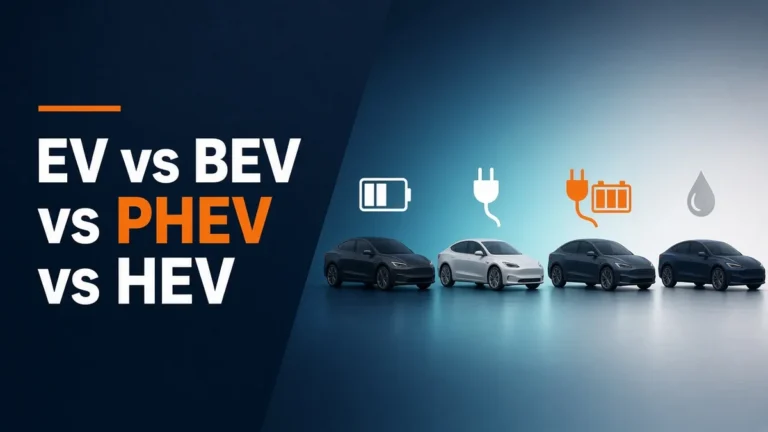
A plug-in hybrid (PHEV) has a larger battery that you charge by plugging in, letting you drive roughly 25 to 55 miles on electricity alone before the gas engine takes over. A regular hybrid (HEV) has a small battery that charges itself through the engine and regenerative braking, so it never plugs in and can only drive very short distances on electric power. PHEVs cost more but can cut fuel use dramatically if you charge daily and have a short commute. Regular hybrids are cheaper, simpler and deliver excellent fuel economy with no change in habits.
Plug-in Hybrid Vs. Hybrid: Key Differences
| Feature | Plug-in Hybrid (PHEV) | Hybrid (HEV) |
|---|---|---|
| Charging | Plug in (Level 1 or Level 2); also charges from engine and braking | Self-charges from engine and braking only |
| Battery size | Larger (often about 10–25 kWh) | Small (often about 1–2 kWh) |
| Electric-only range | About 25–55 miles on many 2026 models | Usually under a mile or two, at low speed |
| Fuel economy | Very high if charged regularly; similar to a hybrid when not charged | Excellent, especially in city driving |
| Price | Higher | Lower |
| Weight and cargo | Heavier; sometimes less cargo space | Lighter; little or no cargo loss |
| Best for | Short commutes with home charging, plus road trips | Drivers without home charging or with long daily drives |
How a Regular Hybrid Works
A hybrid pairs a gas engine with one or more electric motors and a small battery. The motor helps the engine accelerate, lets the car creep and cruise briefly on electricity, and recovers energy through regenerative braking. The engine shuts off at stops. The result is much better fuel economy than a comparable gas car without changing how you refuel.
How a Plug-in Hybrid Works
A PHEV has the same basic parts but a much larger battery and a charging port. After a full charge, it drives like an EV for its electric range, then switches to hybrid mode. Many PHEVs let you choose modes to save battery for later, such as city driving at the end of a highway trip.
- Charge at home: Level 1 can fully charge many PHEVs overnight; Level 2 is faster.
- Electric commuting: if your daily round trip is within the electric range, you may rarely use gas.
- No range anxiety: the gas engine is always available for long trips.
Charging times are covered in how long it takes to charge an electric car.
List of Plug-in Hybrids Available for 2026
| Model | Type | Approx. Electric Range |
|---|---|---|
| Toyota RAV4 Plug-in Hybrid | Compact SUV | About 42–52 miles depending on trim (EPA) |
| Mercedes-Benz GLC 350e | Luxury compact SUV | Up to about 54 miles |
| Toyota Prius Plug-in Hybrid | Hatchback | About 39–45 miles depending on trim |
| Mitsubishi Outlander PHEV | Three-row compact SUV | About 38–45 miles depending on model year |
| BMW X5 xDrive50e | Luxury midsize SUV | Up to about 38 miles |
| Lexus NX 450h+ | Luxury compact SUV | About 37 miles |
| Lexus RX 450h+ | Luxury midsize SUV | About 35 miles |
| Kia Tucson Plug-in Hybrid | Compact SUV | About 32–34 miles |
| Hyundai Tucson Plug-in Hybrid | Compact SUV | About 33 miles |
| Kia Sorento Plug-in Hybrid | Midsize SUV | About 32 miles |
| Mazda CX-90 and CX-70 PHEV | Midsize SUVs | About 26 miles |
| Volvo XC60 and XC90 T8 | Luxury SUVs | About 30–35 miles |
| BMW 330e, 550e and 750e | Luxury sedans | Shorter electric ranges |
| Nissan Rogue Plug-in Hybrid | Compact SUV | 38 miles (EPA); Nissan’s first US plug-in, from $45,990 |
| Porsche Cayenne and Panamera E-Hybrid | Luxury performance | Varies by model |
Electric ranges are approximate EPA or manufacturer figures from recent model years as reported by automakers and publications such as U.S. News and Autoblog. Availability and ratings change each model year, so confirm details for the exact vehicle.
Recently Discontinued PHEVs
- Jeep Wrangler 4xe and Grand Cherokee 4xe: discontinued in North America starting with the 2026 model year.
- Chrysler Pacifica Plug-in Hybrid: discontinued for 2026.
- Ford Escape Plug-in Hybrid: ended when Escape production concluded.
Used versions of these can still be good buys; check recall status and battery health.
Popular Regular Hybrids
- Toyota Prius, Camry, Corolla, RAV4, Highlander, Sienna and Sequoia
- Honda Accord Hybrid, Civic Hybrid and CR-V Hybrid
- Hyundai Elantra, Sonata, Tucson and Santa Fe Hybrid
- Kia Niro, Sportage and Sorento Hybrid
- Ford Maverick Hybrid and F-150 PowerBoost
- Lexus hybrid models across the lineup
- Subaru Forester Hybrid and Crosstrek Hybrid
Which Is Cheaper to Own?
It depends on how you drive and your energy prices. If you charge a PHEV daily and most trips are within its electric range, fuel costs can be very low. If you rarely plug in, a PHEV behaves like a heavier, more expensive hybrid. Use our fuel cost calculator and EV charging cost calculator to compare your likely costs.
Maintenance and Reliability
Both types still have gas engines, so they need oil changes and engine maintenance, but regenerative braking reduces brake wear. PHEVs are more complex because of their larger batteries and charging systems. Consumer Reports surveys have found regular hybrids to be the most reliable powertrain type, while PHEVs report more problems on average. For brand reliability, see our ranking of the most reliable car brands. If you want to skip engine maintenance entirely, see do electric cars need oil changes.
Which Should You Buy?
| Choose a PHEV If… | Choose a Hybrid If… |
|---|---|
| You can charge at home or work | You cannot charge regularly |
| Your daily driving is mostly under 30–50 miles | You drive long distances every day |
| You want electric commuting without range anxiety | You want the lowest purchase price and simplicity |
| You want extra power (many PHEVs are quicker) | You want maximum reliability and cargo space |
Charging safety: Plug PHEVs into outlets and chargers rated for the load, have Level 2 chargers installed by a licensed electrician, and avoid ordinary extension cords.
Related guides: Fuel cost calculator · EV charging cost calculator · Most reliable car brands
PHEV vs Hybrid FAQs
A plug-in hybrid has a larger battery you charge by plugging in and can drive about 25 to 55 miles on electricity alone. A regular hybrid charges its small battery itself and never plugs in.
No, it will still run on gas like a hybrid, but you lose most of the benefit. PHEVs are most efficient when charged regularly.
Models such as the Toyota RAV4 Plug-in Hybrid and Mercedes-Benz GLC 350e offer some of the longest electric ranges, around 50 miles or more depending on trim.
A PHEV is better if you can charge at home and have a short daily commute. A regular hybrid is better if you cannot charge regularly or want a lower price.
Many PHEVs charge fully overnight on a standard 120V outlet and in a few hours on a Level 2 charger, depending on battery size.