Electric Car Conversion Kits: Cost and Is It Worth It?
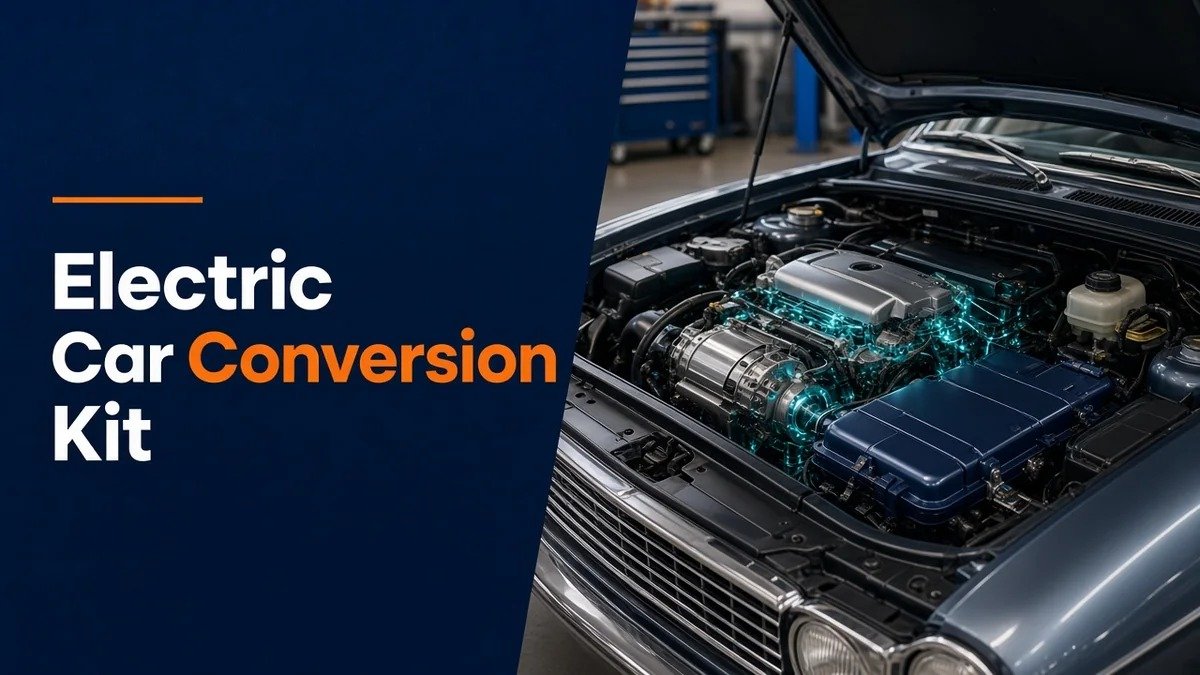
An electric car conversion kit replaces a gas engine with an electric motor, controller, battery pack and charging system. A basic DIY conversion of a small, light car commonly costs about $10,000 to $25,000 or more in parts, while a professional conversion, especially of a classic car or truck, often costs $30,000 to $100,000 or more. Conversions make the most sense for enthusiasts restoring classic or lightweight vehicles. For most people who simply want to drive electric, buying a new or used EV is far cheaper and simpler.
What Is in an Electric Car Conversion Kit?
| Component | What It Does |
|---|---|
| Electric motor | Drives the wheels, usually through the existing transmission or a direct-drive unit |
| Motor controller / inverter | Controls power from the battery to the motor based on the accelerator pedal |
| Battery pack | Stores energy; usually lithium-ion modules salvaged from production EVs or new packs |
| Battery management system (BMS) | Monitors cell voltage and temperature to protect the battery |
| On-board charger and charging port | Charges the battery from Level 1 or Level 2 charging |
| DC-DC converter | Powers the 12-volt system (lights, wipers, radio) from the main battery |
| Adapter plate and coupler | Connects the motor to the transmission |
| Throttle, contactors, fuses and high-voltage cabling | Control and safety components |
| Cooling system | Keeps the motor, controller and batteries at safe temperatures |
| Vacuum pump or electric power steering | Replaces engine-driven brake booster vacuum and steering assist |
Many “kits” include only the motor, controller and adapter; batteries, BMS, charger and custom fabrication are often extra. Read exactly what is included before buying.
How Much Does an EV Conversion Cost?
| Conversion Type | Typical Cost (US) | Notes |
|---|---|---|
| Basic DIY, small light car, modest range | $10,000–$20,000 | Used EV batteries and motor; lots of your own labor |
| Mid-range DIY with salvaged EV drive unit | $15,000–$30,000 | Tesla, Nissan Leaf or similar components |
| Professional conversion, classic car | $30,000–$80,000 | Includes engineering, fabrication and labor |
| High-performance or luxury restomod | $80,000–$150,000+ | Large batteries, high power, custom work |
Costs vary widely with battery size, performance goals, parts sources and labor. Battery prices have fallen over time, but batteries are still the largest part of the budget.
Which Cars Are Good for EV Conversion?
- Lightweight cars: less weight means more range per kWh.
- Simple, older vehicles: fewer integrated electronics make wiring easier.
- Manual transmission cars: easier to mate an electric motor with an adapter plate.
- Vehicles with space for batteries: under the hood, in the trunk or in place of the fuel tank.
- Popular choices: classic VW Beetles and Buses, older Porsche 911 and 914, Mazda Miata, small pickups like the Ford Ranger and Toyota pickups, and classic cars valued for restomods.
Weight is a big factor, since batteries are heavy. Our guide on how much a car weighs shows typical vehicle weights for comparison.
Pros of Converting a Car to Electric
- Keep a car you love while eliminating gas, oil changes and exhaust
- Instant torque and smooth, quiet driving
- Lower running costs than gas, especially with home charging
- Fewer maintenance items: no oil changes, spark plugs or exhaust
- A rewarding project for skilled hobbyists
Cons of Converting a Car to Electric
- High cost: often more than buying a used EV
- Limited range compared with modern EVs unless you spend heavily on batteries
- Weight and handling changes: brakes and suspension may need upgrades
- Safety risks: high-voltage systems can cause serious injury or fire if built incorrectly
- Missing modern safety features in older vehicles
- Registration, inspection and insurance hurdles
- Resale value can be unpredictable
EV Conversion Vs. Buying an Electric Car
| Factor | EV Conversion | New or Used EV |
|---|---|---|
| Cost | $10,000–$100,000+ | Used EVs from well under $15,000; new from about $29,000 |
| Range | Often 80–200 miles | Typically 230–350 miles on new models |
| Safety features | Depends on the donor car | Modern airbags, crash structures, driver assists |
| Fast charging | Often limited or none | Standard on most new EVs |
| Warranty | Only on individual parts | Factory warranty, including battery |
| Best for | Enthusiasts, classic car owners | Most drivers |
If your goal is lower running costs, compare electricity versus gas with our EV charging cost calculator, and see how simple EV upkeep is in our guide on whether electric cars need oil changes.
How an EV Conversion Is Done (Overview)
- Plan the build: target range, power, budget and weight distribution.
- Remove the engine, fuel system, exhaust and radiator (if not reused).
- Install the motor with an adapter plate to the transmission, or fit a complete EV drive unit.
- Mount battery boxes securely, with proper crash protection and weight balance.
- Install the controller, BMS, charger, DC-DC converter and high-voltage wiring with correct fusing and contactors.
- Convert accessories: electric vacuum pump for brakes, electric power steering, heater and A/C.
- Upgrade brakes and suspension if the added weight requires it.
- Test thoroughly at low voltage and low speed before road use.
- Inspect, register and insure the converted vehicle.
Legal, Registration and Insurance Considerations
- Registration: many states require updating the fuel type on the title and registration. Some require an inspection.
- Emissions testing: converted EVs are usually exempt, but paperwork may be needed.
- Insurance: tell your insurer about the conversion; standard policies may not cover modifications without an appraisal or agreed value coverage.
- Safety standards: make sure the conversion does not compromise lights, brakes or crash safety.
Registration fees vary by state, and some states charge extra EV fees. See our guide to car registration costs by state.
High-voltage safety: EV battery packs can deliver lethal current and can catch fire if damaged, shorted or poorly managed. Only attempt a conversion if you have proper training, insulated tools and safety equipment, or hire an experienced professional conversion shop.
Related guides: EV charging cost calculator · How much does a car weigh? · Do electric cars need oil changes?
EV Conversion FAQs
It is worth it mainly for enthusiasts who want to keep a classic or special car. For most drivers, buying a new or used EV is cheaper, safer and offers more range.
Kits usually include an electric motor, controller and adapter plate. Batteries, a battery management system, charger, DC-DC converter, cabling and cooling may be sold separately.
Most cars can be converted in theory, but light, simple, older vehicles with manual transmissions and space for batteries are the easiest and most practical.
Yes. Many states require you to update the fuel type on the registration and title, and some require an inspection after conversion.
Yes, EV conversions are legal in the US, but the vehicle must meet state safety and registration requirements, and you should inform your insurer.