Brake Line Repair: Leaks, Rust and Cost
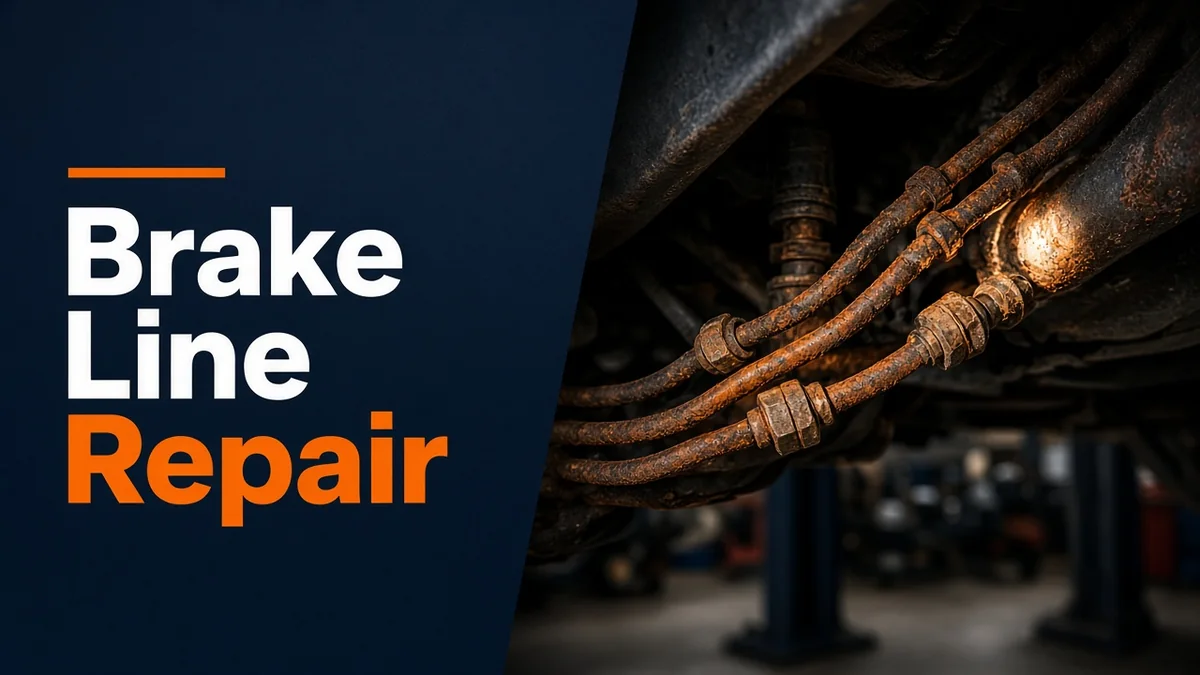
Brake line repair usually costs about $150 to $300 to replace a single steel line or rubber brake hose, and $500 to $1,500 or more when several rusted lines need replacing at once. Brake lines carry pressurized fluid from the master cylinder to each wheel, so a leak, heavy rust or a burst line can cause a soft pedal or a sudden loss of braking. A leaking brake line is not safe to drive on and should be repaired before the car goes back on the road.
What Brake Lines Do
When you press the pedal, the master cylinder pushes brake fluid through a network of rigid steel lines along the underside of the car. Near each wheel, a flexible rubber brake hose connects the steel line to the caliper or wheel cylinder, allowing the suspension and steering to move. Because brake fluid does not compress, any leak or weak spot lets pressure escape, and the brakes lose power.
Brake Line vs Brake Hose
| Steel brake lines | Rubber brake hoses | |
|---|---|---|
| Where | Run along the frame and underbody | Short flexible sections at each wheel |
| Main failure | Rust and corrosion, especially from road salt | Cracking, swelling or internal collapse with age |
| Typical cost to replace one | $150–$350 | $150–$300 |
| Lifespan | Often 10+ years, much less in salty climates | Often 6–10 years, varies with climate |
Brake Line Repair Cost
| Repair | Typical cost |
|---|---|
| Replace one rubber brake hose | $150–$300 |
| Replace one steel line section | $150–$350 |
| Replace several corroded lines | $500–$1,000 |
| Full brake line replacement (truck or SUV) | $1,000–$1,500+ |
| Brake bleed after repair | Usually included; $80–$150 on its own |
These are typical US prices including parts, labor and bleeding the brakes. Costs rise quickly on rusty vehicles, because corroded fittings, bleeder screws and neighboring lines often break when the mechanic tries to remove them. A job that starts as one line can grow into several.
Why a Simple Line Can Become an Expensive Repair
- Seized fittings: rusted flare nuts can round off or snap, forcing replacement of the next section too.
- Access: lines routed above the fuel tank or along the frame may require removing the tank, exhaust or heat shields.
- Pre-bent vs custom lines: factory-shaped lines cost more; custom lines take more labor to bend and flare.
- Material: copper-nickel lines resist rust better than plain steel and cost somewhat more.
- Related parts: a seized bleeder or caliper may need replacing at the same time.
Signs of a Bad or Leaking Brake Line
- A soft, spongy or slowly sinking brake pedal
- The brake warning light on the dashboard, often from low fluid; our guide to dashboard symbols explains the red brake light
- Wet spots or drips of clear to amber, slightly oily fluid near a wheel or under the car
- Visible heavy rust, flaking or bubbling on the metal lines
- Cracked, bulging or swollen rubber hoses
- The brake fluid reservoir level dropping steadily
- The car pulling to one side when braking
If the pedal goes to the floor: pump the brakes, shift to a lower gear, use the parking brake gradually and steer to a safe stop. Do not drive a car with a known brake fluid leak; brake failure can happen with little warning. Have it towed to a shop.
Our guide to towing costs explains what a tow to the repair shop typically costs.
How to Check Your Brake Lines
- Check the brake fluid reservoir under the hood; a level below MIN suggests a leak or very worn pads.
- Look for fluid spots under the car, especially inside each wheel.
- With the car safely supported, shine a flashlight along the metal lines under the car, looking for rust scale, wet spots or kinks.
- Look at the rubber hose behind each wheel for cracks, bulges or wetness.
- Have a shop inspect the lines at each brake service or tire rotation.
Brake fluid is one of several fluids worth checking regularly; our guide to checking car fluids covers them all.
Brake Line Materials: Steel vs Nickel-Copper vs Stainless
| Material | Pros | Cons | Typical Use |
|---|---|---|---|
| Coated steel (factory) | Strong, cheap, what most cars come with | Rusts over time, especially in salt states | Original equipment on most vehicles |
| Nickel-copper (copper-nickel, “Cunifer”) | Very corrosion resistant, easy to bend and flare by hand | Costs more than steel | Popular replacement choice in rust-belt states |
| Stainless steel | Excellent corrosion resistance, very strong | Hard to bend and flare; needs special tools | Custom and performance builds |
| Braided stainless hoses | Firmer pedal feel, abrasion resistant | Must be DOT-approved; more expensive | Flexible hose upgrades at the wheels |
Never use plain copper tubing for brake lines. It is not rated for brake pressures and can fatigue and crack. Pre-bent line kits for specific vehicles save time on full replacements.
Can You Repair a Brake Line Yourself?
Experienced DIYers can replace brake hoses and some line sections with the right tools: line wrenches, a flaring tool for the correct flare type, a tubing bender and a method to bleed the brakes. Mistakes, such as the wrong flare, a poorly seated fitting or air left in the system, can cause brake failure. If you are not confident, this is a job for a professional. Most professionals do not accept compression fittings as a permanent brake line repair, and they can cause a car to fail a safety inspection.
Example Brake Line Repair Scenarios
| Situation | What Usually Gets Done | Typical Cost (US) |
|---|---|---|
| One rusted section near a wheel | Replace one line section, bleed brakes | About $150–$350 |
| Leaking flexible hose at one wheel | Replace hose and washers, bleed brakes | About $150–$300 |
| Rear line rusted through along the frame | Replace the full rear line run, often with nickel-copper | About $400–$800 |
| Whole-vehicle corrosion (older truck or SUV) | Replace all hard lines, possibly fittings and a seized bleeder or caliper | About $800–$1,500+ |
Prices vary by vehicle and region. The labor is often the biggest part, because lines run along the frame, above fuel tanks and around suspension parts.
What to Check on a Brake Line Quote
- Which lines or hoses are being replaced, and why
- Whether the price includes bleeding or a full brake fluid flush
- The line material (steel, nickel-copper or stainless)
- Whether seized bleeder screws or calipers might add cost
- Warranty on parts and labor
- Photos of the damaged line before approving major work
Why Brake Lines Rust and How to Prevent It
Road salt, brine and moisture attack steel lines from the outside, especially where they sit against the frame or collect dirt. Vehicles in the snow belt often need brake line work after 8 to 12 years.
- Rinse the underside of the car regularly during winter, including after salty drives
- Consider an annual rust-proofing treatment in salty climates
- Ask for copper-nickel lines when replacing rusted steel lines
- Have lines inspected during annual maintenance or state inspections
Our guide to preventing rust on a car covers underbody protection in more detail. Rusted brake lines are also a common reason for failing a state safety inspection, as explained in our car inspection guide.
Related guides: car maintenance schedule by mileage, winter car prep and car noises explained.
Brake Line Repair FAQ
About $150 to $350 for a single line or hose, and $500 to $1,500 or more to replace several rusted lines on the same vehicle.
No. A leaking line lets brake pressure escape and can cause sudden brake failure. Have the car towed to a shop.
Short sections can be replaced, but heavily rusted lines are usually replaced entirely, since nearby fittings and lines are often weak too.
Yes. Air enters the system when a line is opened, so the brakes must be bled to restore a firm pedal.