Car Overheating: Causes and What to Do Right Now
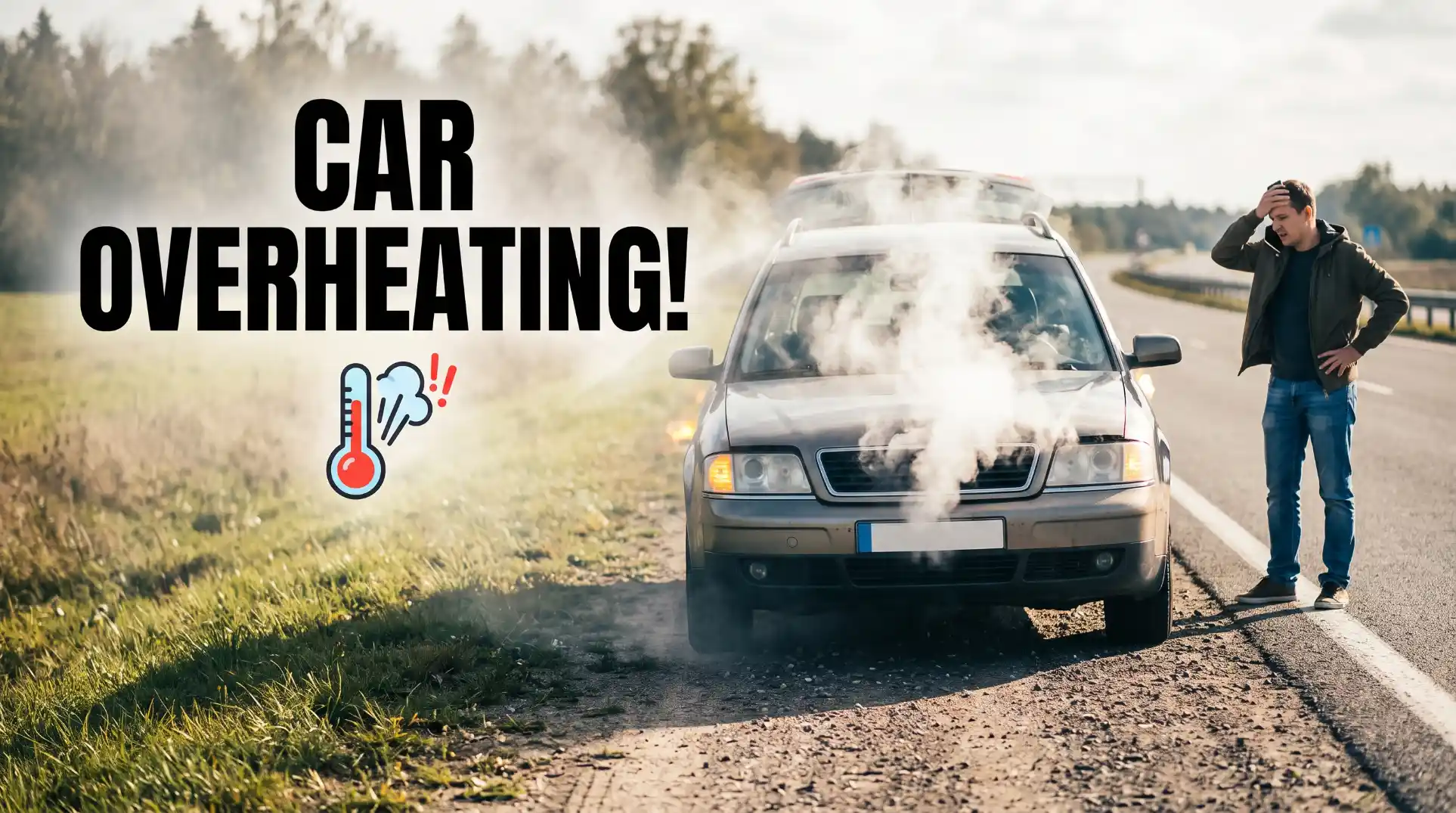
Car overheating is one of the few problems that can ruin an engine in minutes, so act fast. If your car is overheating, turn off the air conditioning, turn the heater and fan to full hot, and pull over as soon as it is safe. Shut off the engine and let it cool for at least 15–30 minutes before opening the hood. Never open the radiator cap on a hot engine. Once it has cooled, check the coolant level and look for leaks, a broken belt or a fan that is not running. The most common causes are low coolant from a leak, a stuck thermostat, a failed radiator fan, a bad water pump, or a clogged radiator.
Do this now: 1. AC off, heater on full hot. 2. Signal and pull over safely. 3. Turn off the engine. 4. Wait at least 15–30 minutes. 5. Do not open the radiator cap while hot. 6. Call roadside help if you cannot find and fix a simple cause.
Key Takeaways
- Heater trick: running the heater on full hot pulls heat away from the engine.
- Stop driving: continuing to drive an overheating engine can warp the cylinder head or blow the head gasket.
- Wait before opening the hood: steam and coolant can cause serious burns.
- Common causes: low coolant, thermostat, radiator fan, water pump, radiator, belt, head gasket.
- Adding coolant can get you to a shop, but the root cause still needs fixing.
What to Do When Your Car Overheats: Step by Step
- Turn off the AC and turn on the heat: set the heater to maximum temperature and the fan to high. It will be uncomfortable, but it helps cool the engine.
- Pull over safely: signal, get off the road, and turn on your hazard lights.
- Turn off the engine: if the gauge is in the red or steam is coming out, shut it off.
- Wait: let the engine cool for at least 15–30 minutes. Do not touch the radiator or hoses.
- Open the hood once cooled: look for steam, leaks, a broken belt, or a split hose.
- Check the coolant reservoir: the translucent overflow tank has min and max marks. If it is low, add the correct coolant (or a 50/50 mix; water only in an emergency).
- Restart and watch the gauge: if the temperature climbs again quickly, do not drive. Call for a tow.
- Drive only to the nearest shop if the temperature stays normal, and keep watching the gauge.
Safety note: Never open the radiator cap or coolant reservoir cap while the engine is hot. The system is pressurized, and hot coolant can spray out and cause severe burns. Keep hands away from the fan, which can switch on even with the engine off on some cars.
Why Is My Car Overheating? Common Causes
| Cause | Clues | What it usually needs |
|---|---|---|
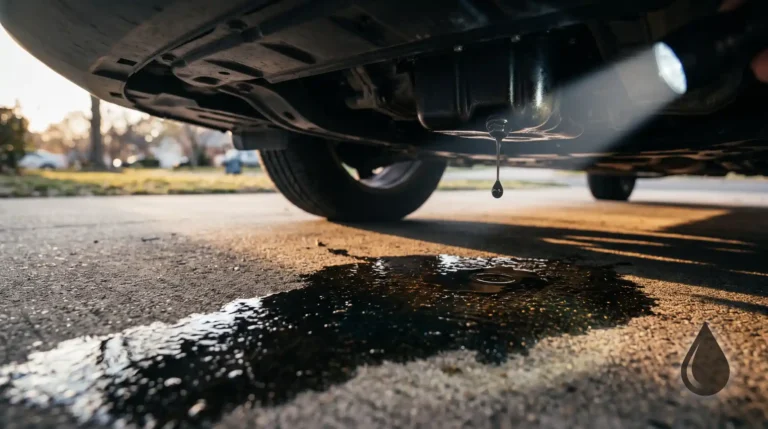
| Low coolant or leak | Low reservoir, puddles of green, orange or pink fluid, sweet smell | Find and fix the leak, refill coolant |
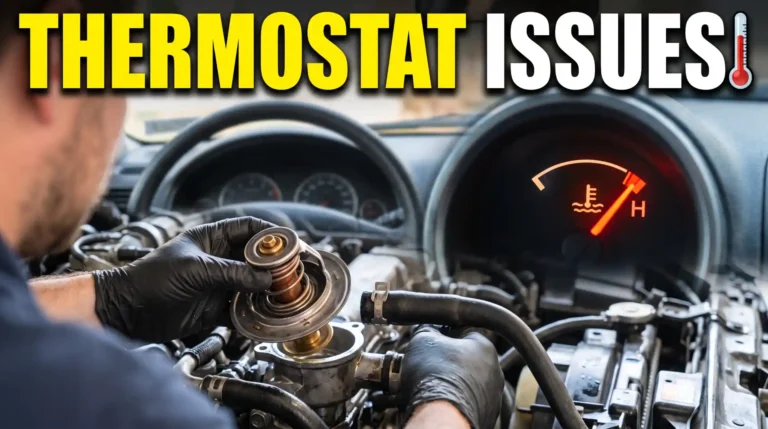
| Stuck thermostat | Overheats quickly; upper radiator hose stays cool | Replace thermostat (often $150–$500) |
| Radiator fan not working | Overheats in traffic or at idle, fine on the highway | Replace fan motor, relay, fuse or sensor |
| Failing water pump | Leak at the front of the engine, whining noise | Replace water pump (roughly $400–$1,100+) |
| Clogged or damaged radiator | Overheats under load, crusty fins or leaks | Flush or replace radiator (about $400–$1,500) |
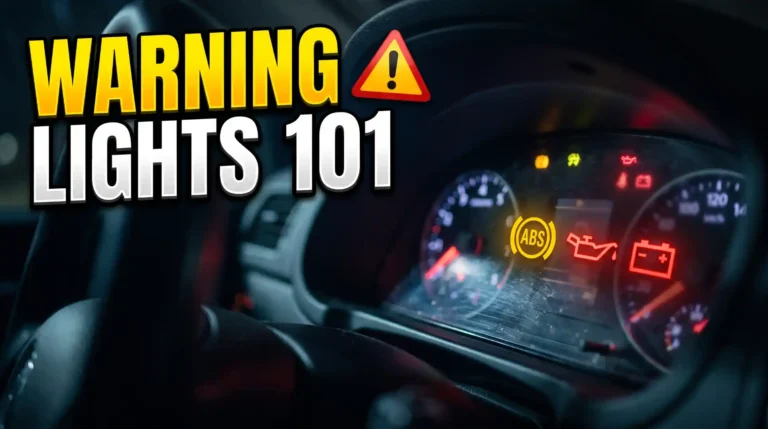
| Broken or slipping belt | Squealing, battery light, power steering loss | Replace belt |
| Head gasket failure | White sweet-smelling exhaust smoke, coolant loss with no leak, milky oil | Major repair; diagnose promptly |
| Low engine oil | Low dipstick reading, oil light | Top up oil; find the cause |
Repair costs vary by vehicle and region. See our thermostat guide for more detail on cooling-system costs.
Overheating in Specific Situations
- Only when idling or in traffic: usually the radiator fan or a clogged radiator.
- Only on the highway or uphill: clogged radiator, low coolant or a weak water pump.
- With the AC on: the AC adds heat in front of the radiator; a weak fan or dirty condenser often shows up here.
- Right after a coolant refill: an air pocket in the system; it may need bleeding.
- While towing: extra load; check the towing capacity and cooling system.
How to Prevent Overheating
- Check coolant level regularly and follow the coolant change interval in your owner’s manual.
- Fix small leaks early.
- Replace worn hoses and belts.
- Keep the radiator and condenser fins free of bugs and debris.
- Watch the temperature gauge, especially in hot weather or when towing.
- Keep engine oil at the correct level.
Car Overheating FAQ
Turn off the AC, turn the heater to full hot, pull over safely, turn off the engine and let it cool for at least 15 to 30 minutes before checking the coolant. Call for help if it overheats again.
No. Driving an overheating engine can cause severe damage such as a warped cylinder head or blown head gasket. Drive only after it cools and the temperature stays normal.
The heater core acts like a small radiator, moving heat from the engine coolant into the cabin.
Low coolant or leaks, a stuck thermostat, a failed radiator fan, a bad water pump, a clogged radiator and a broken belt.
In an emergency, water can get you to a shop, but it does not protect against freezing or corrosion. Have the system refilled with the correct coolant soon.
At least 15 to 30 minutes, and never open the radiator cap while the engine is hot.
This usually points to a radiator fan problem, since the fan provides airflow when the car is not moving.