Car Noises Explained: Squeal, Grind, Knock and Rattle
Most car noises point to a specific system, and when the noise happens is the best clue. A squeal when braking usually means worn brake pads; a squeal when starting or accelerating points to the serpentine belt; grinding is often metal-on-metal brakes or a bad wheel bearing; clicking when turning suggests a worn CV joint; a rattle underneath is commonly a loose exhaust heat shield; and knocking from the engine can be serious and should be checked right away.
Key Takeaways
- Brakes: squeal = pads getting thin; grinding = pads worn through.
- Belts: squeal or chirp at startup, when turning the wheel or with the AC on.
- Rattles: loose heat shields, exhaust clamps, or worn suspension links.
- Clicking in turns: worn CV axle joint on front-wheel-drive and AWD cars.
- Humming that rises with speed: wheel bearing or tire wear.
- Engine knocking: stop and get it checked; it can mean serious engine damage.
Car Noise Chart: Sound, Likely Cause and Urgency
| Noise | When you hear it | Likely cause | How urgent |
|---|---|---|---|
| High-pitched squeal | When braking | Brake pad wear indicators | Soon: book a brake check |
| Grinding or scraping | When braking | Pads worn to metal, damaged rotors | Now: unsafe to ignore |
| Squeal or chirp | Startup, turning, AC on | Worn or loose serpentine belt, bad tensioner | Soon |
| Rattling | Underneath, at idle or over bumps | Loose heat shield, exhaust clamp, catalytic converter internals | Soon |
| Clunk | Over bumps | Worn sway bar links, ball joints, shocks or struts | Soon |
| Clicking | Sharp turns | Worn CV joint | Soon: can fail and leave you stranded |
| Humming or growling | Rises with speed | Wheel bearing, uneven tire wear | Soon |
| Whining | Rises with engine speed or when steering | Power steering pump, alternator, transmission | Soon |
| Knocking or pinging | Under the hood, accelerating | Wrong fuel, carbon buildup, engine bearing wear | Now if loud or constant |
| Hissing | Under the hood, after shutting off | Coolant or vacuum leak | Soon; now if overheating |
| Popping or backfiring | Exhaust | Ignition or fuel mixture problem | Soon |
| Roaring or loud exhaust | Accelerating | Exhaust leak or failed muffler | Soon; exhaust leaks can let fumes in |
Why Is My Car Making a Rattling Noise?
Rattles are among the most common car noises, and most are not dangerous, but a few are. Where and when you hear the rattle narrows it down:
- Underneath the car, at idle or low speed: a loose exhaust heat shield is the classic cause; a rusted clamp or hanger can also let the exhaust rattle.
- Underneath, from the middle of the car: a failing catalytic converter can rattle if its internal honeycomb breaks up.
- Over bumps: worn sway bar links, control arm bushings, struts or loose suspension parts.
- From the engine at startup: timing chain rattle on some engines, or low oil pressure; check the oil level.
- Inside the cabin: loose items in the glovebox, door pockets or trunk, or loose trim panels.
- From the wheels: loose hubcaps, a loose lug nut or a stone in the brake dust shield.
Brake Noises
Most brake pads have a small metal tab that squeals when the pad gets thin, a built-in warning. If the squeal turns into grinding, the pads are worn through and metal is scraping the rotors, which reduces stopping power and makes the repair more expensive. A light squeal on a damp morning that disappears after a few stops is usually surface rust and is normal.
Noises When Turning
- Clicking or popping in tight turns: worn outer CV joint; look for a torn rubber boot and grease on the inside of the wheel.
- Whining when turning the wheel: low power steering fluid or a failing pump (on hydraulic systems).
- Creaking or groaning: dry or worn ball joints, tie rod ends or strut mounts.
- Humming that changes when you steer left or right: a wheel bearing, since turning loads one side more.
Engine Noises
- Ticking that speeds up with the engine: low oil, valve train noise or a small exhaust manifold leak.
- Deep knocking: possible rod bearing wear; check oil and stop driving if it is loud.
- Pinging when accelerating: detonation from low-octane fuel or carbon buildup.
- Squealing at startup: belt slipping, especially in cold or wet weather.
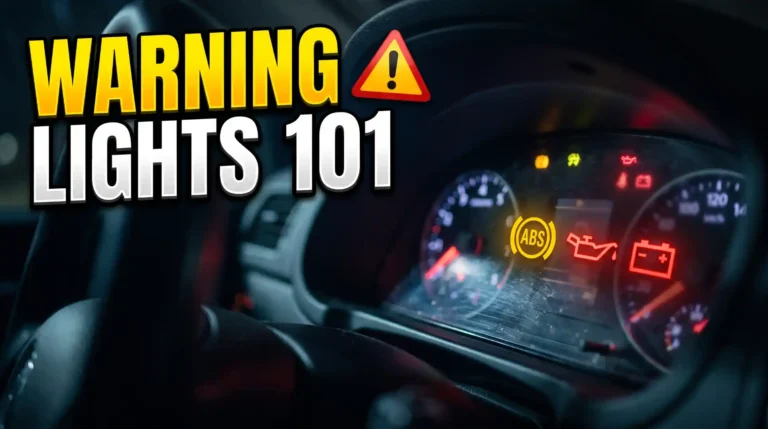
Safety note: Grinding brakes, loud engine knocking, a burning smell, smoke, or a noise together with a warning light or steering or braking changes are reasons to stop driving and get help. Continuing to drive can turn a simple repair into an expensive one or cause a loss of control. If the noise comes with a vibration through the wheel or seat, see why your car is shaking. Some noises trace back to known defects, so run your VIN through the NHTSA recall lookup.
How to Describe a Noise to Your Mechanic
- When: cold start, warm engine, braking, turning, accelerating, over bumps or at a steady speed.
- Where: front, rear, a specific wheel, under the hood, under the car or inside the cabin.
- What: squeal, grind, click, clunk, rattle, hum, whine, knock or hiss.
- Changes: does it get faster with speed or with engine revs? Does it change when you turn?
- Record it: a short phone video with audio helps a mechanic hear what you hear.
What Car Noise Repairs Typically Involve
| Noise source | Common repair |
|---|---|
| Brake squeal or grinding | Replace pads; resurface or replace rotors if damaged |
| Belt squeal | Replace serpentine belt or tensioner |
| Heat shield rattle | Re-secure or replace the shield or clamp |
| CV joint clicking | Replace the CV axle |
| Wheel bearing hum | Replace the wheel bearing or hub assembly |
| Suspension clunk | Replace sway bar links, bushings, ball joints or struts |
Car Noises FAQ
Common causes are a loose exhaust heat shield, a loose exhaust clamp or hanger, worn suspension parts, a failing catalytic converter or loose items in the cabin. Where and when you hear it helps narrow it down.
Usually the brake pad wear indicators are telling you the pads are getting thin. A brief squeal on damp mornings can be harmless surface rust.
It often means the brake pads are worn to metal and scraping the rotors. Have the brakes checked immediately.
Clicking in tight turns is a common sign of a worn CV joint, often after its rubber boot has torn.
A failing wheel bearing or uneven tire wear are the most common causes.
Many rattles, such as a loose heat shield, are not immediately dangerous, but a rattle from the suspension, wheels or engine should be checked soon.
Knocking can come from low-octane fuel, carbon buildup or worn engine bearings. Check the oil level and have loud or constant knocking inspected right away.