Pros and Cons of Electric Cars: Is an EV Right for You?
The main benefits of electric cars are much lower fuel and maintenance costs, zero tailpipe emissions, quiet and quick acceleration, and the convenience of charging at home. The main drawbacks are a higher purchase price on many models, longer refueling time on road trips, reduced range in cold weather, uneven public charging reliability, and higher insurance and tire costs for some models. EVs make the most sense for drivers who can charge at home and have predictable daily driving.
Pros and Cons of Electric Cars at a Glance
| Pros | Cons |
|---|---|
| Lower fuel cost per mile, especially with home charging | Higher upfront price on many models |
| Less maintenance: no oil changes, spark plugs or exhaust | Longer “refueling” time on road trips |
| Zero tailpipe emissions | Range drops in cold weather and at high speeds |
| Instant torque and quick, smooth acceleration | Public charging can be unreliable or crowded |
| Quiet, comfortable ride | Home charging may be hard for renters and apartment dwellers |
| Convenient home charging: leave home “full” every day | Insurance and tires can cost more on some EVs |
| Regenerative braking reduces brake wear | Battery replacement outside warranty is expensive |
| Lower center of gravity improves handling and rollover resistance | Heavier weight wears tires faster |
| Access to HOV lanes and local perks in some areas | Some models depreciate quickly |
Benefits of Electric Cars
1. Lower Fuel Costs
Charging at home is usually much cheaper per mile than buying gasoline, especially if you can charge overnight on a lower off-peak electricity rate. Public DC fast charging costs more than home charging but is often still competitive with gas. Compare your own numbers with our EV charging cost calculator and fuel cost calculator.
2. Lower Maintenance
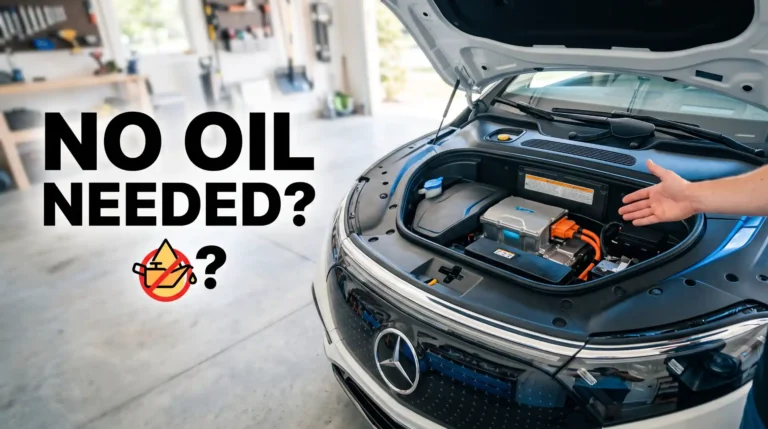
EVs have far fewer moving parts. There is no engine oil, transmission fluid in the traditional sense, spark plugs, timing belts or exhaust system. Regenerative braking also reduces brake pad wear. Main maintenance items are tires, cabin filters, brake fluid, wipers and coolant for the battery system. See do electric cars need oil changes for more.
3. Zero Tailpipe Emissions
EVs produce no tailpipe emissions, which improves local air quality. Total lifecycle emissions depend on how the electricity is generated and how the battery is made, but studies generally find EVs produce lower lifetime greenhouse gas emissions than comparable gas cars in the US, and the advantage grows as the grid gets cleaner.
4. Performance and Driving Experience
Electric motors deliver full torque instantly, so even affordable EVs feel quick off the line. The heavy battery sits low in the floor, which improves stability, and the cabin is quiet with smooth, seamless acceleration.
5. Home Charging Convenience
Plug in at night and start every day with a full battery. For most daily driving, you may rarely need a public charger.
6. Safety
Many EVs earn top crash test ratings, helped by their low center of gravity (which reduces rollover risk) and large crumple zones without an engine up front.
7. Other Perks
- HOV or carpool lane access in some states
- Utility rebates and lower off-peak charging rates
- State or local incentives in some areas
- Over-the-air software updates that add features
Disadvantages of Electric Cars
1. Higher Upfront Cost
Many EVs still cost more than comparable gas models, although prices have dropped and affordable options such as the Chevrolet Bolt and Nissan Leaf now start around $29,000 to $30,000. The federal new clean vehicle credit ended for vehicles acquired after September 30, 2025, but some states and utilities still offer incentives.
2. Charging Time and Road Trips
Even fast chargers typically take about 20 to 45 minutes to charge from 10% to 80%, versus a few minutes at a gas pump. Road trips require planning around charging stops. See how long it takes to charge an electric car for real-world times.
3. Range Limits and Cold Weather
Most new EVs offer about 230 to 350 miles of EPA range, which covers most daily driving. But range can drop significantly in freezing temperatures, especially when heating the cabin, and at sustained high highway speeds. Heat pumps and preconditioning while plugged in help.
4. Public Charging Reliability
Public charging networks have grown quickly, but broken or occupied chargers are still a common complaint. The industry shift to the NACS standard is giving many EVs access to Tesla’s Supercharger network, which is widely regarded as the most reliable.
5. Apartment and Street Parking Challenges
Without a driveway or garage, charging can be inconvenient. Workplace charging, right-to-charge laws for renters and nearby public chargers can help.
6. Insurance, Tires and Repairs
Some EVs cost more to insure because repairs, parts and battery damage assessment can be expensive. EVs are heavy and have instant torque, so tires may wear faster. Body repairs may require specially trained shops.
7. Battery Degradation and Replacement
Batteries slowly lose capacity over time. Most modern EV batteries are expected to last well beyond their 8-year or 100,000-mile warranty, but a replacement outside warranty can be very expensive.
8. Depreciation
Some EVs have lost value quickly as newer models offer more range and prices fall. That can hurt sellers but helps used EV buyers.
Total Cost of Ownership: EV Vs. Gas
Over several years, lower fuel and maintenance costs can offset a higher purchase price, especially for drivers who charge at home and drive a lot. The outcome depends on your electricity rate, gas prices, insurance, depreciation and financing. Run your own comparison with our total cost of ownership calculator.
Who Should Buy an Electric Car?
| An EV Is a Great Fit If You… | An EV May Not Fit If You… |
|---|---|
| Can charge at home or work | Have no reliable place to charge |
| Drive mostly predictable daily distances | Frequently drive long distances in remote areas |
| Want lower running costs | Tow heavy loads long distances often |
| Live in a moderate climate or can precondition | Live in extreme cold without garage parking |
| Are comfortable planning road trip stops | Need to refuel in minutes on a tight schedule |
If you are on the fence, a hybrid or plug-in hybrid can be a good middle ground.
Charging safety: Have a licensed electrician install any Level 2 home charger, use equipment rated for your vehicle, and avoid ordinary extension cords for charging.
Related guides: Do electric cars need oil changes? · EV charging cost calculator · Total cost of ownership calculator
Electric Car Pros and Cons FAQs
Lower fuel and maintenance costs, zero tailpipe emissions, quick and quiet acceleration, and the convenience of charging at home.
Studies generally show that EVs produce lower lifetime greenhouse gas emissions than comparable gas cars in the US, although the benefit varies with how electricity is generated.
For drivers who can charge at home and have predictable daily driving, EVs often save money over time. Compare total ownership costs before deciding.
Most modern EV batteries are expected to last well beyond their typical 8-year or 100,000-mile warranty, with gradual capacity loss over time.