How to Get Smoke and Cigarette Smell Out of a Car for Good
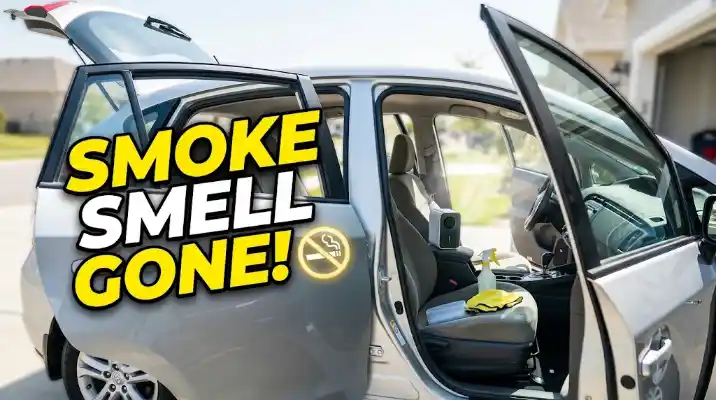
To get cigarette smoke smell out of a car, you have to remove the residue, not just cover the smell. Smoke leaves a sticky film of tar and nicotine on every surface, especially the headliner, seats, carpets, seat belts, glass and the air vents. Clean all of those thoroughly, replace the cabin air filter, absorb what remains with baking soda or activated charcoal, and for heavy odors finish with a professional-grade treatment such as chlorine dioxide or ozone. Air fresheners alone only mask it for a few days.
Follow the steps below from quickest to most thorough, and use the stronger treatments only if the smell keeps coming back.
Key Takeaways
- Smoke residue is the source: it clings to fabric, the headliner, plastics, glass and the vents.
- Replace the cabin air filter, or the smell returns every time the fan runs.
- Clean the headliner gently: spray the towel, not the roof, to avoid sagging.
- Absorbers help: baking soda, activated charcoal and bowls of white vinegar pull out lingering odor.
- Heavy smoke: a chlorine dioxide or ozone treatment, or a professional detail, is often needed.
Why Smoke Smell Is so Hard to Remove
Tobacco smoke carries tiny particles and sticky chemicals that settle into every porous surface. Fabric seats and carpet soak them up, the headliner traps smoke as it rises, and the air conditioning system pulls smoke through the cabin filter and ducts. Warm weather and humidity release the smell again, which is why a car can seem fine one day and reek the next. This residue, often called thirdhand smoke, is also why researchers recommend removing it rather than just masking the smell.
Step-by-Step: How to Remove Smoke Smell From a Car
- Remove the source: empty and clean the ashtray, remove any cigarette butts, lighters and packs, and check under seats and in door pockets.
- Air the car out: open all the doors for an hour on a dry, breezy day.
- Take out the floor mats and wash them: scrub rubber mats with an all-purpose cleaner; shampoo carpet mats and let them dry in the sun.
- Vacuum everything thoroughly: seats, carpets, the trunk, under the seats and between cushions.
- Clean hard surfaces: wipe the dashboard, console, door panels, steering wheel and every plastic trim piece with an interior cleaner. The sticky film comes off onto your towel, often yellow-brown.
- Clean the glass: smoke leaves a haze on the inside of the windows; use glass cleaner and two passes if needed.
- Clean the seat belts: pull each belt all the way out, clip it, wipe with diluted interior cleaner and let it dry fully before releasing.
- Shampoo seats and carpets: use an upholstery cleaner or enzyme cleaner and a brush, then extract with a wet-dry vacuum. Leather should be cleaned with a leather cleaner and conditioned.
- Clean the headliner carefully (see below).
- Replace the cabin air filter and treat the vents (see below).
- Absorb the rest: sprinkle baking soda on carpets and cloth seats overnight and vacuum it up, and leave activated charcoal or bowls of white vinegar in the closed car for a day or two.
How to Clean the Headliner Without Damaging It
The headliner holds a lot of smoke, but its fabric is glued to a board and can sag if you soak it. Brush it gently first. Then lightly mist upholstery cleaner onto a microfiber towel, not the headliner, and blot or wipe in one direction. A steam cleaner on a low setting with an upholstery attachment also works well; keep it moving and do not let the fabric get wet through. Let it dry completely with the doors open.
Clean the Air Vents and Cabin Air Filter
Smoke pulled through the ventilation system coats the cabin air filter and the inside of the ducts. Replace the cabin air filter, which is usually behind the glove box and costs about $15–$30, choosing an activated carbon version if available. Then use an AC and vent odor treatment: many products are sprayed into the fresh-air intake near the base of the windshield or placed in the car while the fan runs on recirculation. Run the AC and heater on high for 10–15 minutes afterward.
Home Remedies That Help
| Remedy | How to use it | Best for |
|---|---|---|
| Baking soda | Sprinkle on carpets and seats, leave overnight, vacuum | Absorbing odor from fabric |
| Activated charcoal | Bags under seats and in the trunk for several days | Ongoing, scent-free odor absorption |
| White vinegar | Bowls left in the closed car overnight; wipe hard surfaces with a diluted mix | Neutralizing odor in the air and on plastics |
| Coffee grounds | A container of dry grounds in the car for a day or two | Absorbing mild odors |
| Enzyme cleaner | Spray on fabric, let it dwell, extract | Breaking down residue in upholstery |
These work best after a thorough clean. On their own they reduce light odors but rarely remove years of heavy smoking.
Stronger Treatments for Heavy Smoke Odor
Odor Foggers
Aerosol “odor bombs” fill the closed cabin with a neutralizing mist. They help with moderate odors after cleaning. Run the fan on recirculation while the fogger works so the product reaches the vents, then air the car out thoroughly.
Chlorine Dioxide Treatment
Chlorine dioxide kits release a gas that neutralizes smoke odor molecules in fabric, foam and the air system. Detailers and many car dealers use it because it is effective and generally gentler on rubber and plastics than ozone. The car must be empty during treatment and aired out well afterward.
Ozone Treatment
An ozone generator oxidizes odor molecules and is widely used on smoke-damaged cars. It can be very effective, but ozone is harmful to breathe, can react with smoke residue to form other irritating chemicals, and repeated long treatments can degrade rubber and plastics. If you use it, clean the car first, run it only in an empty car for the time the manufacturer recommends, and air the car out completely before driving.
Safety note: never sit in or let pets into a car during an ozone, chlorine dioxide or fogger treatment. Follow the product directions exactly, keep treatments away from children, and ventilate the car completely before driving it.
Vape and Marijuana Smoke
Vape clouds leave an oily film on glass and plastics, and marijuana smoke clings to fabric like tobacco smoke. The same process works: clean the glass and hard surfaces, shampoo the fabric, replace the cabin filter and use an absorber or odor treatment. Vape residue on the inside of the windshield usually needs two passes with glass cleaner.
What Does Professional Smoke Odor Removal Cost?
A professional interior detail with odor removal typically costs about $150 to $400, depending on how heavily the car was smoked in and whether an ozone or chlorine dioxide treatment and headliner cleaning are included. Very heavily smoked cars sometimes need repeated treatments or replacement of the cabin filter, headliner or carpet.
Buying a Used Car That Was Smoked In
Many buyers avoid smoker cars, which can mean a lower price for you if you are willing to clean one. Sniff the car with the fan on high, look for burn marks, yellowed headliners and ash in the vents, and budget for a thorough detail. Keep in mind that sellers sometimes use strong air fresheners or ozone right before a sale, so the smell can return after a few warm days. If the smell is fuel rather than smoke, see why your car smells like gas, since that can be a safety issue. Replacing the cabin filter is also part of routine care covered in fueleconomy.gov’s maintenance tips.
How to Keep the Smell From Coming Back
- Do not smoke or vape in the car; smoke outside with the doors closed.
- Replace the cabin air filter once or twice a year.
- Keep activated charcoal bags in the car.
- Clean interior glass and wipe hard surfaces regularly.
- Air the car out on dry days.
Smoke Smell Removal FAQ
Clean every surface that holds residue, including the headliner, seats, carpets, seat belts, glass and plastics, replace the cabin air filter, absorb what remains with baking soda or charcoal, and use a chlorine dioxide or ozone treatment for heavy odors.
A light odor can improve in a day or two of cleaning and airing out. Heavy, long-term smoke smell may take several rounds of cleaning and treatment over a week or more.
White vinegar helps. Bowls left in the closed car overnight absorb odor, and a diluted vinegar solution can wipe hard surfaces. It works best after the car has been cleaned.
Yes, it absorbs odor from carpets and cloth seats. Sprinkle it generously, leave it overnight and vacuum it up.
It can be effective, but ozone is harmful to breathe and can damage rubber and plastics with overuse. Use it only in an empty car for the recommended time and air the car out completely afterward.
Heat and humidity release odor from residue still trapped in fabric, foam, the headliner and the air system. More thorough cleaning or a stronger treatment is usually needed.
Usually about $150 to $400 for an interior detail with odor treatment, depending on how heavily the car was smoked in.
No. Air fresheners mask the smell temporarily. The residue must be cleaned and neutralized for the smell to go away.