All-Season vs All-Weather Tires: Which Do You Need?
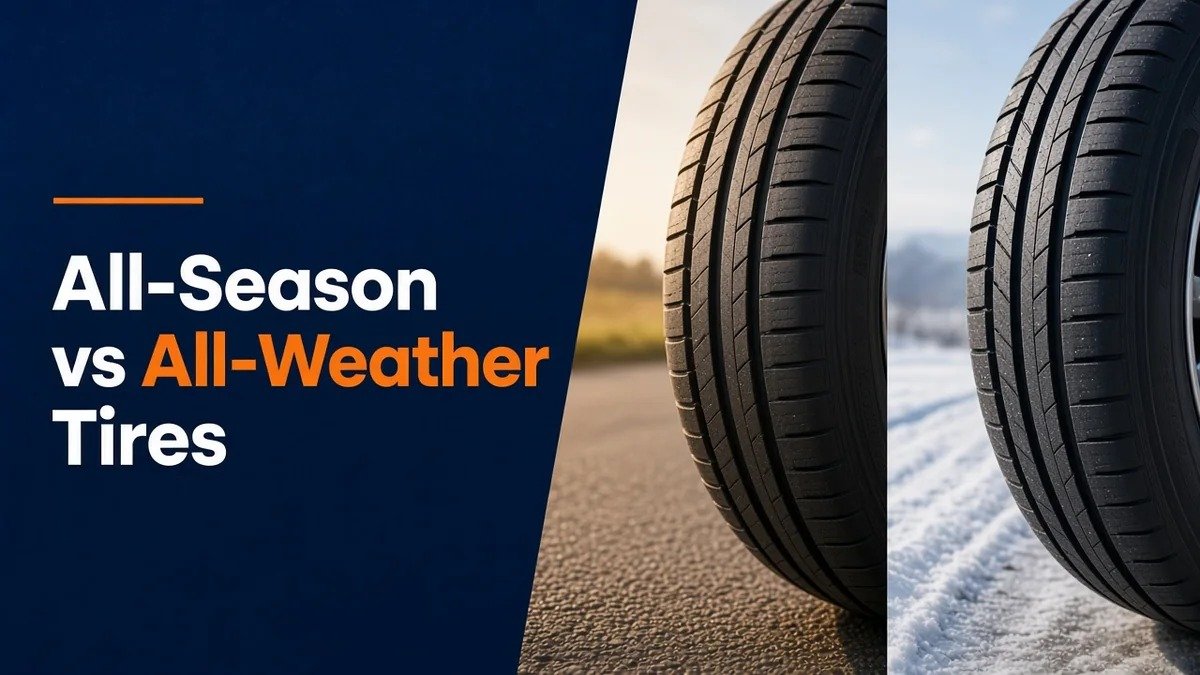
The main difference between all-season and all-weather tires is winter performance. All-weather tires carry the Three-Peak Mountain Snowflake (3PMSF) symbol, meaning they passed a standardized snow traction test, so they grip much better on snow and in cold temperatures. All-season tires are built for dry roads, rain and light snow, and they usually last longer, ride quieter and cost less. If you get regular snow but do not want to swap to dedicated winter tires, all-weather tires are the better choice. If winters are mild, all-season tires are usually the smarter buy.
All-Season Vs. All-Weather Tires: Comparison
| Feature | All-Season Tires | All-Weather Tires | Winter Tires |
|---|---|---|---|
| Snow certification | Usually M+S only | 3PMSF symbol | 3PMSF symbol |
| Light snow | Fair | Good | Excellent |
| Heavy snow and slush | Poor to fair | Good | Excellent |
| Ice | Poor | Fair | Best (especially studless ice-focused or studded) |
| Cold temperatures (below about 45°F) | Rubber stiffens, less grip | Stays more flexible | Stays flexible |
| Rain and wet roads | Good | Good | Good |
| Dry grip and handling | Good to very good | Good | Softer, less precise |
| Tread life | Longest (often 50,000–80,000 mile warranties) | Moderate (often 50,000–60,000 miles) | Shortest, used only in winter |
| Noise and comfort | Quietest | Slightly louder | Louder |
| Year-round use | Yes | Yes | No (wear fast in heat) |
Treadwear warranties vary widely by tire model and brand. Check the manufacturer’s warranty for the specific tire you are considering.
What Are All-Season Tires?
All-season tires are the default on most new cars and SUVs sold in the US. Their tread compound and pattern balance dry grip, wet traction, comfort, low rolling resistance and long wear. Most carry the M+S marking, which is based on tread design, not a performance test. They handle light snow, but their rubber gets harder as temperatures drop, reducing grip on cold, snowy or icy roads.
Pros
- Long tread life and strong treadwear warranties
- Quiet, comfortable ride
- Good fuel efficiency
- Wide selection and lower prices
- Good dry and wet performance
Cons
- Limited traction in heavy snow, slush and on ice
- Rubber stiffens in cold weather
- Not certified for severe snow in most cases
What Are All-Weather Tires?
All-weather tires, sometimes called “all-season plus winter” tires, are designed to be used year-round while also earning the Three-Peak Mountain Snowflake certification. They use a more flexible rubber compound and more siping (small slits in the tread) to grip snow and cold pavement, while resisting the fast wear that winter tires suffer in summer heat.
Pros
- Certified severe-snow traction (3PMSF)
- Better braking and grip in cold and slush
- No need for seasonal tire changes or storage
- Meet winter tire rules in some regions
Cons
- Usually shorter tread life than all-season tires
- Slightly more road noise and softer handling
- Less ice grip than dedicated winter tires
- Fewer size choices for some vehicles
What Does the 3PMSF Symbol Mean?
The Three-Peak Mountain Snowflake symbol shows a snowflake inside a three-peaked mountain on the tire sidewall. To earn it, a tire must perform at least 10% better than a standard reference tire in a standardized snow traction test. The M+S marking, by contrast, simply indicates certain tread design features and does not require a snow performance test. Some all-season tires now also carry 3PMSF, blurring the line, so check the sidewall rather than relying on the product name.
Which Tire Is Right for You?
| Your Climate and Driving | Best Choice |
|---|---|
| Mild winters, rare snow (South, Southwest, much of the West Coast) | All-season |
| Occasional snow, cold snaps, want one set of tires | All-weather |
| Regular snow, hills, rural roads, not plowed quickly | All-weather or winter tires |
| Frequent ice, heavy snow, mountain driving | Dedicated winter tires in winter, all-season in summer |
| Performance car in a warm climate | Summer or ultra-high-performance all-season |
| Commuter who values tread life and a quiet ride | All-season |
If you are considering a separate set of winter tires, our winter car prep and snow tire guide covers when to switch and what else to check before cold weather.
All-Weather Vs. Winter Tires
All-weather tires are a compromise. They are much better in snow than all-season tires, but dedicated winter tires still have softer rubber and deeper, more aggressive tread for ice and deep snow. If you live somewhere with long, harsh winters, two sets (winter plus all-season) offer the best overall performance and can extend the life of each set. If you want simplicity and moderate winters, all-weather tires are a strong single-set solution.
Cost and Tread Life
- All-season tires: typically about $100 to $250 per tire for common sizes, with long treadwear warranties.
- All-weather tires: often similar or slightly higher in price, with somewhat shorter treadwear warranties.
- Two-set strategy: higher upfront cost plus seasonal swaps (often $50 to $100 per change, or free with a second set of wheels), but each set lasts longer.
To estimate how long your next set might last, see our guide on how long tires last. If you are changing sizes, check the fit with our tire size calculator.
Tips for Winter Driving on Any Tire
- Check tire pressure more often in winter, since cold air lowers pressure
- Keep at least 5/32 inch of tread for snow; deeper is better
- Replace all four tires together, especially on AWD vehicles
- Slow down and leave much more following distance on snow and ice
- Keep an emergency kit with a scraper, blanket and traction aids
Wondering whether you need to idle the car before driving in the cold? See should you warm up your car in winter.
Safety note: No tire makes a car safe on ice at normal speeds. On icy roads, reduce speed, brake gently and early, and avoid sudden steering inputs. Mixing tire types on the same vehicle can cause unpredictable handling, so install the same type on all four wheels.
Related guides: Winter car prep and snow tires · How long do tires last? · Tire size calculator
All-Season vs All-Weather FAQs
All-weather tires are certified for severe snow with the Three-Peak Mountain Snowflake symbol and grip better in cold and snow. All-season tires last longer and ride quieter but are weaker in winter conditions.
Yes. All-weather tires are designed for year-round use, unlike winter tires, which wear quickly in hot weather.
M+S stands for mud and snow. It indicates certain tread design features but does not require a snow performance test, unlike the 3PMSF symbol.
Choose all-season if you get little or no snow. Choose all-weather if you get regular winter weather and want one set of tires all year.