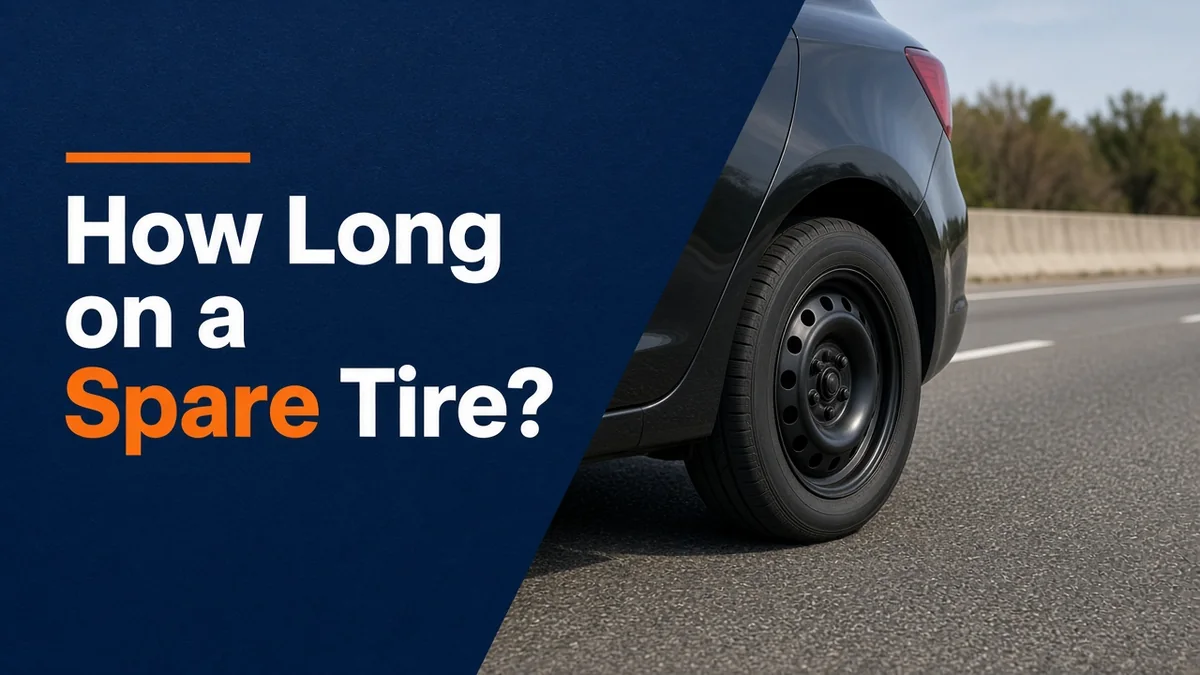
How Long Can You Drive on a Spare Tire? Miles and Speed Limits
On a compact temporary spare (a “donut”), most manufacturers say to drive no more than about 50 to 70 miles and no faster than 50 mph. A donut is only meant to get you to a tire shop. A full-size spare that matches your other tires can be driven like a regular tire, while a full-size spare that does not match should be replaced as soon as practical. Always check the sidewall and your owner’s manual, because limits vary by vehicle.
How Far Can You Drive on a Spare Tire? Quick Answer by Type
| Spare Type | Max Distance | Max Speed | Notes |
|---|---|---|---|
| Compact temporary (“donut”) | About 50–70 miles | 50 mph | Get to a tire shop right away |
| Full-size temporary (lightweight) | Usually under 100 miles | Often 50–65 mph (check sidewall) | Not meant for permanent use |
| Full-size non-matching spare | Can drive further, replace soon | Normal legal speeds | Size or tread mismatch can stress AWD systems |
| Full-size matching spare | Unlimited, treat as regular tire | Normal legal speeds | Rotate it in with the other four |
| Run-flat tire (no spare) | About 50 miles at zero pressure | 50 mph | Limits vary by brand; see manual |
| Tire sealant kit (no spare) | Enough to reach a shop | Usually 50 mph or less | Works only for small tread punctures |
The distance and speed limits for temporary spares are printed on a label on the tire sidewall or on the wheel, and in the owner’s manual. When those differ from general guidance, follow the label.
Why Are Donut Spare Tires so Limited?
A compact spare is built to save weight, trunk space and cost. That means compromises:
- Thin tread and construction: very shallow tread depth and a lighter carcass wear out quickly and are more prone to damage.
- Smaller diameter: the donut spins faster than your other tires to keep up, which heats it and puts strain on the differential.
- Narrow width: a smaller contact patch means less grip for braking, cornering and wet roads.
- High inflation pressure: usually around 60 psi, so it loses capability fast when under-inflated.
- Speed rating: many compact spares are designed for a top speed of about 50 mph.
What Happens If You Drive Too Long on a Spare Tire?
- Spare tire failure: the thin tread can wear through or the tire can overheat and blow out.
- Drivetrain damage: the size difference makes the differential work constantly. On all-wheel-drive and four-wheel-drive cars, this can damage the center differential or transfer case.
- Poor braking and handling: stopping distances get longer, and ABS, traction control and stability control may not work as designed.
- Uneven wear and alignment issues: on the remaining tires and suspension.
- Warning lights: the tire pressure monitoring system (TPMS) or stability control light may stay on.
If a warning light appears after installing a spare, our guide to dashboard symbols and what they mean explains which ones are normal with a spare and which need attention.
Types of Spare Tires Explained
Compact Temporary Spare (Donut)
The most common spare in modern sedans and crossovers. It is smaller, lighter and narrower than a regular tire, often on a black steel wheel, with a yellow or orange warning label. Treat it strictly as a short-term fix.
Full-Size Temporary Spare
Same diameter as your road tires, but lighter construction and less tread. It is better than a donut, but still has speed and distance limits marked on the sidewall.
Full-Size Spare
A regular tire on a regular wheel, common on trucks, body-on-frame SUVs and some older cars. If it matches the other four in brand, size and tread depth, you can use it normally. If it is older or has much deeper tread than the others, have it checked, and on AWD vehicles replace it with a matching tire soon.
Run-Flat Tires
Many BMW, MINI and some other models come with run-flat tires and no spare. Their stiff sidewalls support the car after a puncture, typically for about 50 miles at up to 50 mph. Check your manual for your exact limit.
Tire Repair Kits
A growing number of new cars include only a sealant and compressor kit. It can seal a small nail hole in the tread, but not sidewall damage or large cuts. Some shops cannot repair a tire full of sealant, so mention it when you get there.
Spare Tire Speed Limit: Why 50 Mph?
The 50 mph limit on temporary spares reflects their light construction and heat tolerance. Driving faster builds more heat in the thin carcass and increases the risk of failure, especially on hot pavement or with a heavy load. On the highway, use the right lane, turn on hazard lights if you are well below traffic speed, and exit to a slower route if possible.
How to Drive Safely on a Spare Tire
- Check the pressure right away: spares often sit for years and lose air. The correct pressure is on the sidewall or the door-jamb placard, often 60 psi for a donut.
- Stay at or under 50 mph on a temporary spare.
- Avoid hard braking, sharp turns and potholes.
- Leave extra following distance, especially in rain or snow.
- Do not tow or carry heavy loads.
- Head straight to a tire shop to repair or replace the damaged tire.
- Do not use more than one donut at once.
Should the Spare Go on the Front or Rear?
Your owner’s manual has the final word, but many experts prefer the rear for a donut on front-wheel-drive cars, since the front tires handle steering, most of the braking and power delivery. That means moving a good rear tire to the front and putting the spare on the rear. If that is not practical on the roadside, install the spare where the flat was and drive gently to a shop.
When to Replace or Check Your Spare Tire
- Check pressure every month or two, and before road trips.
- Inspect for cracks in the rubber, especially on spares more than 6 years old.
- Replace by age: many manufacturers recommend replacing tires, including spares, around 6 to 10 years from the manufacture date, even if unused.
- Replace after use if a donut has been driven near or beyond its limit.
- Make sure the jack and lug wrench are present and working.
Spares age just like regular tires. See our guide on how long tires last for how to read the DOT date code on the sidewall. If you are replacing a spare with a full-size tire, our tire size calculator helps confirm it matches your road tires.
What If You Do Not Have a Spare?
If your car came with no spare, or the spare is flat, your options are a tire sealant kit, roadside assistance through your insurer, automaker or a motor club, or a tow to the nearest shop. Our guide to how much it costs to tow a car shows typical prices if you need one.
Safety note: Change a tire only when you are fully off the road on level ground, with the parking brake set and hazard lights on. On a busy highway shoulder or in poor visibility, it is safer to stay in the vehicle and call for roadside help. Never get under a car supported only by the jack.
Related guides: How long do tires last? · Towing cost guide · Dashboard symbols and meanings
Spare Tire FAQs
Most compact donut spares are designed for about 50 to 70 miles at speeds no higher than 50 mph. Check the label on the spare or your owner’s manual for your car’s exact limit.
With a full-size matching spare, yes. With a donut, driving for a week is not recommended unless the total distance stays within the limit, usually about 50 to 70 miles.
A temporary spare can overheat and fail at higher speeds, and handling and braking get worse. It can also stress the differential. Stay at or below the speed printed on the spare.
You can with a full-size spare. With a donut, keep to 50 mph or less, use the right lane and hazard lights if needed, and take slower roads when possible.