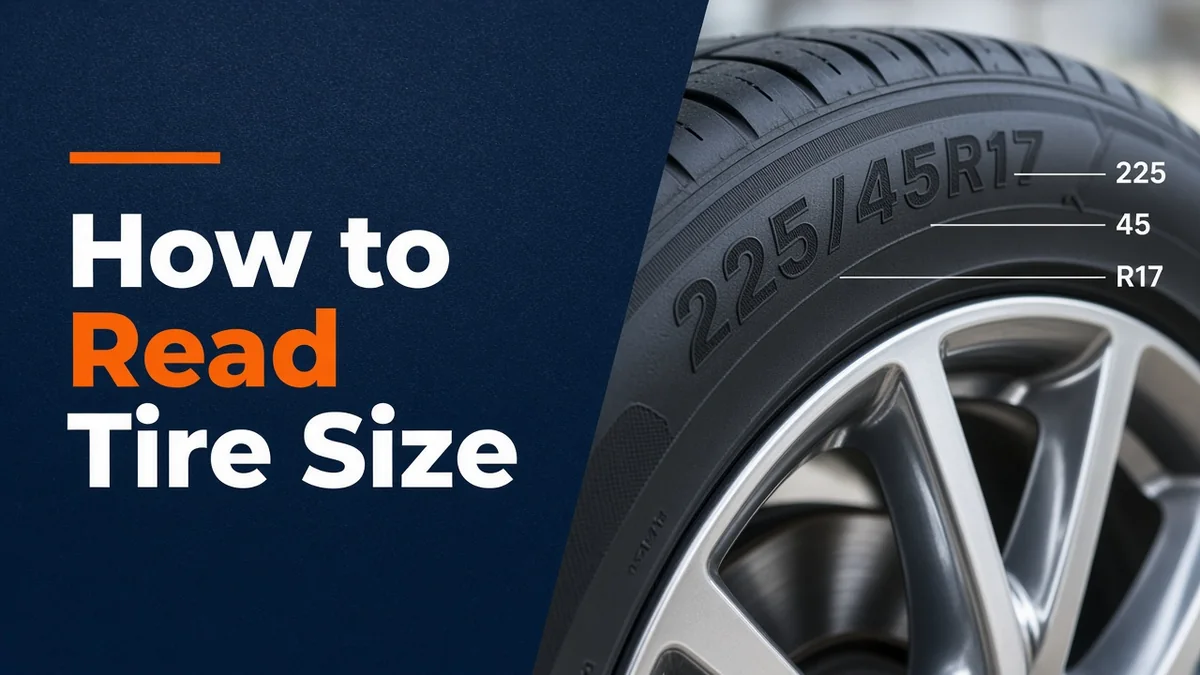
How to Read Tire Size Numbers (Load Index, Date Code)
Tire size numbers follow a standard format. In P215/55R17 94V, “P” means a passenger tire, 215 is the tire width in millimeters, 55 is the aspect ratio (the sidewall height is 55 percent of the width), R means radial construction, 17 is the wheel diameter in inches, 94 is the load index (1,477 pounds per tire) and V is the speed rating (up to 149 mph). The DOT code elsewhere on the sidewall ends in four digits that show the week and year the tire was made.
How to Read a Tire Size, Step by Step
| Marking | Example | What it means |
|---|---|---|
| Tire type | P | Passenger car; LT means light truck, ST means special trailer; no letter usually means a metric (European) size |
| Section width | 215 | Tire width in millimeters, sidewall to sidewall |
| Aspect ratio | 55 | Sidewall height is 55% of the width |
| Construction | R | Radial; almost all modern tires |
| Wheel diameter | 17 | Fits a 17-inch wheel |
| Load index | 94 | Maximum load per tire: 1,477 lb |
| Speed rating | V | Rated up to 149 mph |
Your car’s original tire size is listed on the placard inside the driver’s door jamb and in the owner’s manual. Stick to that size unless you have a good reason to change it; our tire size calculator shows how a different size changes overall diameter and speedometer accuracy.
Tire Type Prefixes and Construction Letters
| Marking | Meaning |
|---|---|
| P (for example P225/65R17) | P-metric passenger car tire (US sizing) |
| No prefix (225/65R17) | Euro-metric passenger tire; load capacity differs slightly from P-metric at the same size |
| LT | Light truck tire, built for heavier loads and towing |
| ST | Special trailer tire; for trailers only |
| T | Temporary spare (“donut”) |
| R | Radial construction (almost all modern tires) |
| D or B | Bias-ply or belted bias construction (some trailer, classic and off-road tires) |
| ZR | Radial rated for speeds above 149 mph (older marking now paired with a speed symbol) |
When replacing tires, keep the same type your vehicle was designed for. Putting P-metric tires on a truck that calls for LT tires can reduce load capacity.
Load Index Chart
The load index is a code for the maximum weight each tire can carry when properly inflated. Multiply by four for the tire set’s total capacity.
| Load index | Max load per tire |
|---|---|
| 85 | 1,135 lb |
| 88 | 1,235 lb |
| 91 | 1,356 lb |
| 94 | 1,477 lb |
| 97 | 1,609 lb |
| 100 | 1,764 lb |
| 102 | 1,874 lb |
| 105 | 2,039 lb |
| 110 | 2,337 lb |
| 115 | 2,679 lb |
| 120 | 3,086 lb |
Never go lower on load index: replacement tires must have a load index at least as high as the original equipment, and a load range suitable for your vehicle, especially on trucks, SUVs and vehicles that tow. Underrated tires can overheat and fail.
Speed Rating Chart
| Speed rating | Maximum speed |
|---|---|
| Q | 99 mph |
| R | 106 mph |
| S | 112 mph |
| T | 118 mph |
| U | 124 mph |
| H | 130 mph |
| V | 149 mph |
| W | 168 mph |
| Y | 186 mph |
| (Y) | Above 186 mph |
Speed ratings describe the tire’s tested capability under its rated load, not a recommendation to drive that fast. Replacement tires should generally match or exceed the original speed rating. Winter tires often carry lower ratings, which is acceptable for seasonal use.
How to Read the DOT Code and Tire Age
The Tire Identification Number starts with “DOT” and is followed by letters and numbers identifying the factory and tire. The last four digits show when it was made: the first two are the week and the last two are the year. For example, 2225 means the 22nd week of 2025. The full code may appear only on one side of the tire, so check both sidewalls.
Rubber ages even when a tire is not used. Many vehicle manufacturers recommend replacing tires six years after they were made, and many tire makers set about 10 years as the maximum, regardless of tread depth. Our guide to how long tires last covers age and mileage together.
Other Sidewall Markings
| Marking | Meaning |
|---|---|
| XL or Extra Load | Reinforced tire that carries more load at higher pressure |
| Load Range C, D, E | Light truck ply rating; E is common on heavy-duty pickups |
| M+S | Mud and snow; basic all-season traction marking |
| Three-peak mountain snowflake | Passed a standardized severe snow traction test |
| Treadwear (for example 500) | Relative wear rating under UTQG; higher usually lasts longer |
| Traction (AA, A, B, C) | Straight-line wet braking grade; AA is best |
| Temperature (A, B, C) | Resistance to heat buildup; A is best |
| Max. Load and Max. Press. | Maximum load and inflation pressure, not the pressure to run |
Where to Find Your Car’s Original Tire Size
- Door jamb placard: the Tire and Loading Information label on the driver’s door jamb lists the original tire size and recommended pressure.
- Owner’s manual: lists approved sizes, sometimes different sizes for different trims.
- Fuel door or glovebox: some vehicles place the label there.
- Current tires: read the sidewall, but remember a previous owner may have installed a different size.
If your car came with different sizes front and rear (a staggered setup), the placard lists both.
Where to Find the Correct Tire Pressure
The pressure printed on the tire sidewall is the maximum the tire can hold, not the pressure you should use. The correct pressure for your vehicle is on the placard inside the driver’s door jamb or in the owner’s manual. Check it monthly with a gauge, since correct pressure affects safety, tire wear and fuel economy.
Can You Use a Different Tire Size?
Sometimes. A slightly different width or aspect ratio with the same overall diameter can work, and plus-sizing to larger wheels with lower-profile tires is common. Keep overall diameter within about 3 percent of the original to avoid speedometer error and problems with stability control and ABS, check clearance at full steering lock and suspension travel, and never reduce load capacity. On all-wheel-drive vehicles, all four tires should match closely in size and tread depth.
Metric vs Flotation Sizes
Off-road and truck tires are sometimes sold in flotation sizes, such as 33×12.50R17. Here 33 is the overall diameter in inches, 12.50 is the width in inches, and 17 is the wheel diameter. They are common on lifted trucks and off-road vehicles. Whatever the size format, check load capacity and clearance before fitting. For cold-weather traction, our winter car prep and snow tires guide explains when a dedicated winter tire makes sense.
Related guides: car inspection, car maintenance schedule by mileage and why your car is shaking.
Tire Size Numbers FAQ
Read the last four digits of the DOT code on the sidewall. The first two are the week and the last two are the year of manufacture.
A code for the maximum weight each tire can carry. For example, 94 means 1,477 pounds per tire.
Extra Load. The tire is reinforced to carry more weight than a standard load tire of the same size when inflated to a higher pressure.
Sometimes, if the overall diameter stays close to the original, the load rating is not lower, and the tire clears the suspension and body. Check with a tire professional.
P tires are designed for passenger cars, SUVs and light trucks under normal loads. LT tires have stronger construction and higher load ranges for heavy hauling and towing.
Check the Tire and Loading Information placard on the driver’s door jamb or your owner’s manual. It lists the original equipment size and correct pressure.