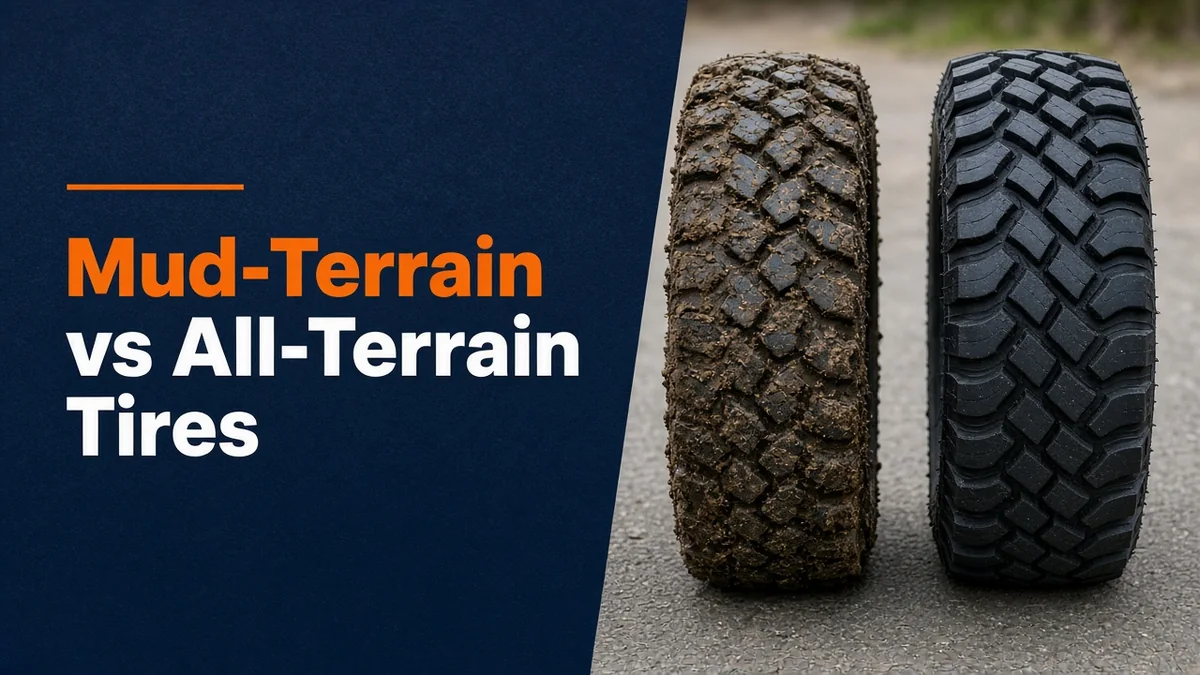
Mud-Terrain vs All-Terrain Tires
All-terrain (A/T) tires are the better choice for most trucks and SUVs: they are quieter on the highway, last longer, handle rain and snow better, and still work well on gravel, dirt and light trails. Mud-terrain (M/T) tires have huge tread blocks and deep voids that dig through mud, rocks and loose sand far better, but they are loud, wear faster on pavement and often grip worse on wet roads and packed snow. Choose mud-terrains only if you regularly drive in deep mud or serious off-road terrain.
All-Terrain vs Mud-Terrain Compared
| All-terrain (A/T) | Mud-terrain (M/T) | |
|---|---|---|
| Tread design | Moderate blocks, smaller voids, many sipes | Large blocks, very wide voids, aggressive shoulders |
| Highway noise | Relatively quiet | Loud hum or roar |
| Ride comfort | Smoother | Firmer |
| Tread life | Often 50,000–60,000+ miles, many with warranties | Often 30,000–40,000 miles |
| Wet pavement | Good | Fair to poor |
| Snow and ice | Good; many are 3PMSF rated | Fair on deep snow, weaker on packed snow and ice |
| Mud | Fair to good in light mud | Excellent |
| Rocks and trails | Good | Excellent, with tougher sidewalls |
| Fuel economy | Smaller penalty | Larger penalty |
| Price | Moderate | Higher |
What Are All-Terrain Tires?
All-terrain tires are designed to split the difference between a highway tire and an off-road tire. Their tread blocks are chunkier than a street tire, with enough open space to clear gravel and moderate mud, but they keep plenty of rubber on the road for grip and have many small slits, called sipes, for wet and snowy traction. They suit trucks and SUVs that spend most of their time on pavement and occasionally head down dirt roads, to a campsite or onto easy trails.
What Are Mud-Terrain Tires?
Mud-terrain tires prioritize off-road traction. Their widely spaced tread blocks let the tire dig in and fling mud out of the voids so the next block can bite. Many have reinforced, three-ply sidewalls to resist punctures on rocks and aggressive shoulder lugs that help when aired down. The trade-off is less rubber touching the road, which means more noise, faster wear and reduced grip on wet or icy pavement.
Rugged-Terrain and Hybrid Tires
Many manufacturers now offer rugged-terrain (R/T) or hybrid tires that sit between the two categories. They borrow the aggressive shoulder design of a mud-terrain with a more road-friendly center tread. They are a good fit if you want more off-road bite and looks than an all-terrain but do not want the full compromises of a mud tire.
Tread Design Differences Explained
- Void ratio: the open space between tread blocks. Mud-terrain tires have large voids to clear mud and grab rocks; all-terrain tires have tighter spacing for better road contact and quieter running.
- Tread depth: mud-terrains often start around 15/32 to 20/32 inch, compared with roughly 12/32 to 15/32 for many all-terrains.
- Sidewall lugs: mud-terrains usually have aggressive shoulder and sidewall blocks for traction in ruts and when aired down; all-terrains have milder sidewall features.
- Siping: all-terrains have more sipes for wet and snow grip; mud-terrains have fewer, larger blocks.
- Construction: both are often available in light truck (LT) sizes with multiple plies for puncture resistance; mud-terrains frequently have tougher, heavier carcasses.
- Rubber compound: mud-terrains use cut- and chip-resistant compounds; all-terrains balance wear, grip and comfort.
Which Is Better in Snow?
Usually all-terrain tires. Look for the three-peak mountain snowflake (3PMSF) symbol, which shows a tire passed a standardized snow traction test. Many all-terrains carry it; most mud-terrains do not. Mud-terrains can work in deep, unpacked snow, but their large voids pack with snow and their fewer sipes grip poorly on packed snow and ice. For true winter safety, a dedicated winter tire is still best; see our winter car prep and snow tires guide.
Best Tire by Terrain
| Terrain or Use | All-Terrain | Mud-Terrain |
|---|---|---|
| Highway commuting | Excellent: quieter, longer wear | Poor to fair: loud, faster wear |
| Gravel and dirt roads | Very good | Very good |
| Deep mud | Fair | Excellent |
| Rocks and ledges | Good | Excellent |
| Sand | Good when aired down | Good when aired down |
| Snow and ice | Good (best if 3PMSF-rated) | Fair; few sipes, less grip on ice |
| Wet pavement | Good | Fair |
| Towing and heavy loads | Very good in LT sizes | Very good in LT sizes |
| Fuel economy | Better | Worse |
Which Should You Choose?
| Your driving | Best choice |
|---|---|
| Mostly highway with occasional gravel roads | All-terrain |
| Daily driver that sees snow in winter | All-terrain with 3PMSF, or winter tires |
| Weekend trail driving, moderate mud | All-terrain or rugged-terrain |
| Frequent deep mud, rock crawling, off-road competition | Mud-terrain |
| Towing and hauling on pavement | All-terrain or highway tire in the right load range |
Size, Load Range and Fitment
Off-road tires often come in larger sizes and higher load ranges, such as Load Range E for heavy-duty trucks. Bigger tires can affect speedometer accuracy, gearing, fuel economy and clearance, and may need a lift or leveling kit. Check load capacity against your vehicle’s requirements and use our tire size calculator to compare diameters before switching sizes.
Match load rating and pressure: never fit tires with a lower load index or load range than your vehicle requires, especially if you tow or haul. Run the pressure recommended for your vehicle on the road, and if you air down for off-road traction, reinflate before returning to pavement.
Cost and Tread Life
All-terrain tires commonly cost about $150 to $350 each for popular truck and SUV sizes, and mud-terrains about $200 to $450 each, with larger sizes costing more. Because mud-terrains wear faster on pavement, their cost per mile is usually higher. Rotating any off-road tire regularly helps it wear evenly; our guide to how long tires last covers other ways to extend tread life.
Fuel Economy and Noise
Heavier, more aggressive tires increase rolling resistance and weight, which lowers fuel economy, often more noticeably with mud-terrains. The louder tread pattern can also make long highway drives more tiring. If your truck spends most of its life on pavement, those daily costs matter more than rare off-road benefits.
Related guides: car maintenance schedule by mileage, suspension repair cost and why your car is shaking.
Mud-Terrain vs All-Terrain FAQ
Mud-terrains have larger tread blocks and wider voids for deep mud and rocks. All-terrains have a tighter tread for quieter, longer-lasting, better-gripping road performance with moderate off-road ability.
Yes. Their large tread blocks create a noticeable hum or roar, much louder than most all-terrain tires.
Usually yes, because they are heavier and have more rolling resistance than all-terrain or highway tires.
Yes, for most off-road driving, including gravel, dirt, light mud and moderate trails. Mud-terrain tires are better only in deep mud and extreme rock crawling.