How to Change Your Car Air Filter (Engine and Cabin): Steps, Timing and Cost
Changing a car air filter is one of the easiest DIY jobs: most engine air filters sit in a plastic box under the hood held by clips or a few screws, and most cabin air filters slide out from behind the glove box. Each takes about 5 to 15 minutes, needs few or no tools, and a new filter usually costs $15 to $40. Replace the engine air filter about every 15,000 to 30,000 miles and the cabin filter about every 12,000 to 15,000 miles or once a year, sooner in dusty or polluted areas.
Below are step-by-step instructions for both filters, how to tell when they need changing, which type to buy, and what a shop charges if you would rather not do it yourself.
Key Takeaways
- Two different filters: the engine air filter protects the engine; the cabin filter cleans the air you breathe.
- Engine filter: check at every oil change, replace about every 15,000–30,000 miles.
- Cabin filter: replace about every 12,000–15,000 miles or yearly.
- DIY cost: $15–$40 per filter; a shop charges about $40–$100 each.
- Match the airflow arrow when installing a cabin filter.
Engine Air Filter vs Cabin Air Filter
| Engine air filter | Cabin air filter | |
|---|---|---|
| What it does | Stops dust and debris from entering the engine | Filters dust, pollen and pollution from the air coming through your vents |
| Where it is | In the air box under the hood | Usually behind the glove box, sometimes under the dash or near the windshield cowl |
| How often to replace | About every 15,000–30,000 miles; check every oil change | About every 12,000–15,000 miles or once a year |
| Signs it is dirty | Visibly dark filter, sluggish acceleration, sometimes rough idle | Weak airflow, musty smell, windows slow to defog |
| DIY parts cost | $15–$40 | $15–$40 |
| Shop price | $40–$90 | $40–$100 (dealers can charge more) |
Your owner’s manual lists the exact interval for your car. Many manufacturers recommend shorter intervals under “severe” conditions such as dusty roads, heavy traffic, construction areas or frequent towing.
Signs Your Air Filter Needs Replacing
Engine Air Filter
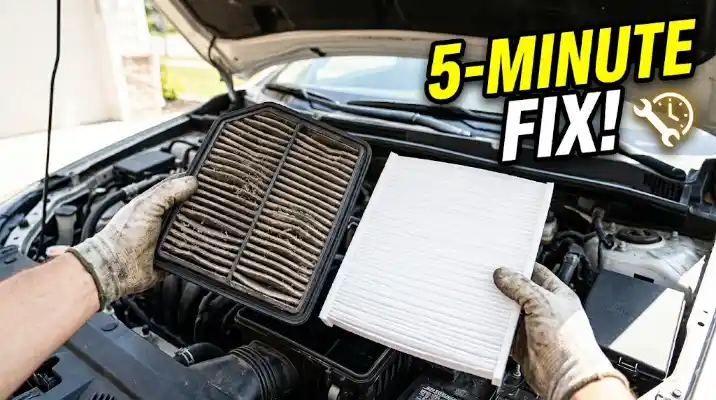
- The filter looks gray, brown or black instead of white or off-white
- Dirt, leaves or debris on the intake side
- Holding it up to a light, very little light passes through
- Slower acceleration or reduced power
- Rough idle or, in severe cases, a check engine light from airflow sensor readings
On modern fuel-injected engines, a clogged filter mainly reduces acceleration and performance rather than fuel economy, because the engine computer adjusts fuel to match the airflow. It still makes sense to replace a dirty filter: it is cheap and protects the engine.
Cabin Air Filter
- Weak airflow from the vents, even on high
- A musty or dusty smell when the fan runs
- Windows that fog up or take longer to clear
- More sneezing or allergy symptoms in the car
- A whistling sound from the vents
How to Change Your Engine Air Filter
- Buy the right filter using your year, make, model and engine size.
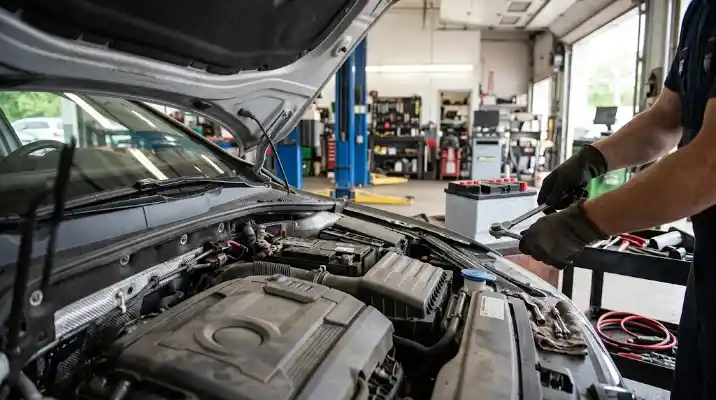
- Open the hood and find the air box, a black plastic box connected to a large intake hose.
- Open the air box: release the metal clips, or remove the screws with a screwdriver or socket. Some need a hose clamp loosened.
- Note how the old filter sits, then lift it out.
- Clean the air box: wipe or vacuum out leaves and dirt. Do not let debris fall into the intake duct toward the engine.
- Install the new filter with the rubber seal facing the same way as the old one, making sure it sits flat all around the edge.
- Close the air box and refasten every clip or screw so no unfiltered air can get in.
Safety note: work with the engine off and cool. Never run the engine with the air box open or the filter removed, and make sure no tools, rags or screws are left inside the intake.
How to Change Your Cabin Air Filter
- Find the filter location in your owner’s manual. In most cars it is behind the glove box.
- Empty the glove box and open it.
- Release the glove box: many have stops on the sides that you squeeze inward, or a small damper arm you unclip on the right side, letting the glove box swing down.
- Open the filter cover by squeezing its tabs.
- Slide out the old filter and note the airflow arrow printed on its edge.
- Vacuum the housing if leaves or dust are inside.
- Insert the new filter with the airflow arrow pointing the same way, usually down or toward the rear of the car.
- Replace the cover, lift the glove box back into place and reattach the damper arm.
Some cars place the cabin filter under the dashboard, behind a kick panel or under the cowl at the base of the windshield. Model-specific videos and the manual help with these.
Which Type of Filter Should You Buy?
| Filter type | Pros | Cons |
|---|---|---|
| Standard paper engine filter | Cheap, effective, easy to find | Disposable |
| Reusable cotton or oiled engine filter | Washable, can last the life of the car | Costs more; over-oiling can foul airflow sensors; must be cleaned properly |
| Basic particulate cabin filter | Cheap, traps dust and pollen | Does little for odors |
| Activated carbon cabin filter | Also reduces odors and some exhaust fumes | Costs a bit more |
| High-efficiency or HEPA-style cabin filter | Traps finer particles; good for allergies | Higher price; may slightly reduce airflow in some cars |
For most drivers, a quality paper engine filter and an activated carbon cabin filter are the best value.
Can You Clean an Air Filter Instead of Replacing It?
Standard paper filters are designed to be replaced. Tapping out loose dirt can help briefly, but blowing them out with compressed air can tear the paper and let dirt through. Reusable cotton filters are the exception: they are washed and re-oiled according to the maker’s instructions. Cabin filters should always be replaced, not cleaned.
What Does a Shop Charge?
Quick lubes, repair shops and dealers commonly offer air filter replacement during an oil change. Expect about $40 to $90 for an engine air filter and $40 to $100 for a cabin filter, and more at some dealers. Ask to see the old filter before you approve a replacement; a filter that looks only lightly dusty often has more life left.
Tips to Make Filters Last Longer
- Check the engine filter at every oil change, especially after dusty summers or road trips.
- Use recirculation mode on very dusty roads or in heavy traffic.
- Clear leaves and debris from the cowl area below the windshield where the cabin air enters.
- Run the fan with the AC off for a few minutes before parking to dry the system and prevent musty smells.
Car Air Filter FAQ
Replace the engine air filter about every 15,000 to 30,000 miles and check it at every oil change. Replace the cabin air filter about every 12,000 to 15,000 miles or once a year, sooner in dusty or polluted areas.
A clogged engine air filter reduces performance and acceleration and can lead to rough running. A dirty cabin filter reduces airflow from the vents, causes musty smells and lets more dust and pollen into the car.
Yes. Most engine and cabin air filters take 5 to 15 minutes to change with few or no tools, and parts cost about $15 to $40 each.
In most cars it is behind the glove box. Some are under the dashboard, behind a kick panel or under the cowl at the base of the windshield. Check your owner manual.
On modern fuel-injected cars, a dirty engine air filter mostly reduces acceleration and power rather than fuel economy, but it should still be replaced.
About $15 to $40 for the part if you do it yourself, or about $40 to $100 at a shop, and more at some dealerships.
Follow the airflow arrow on the filter edge and install it the same way as the old one, usually pointing down or toward the rear of the car.
Standard paper filters should be replaced, not cleaned. Reusable cotton engine filters can be washed and re-oiled following the maker’s instructions. Cabin filters should always be replaced.