How to Freshen Your Car Interior (And Choose the Right Air Freshener)
To freshen your car interior for good, remove the source of the smell first, then absorb what is left, and only then add a scent. That means clearing out trash, vacuuming and cleaning the seats, carpets and mats, replacing the cabin air filter, and letting fresh air in. Baking soda or activated charcoal soaks up lingering odors, and an air freshener adds a pleasant scent once the car is actually clean. An air freshener on its own only hides a smell for a while.
This guide covers a step-by-step freshening routine, the main types of car air fresheners and how they compare, natural options, and stronger treatments for stubborn odors.
Key Takeaways
- Clean before you scent: fresheners mask odors; cleaning removes them.
- Replace the cabin air filter if the air from the vents smells stale or musty.
- Baking soda and activated charcoal are cheap, scent-free odor absorbers.
- Vent clips and gels give steady scent; hanging cards are cheap but fade fast.
- Stubborn smoke or pet odors may need an enzyme cleaner, fogger or professional ozone treatment.
How to Freshen Your Car Interior Step by Step
- Clear everything out: remove trash, food wrappers, gym bags and anything under the seats. Check seat pockets, door bins and the trunk, including the spare tire well, where spills often hide.
- Air it out: open all the doors for 20–30 minutes on a dry day.
- Take out the floor mats and shake, vacuum and wash them. Rubber mats can be scrubbed and rinsed; carpet mats can be shampooed and dried in the sun.
- Vacuum thoroughly: carpets, seats, between cushions, under the seats and along the rails, using crevice and brush tools.
- Deodorize the fabric: sprinkle baking soda over carpets and cloth seats, leave it for a few hours or overnight, then vacuum it up.
- Clean hard surfaces: wipe the dashboard, console, door panels and steering wheel with an interior cleaner. Oils from hands and food build up and smell.
- Treat spills and stains: use an enzyme cleaner on organic messes like milk, food, vomit or pet accidents; enzymes break down the source of the odor.
- Replace the cabin air filter: a dirty or damp filter makes every drive smell stale. It is usually behind the glove box and costs about $15–$30.
- Freshen the AC system: if the vents smell musty, use an AC evaporator cleaner or vent treatment, then run the fan on high.
- Add a scent last: choose an air freshener once the car smells neutral.
Types of Car Air Fresheners Compared
| Type | How it works | Typical lifespan | Best for |
|---|---|---|---|
| Hanging cardboard (such as tree-shaped cards) | Scented paper releases fragrance | 1–3 weeks of strong scent | Cheap, quick scent |
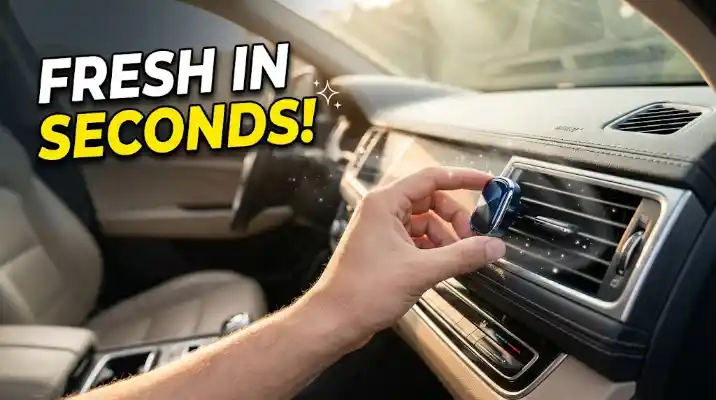
| Vent clips | Airflow from the vents spreads scent oil | 3–6 weeks, often adjustable | Steady scent while driving |
| Gel or can fresheners | Scented gel evaporates slowly | 30–60 days | Set-and-forget scent under a seat |
| Sprays | Fragrance or odor neutralizer sprayed on fabric or air | Minutes to days | Quick refresh, targeted spots |
| Oil diffusers (plug-in or passive) | Essential or fragrance oil diffused | Weeks, refillable | Custom natural scents |
| Activated charcoal or bamboo bags | Absorb odor and moisture, no scent | Up to 1–2 years if recharged in sun | Scent-free odor control |
| Odor foggers (odor bombs) | Aerosol fills the cabin with neutralizer | One-time treatment | Strong lingering odors |
Popular options include classic hanging trees, vent clips from brands such as Febreze and Glade, and designer-style scents like Bath and Body Works Scentportables or Yankee Candle car jars. Custom air fresheners printed with your own logo or photo are popular gifts and business giveaways. Choose based on how strong you like the scent and whether you want odor elimination or just fragrance.
What Is the Best Car Air Freshener?
The best air freshener depends on what you need:
- For a car that already smells: an odor eliminator (enzyme spray, fogger or activated charcoal) rather than a perfume.
- For a light, steady scent: a vent clip you can adjust, so it is not overpowering on hot days.
- For a long-lasting, low-effort option: a gel can under the seat.
- For sensitive noses or kids: unscented charcoal bags or a light natural scent.
- For a strong, luxury scent: refillable oil diffusers or premium vent clips.
Look for products labeled as odor eliminators or neutralizers if you want to deal with smells, not just cover them, and start with the lowest setting in a small space like a car.
Natural Ways to Make Your Car Smell Good
- Baking soda: sprinkle on carpets and seats, or leave an open container under a seat to absorb odors.
- Activated charcoal bags: scent-free and reusable; recharge them by leaving them in the sun.
- Coffee grounds: a small container of dry grounds absorbs odors and adds a light coffee smell.
- Essential oils: a few drops of lemon, lavender, peppermint or eucalyptus on a wooden clip, felt pad or cotton ball near a vent.
- White vinegar: a bowl left in the closed car overnight absorbs odors; the vinegar smell fades once removed.
- Dryer sheets: a quick, cheap scent tucked under the seats.
Stubborn Odors: Smoke, Pets, Mildew and Spills
Cigarette Smoke
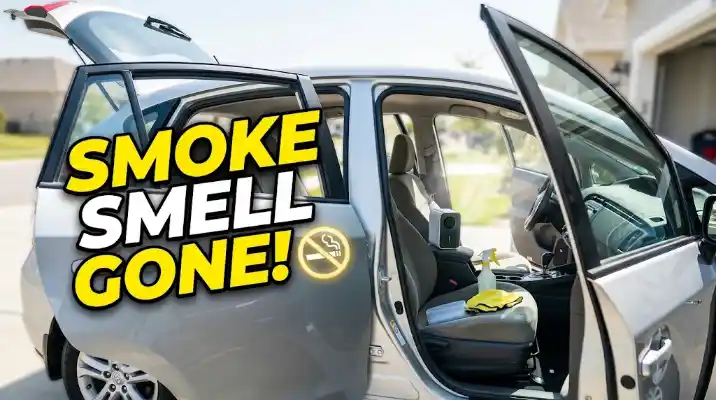
Smoke residue clings to the headliner, seats, carpets, seat belts and the air system. Clean every surface, including the headliner gently, replace the cabin filter, and use an odor fogger or professional treatment. Heavy smoke odor often needs several rounds.
Pet Odors
Remove pet hair with a rubber brush or pet-hair tool before vacuuming, then use an enzyme cleaner on any accidents. Seat covers or a washable hammock make future cleanup much easier.
Musty or Mildew Smell
A musty smell usually means moisture: a damp carpet from a leak, a clogged AC drain or mold on the AC evaporator. Find and fix the water source, dry the carpet completely, replace the cabin air filter and treat the AC system. Leaving windows cracked slightly on dry, sunny days can help.
Sour Milk, Food or Vomit
Soak up as much as possible, then use an enzyme cleaner and let it work for the full time on the label. Blot, rinse lightly and dry thoroughly. Carpet padding that stays wet can keep smelling, so use a wet-dry vacuum or extractor to pull moisture out.
Professional Odor Removal
Detailers use tools that go further than home products:
- Hot-water extraction deep-cleans carpets and upholstery.
- Steam cleaning sanitizes surfaces and helps break down odors.
- Ozone treatment uses a generator to oxidize odor molecules. It is effective on smoke and mildew, but ozone is harmful to breathe and can degrade rubber with overuse, so it must be done in an empty car followed by thorough airing out.
- Chlorine dioxide treatments neutralize odors in the cabin and air system; they also require the car to be empty and ventilated afterward.
Professional odor removal typically costs about $50 to $150 as an add-on to a detail, and more for heavy smoke damage.
Safety note: never run an ozone generator or chemical fogger with people or pets inside the car, follow the product timing exactly and air the car out completely afterward. Keep strong fresheners and oils away from children and pets, avoid placing fresheners where they block airbags or your view, and do not let liquid fresheners leak onto the dashboard, where they can damage plastics. A fresh cabin filter is part of routine care; see fueleconomy.gov’s maintenance tips.
How to Keep Your Car Smelling Fresh
- Take trash out every time you leave the car.
- Keep a small trash bag and a pack of wipes in the car.
- Use all-weather floor mats that you can rinse.
- Vacuum every two weeks and do a deeper clean every few months.
- Replace the cabin air filter every 12,000–15,000 miles, or yearly.
- Do not leave damp towels, gym clothes or groceries in the car.
- Run the fan with the AC off for a few minutes before parking to dry the system.
Car Freshening FAQ
Remove the source of odors first by cleaning carpets, seats and mats, replace the cabin air filter, then keep a scent-free absorber like activated charcoal in the car and add a mild air freshener. Regular cleaning keeps it fresh.
Clear out trash, vacuum, deodorize fabric with baking soda, clean hard surfaces, treat stains with an enzyme cleaner, replace the cabin filter and then add a light scent.
Gel cans and refillable oil diffusers typically last 30 to 60 days, while activated charcoal bags can control odors for a year or more if you recharge them in the sun.
Most scented fresheners only mask odors. Products labeled as odor eliminators, enzyme cleaners and activated charcoal actually reduce or remove the smell.
Find and dry any moisture, replace the cabin air filter, treat the AC evaporator with a vent cleaner and air the car out. A persistent musty smell can mean a water leak or clogged AC drain.
Yes if you follow the directions: use it only in an empty car, keep doors closed for the stated time and ventilate thoroughly before driving. Do not use it with people or pets inside.
Yes. Sprinkling baking soda on carpets and cloth seats for a few hours or overnight, then vacuuming, absorbs many odors without adding fragrance.
Odor removal is usually $50 to $150 as an add-on to a detail, and more for heavy smoke or mildew that needs ozone or repeated treatments.